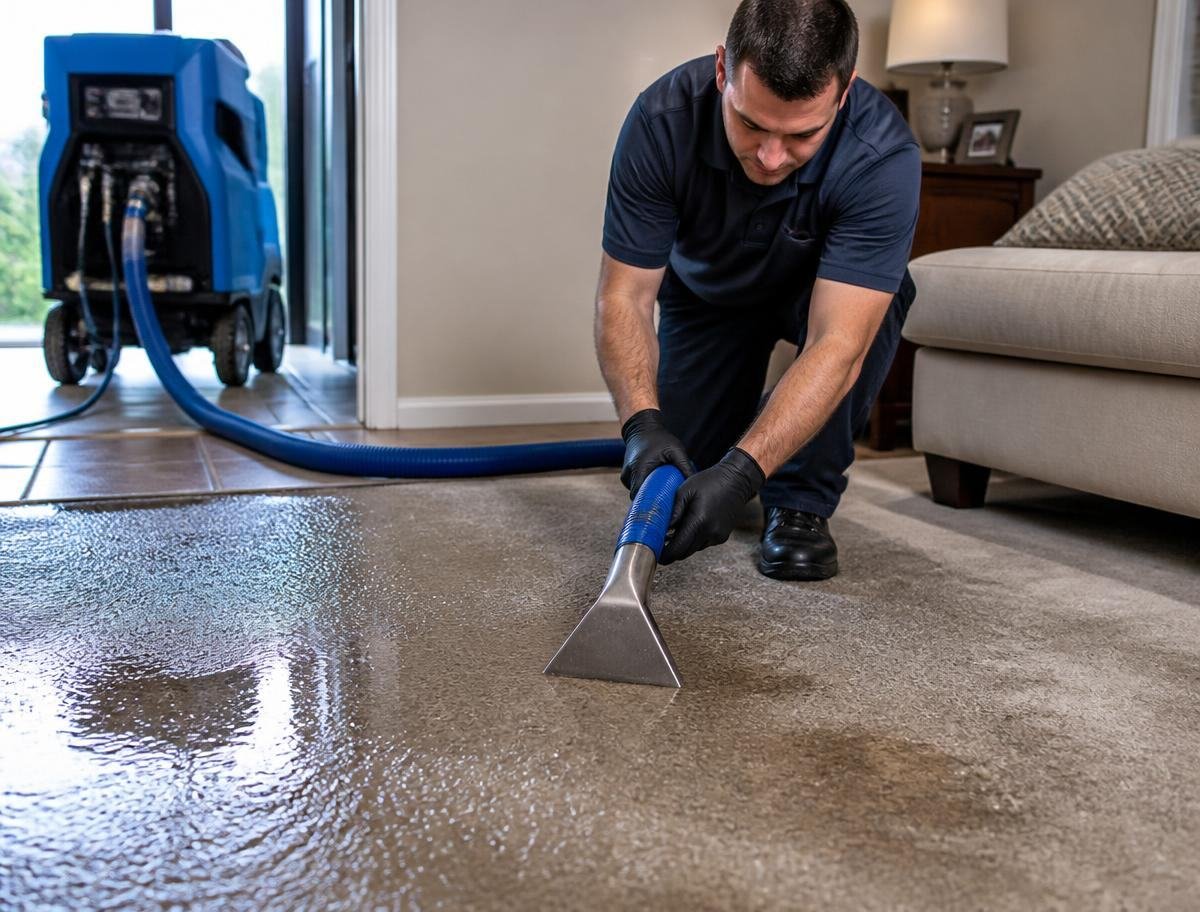
Truck-Mount Extractors
High-volume pump-out that removes standing water before it wicks into subfloor and drywall.
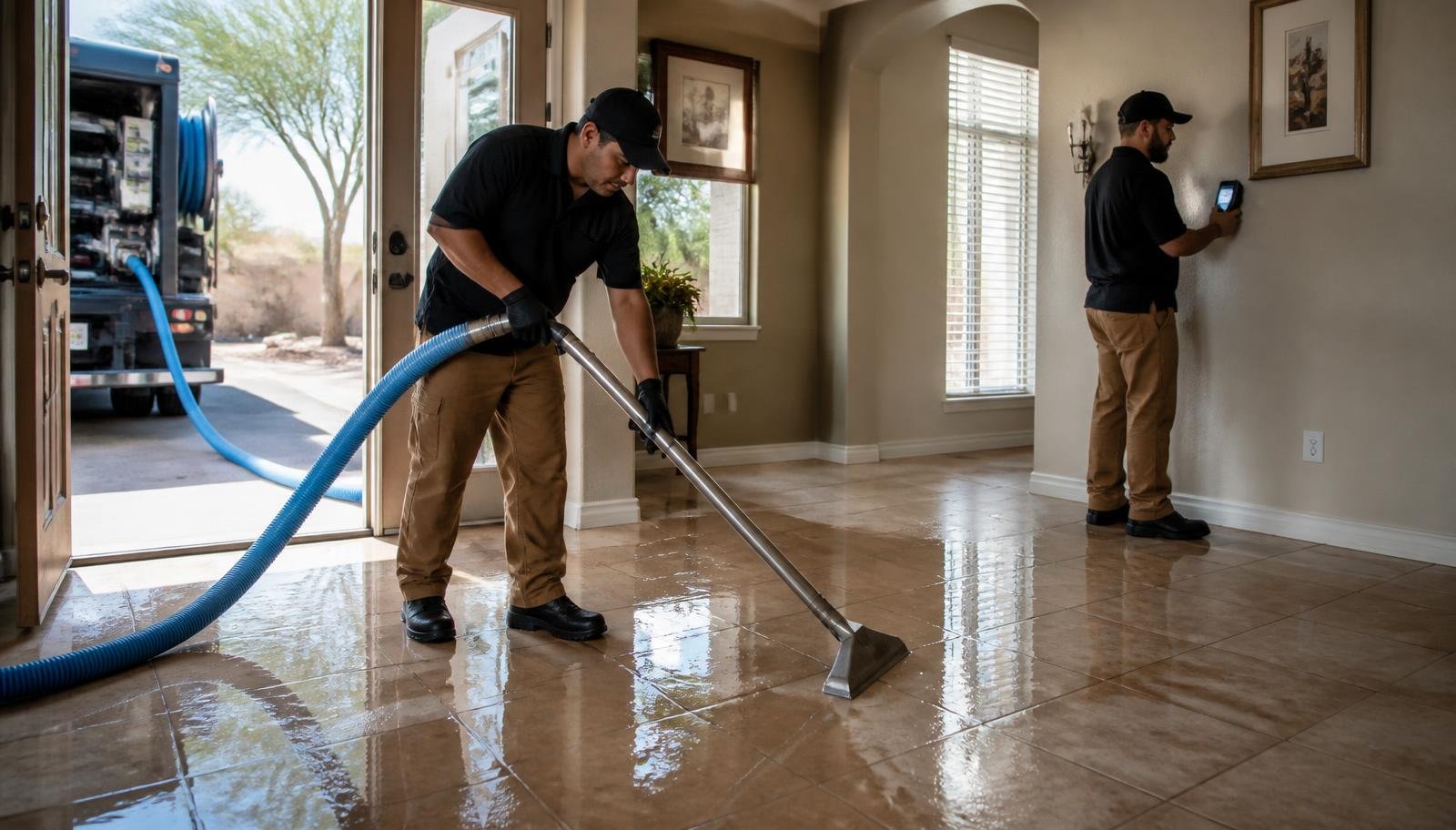
Standing floodwater gets pumped out fast with commercial extractors, hidden moisture is mapped with thermal imaging, and psychrometric structural drying halts mold in its tracks.
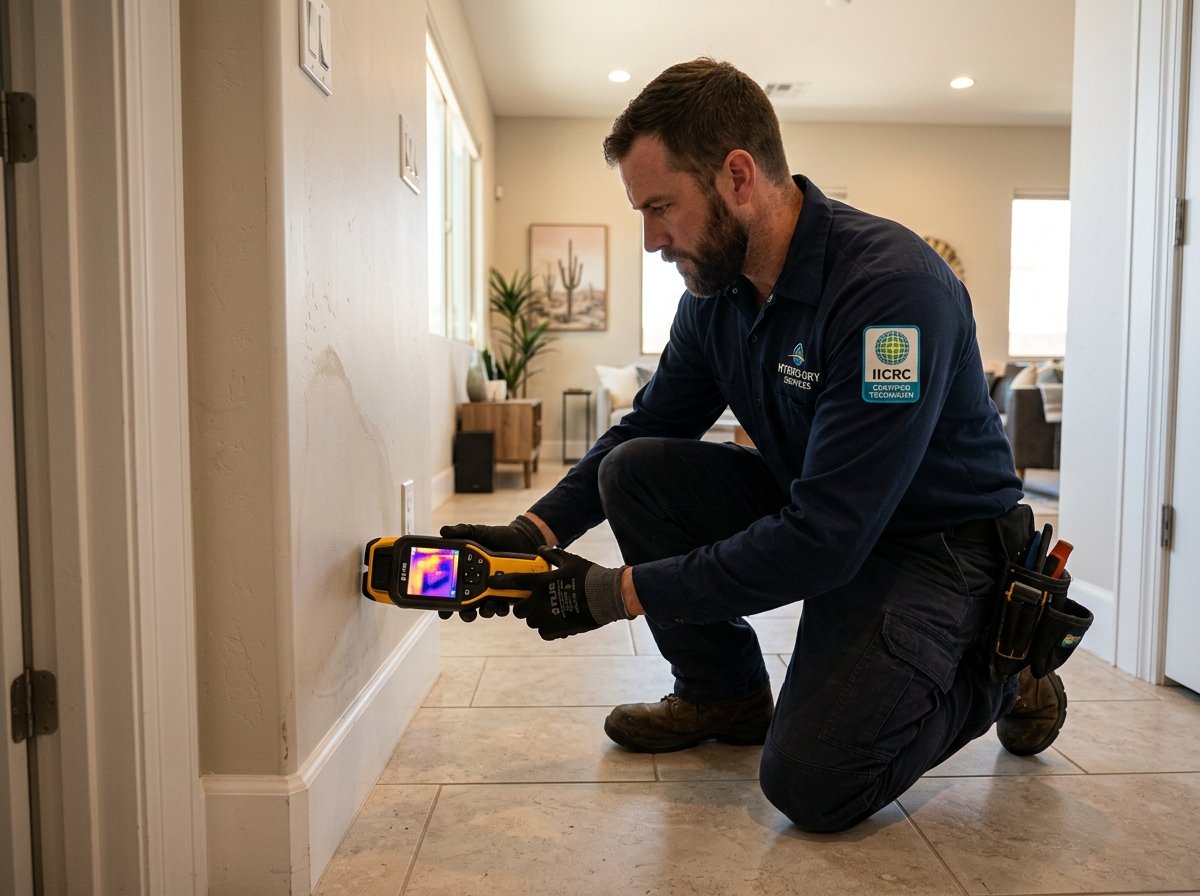
The first 24 hours decide the size of the job.
Extraction is the first phase of every water loss — pulling standing water out with truck-mount and portable extractors before it migrates deeper into subfloor, drywall, and cabinetry.
Mitigation is what happens next: placing air movers and dehumidifiers, monitoring moisture readings daily, and adjusting equipment until the structure is measurably dry — not just dry to the touch.
Shortcuts can leave moisture in wall cavities, cabinets, or flooring assemblies. Documented readings determine whether materials are drying as expected and help identify areas that need a different approach.
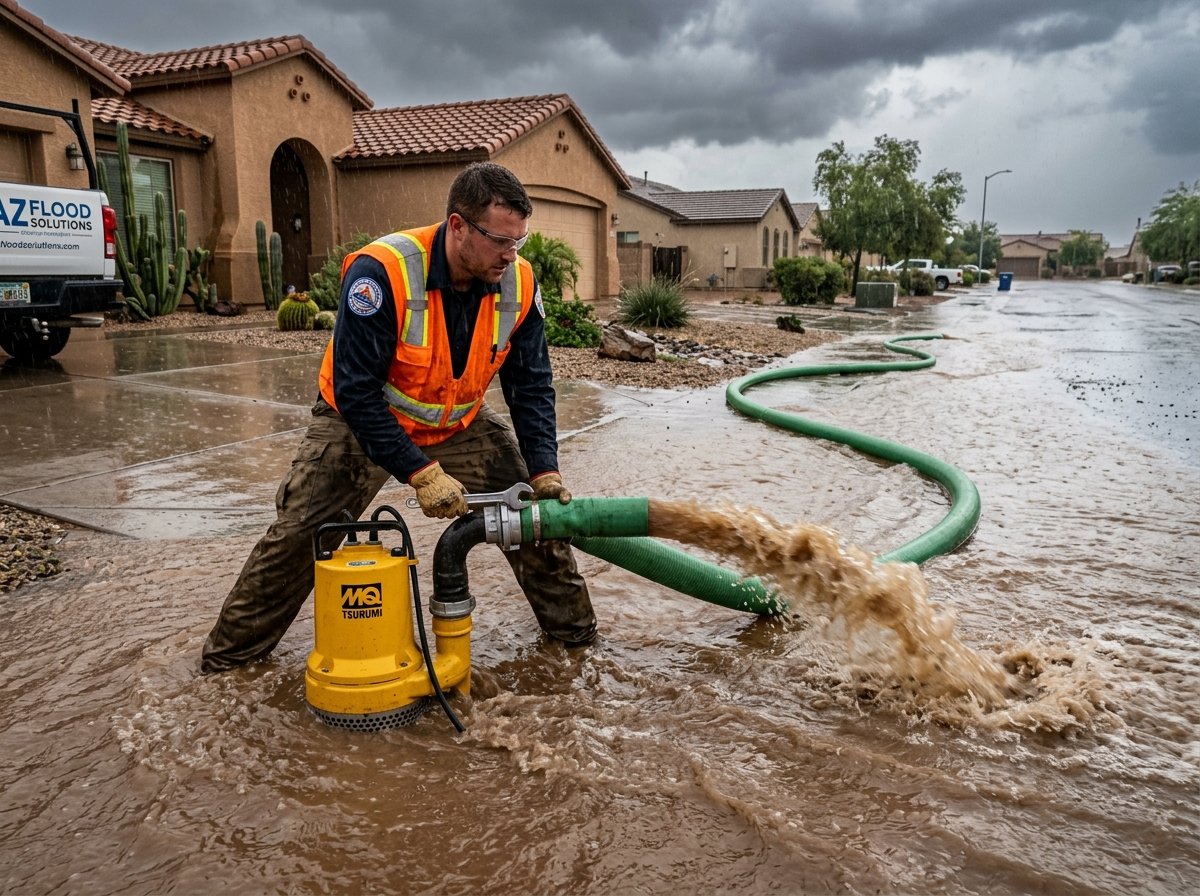
Calibrated industrial extraction and daily moisture logging across the Phoenix metro.
If you observe any of these conditions, moisture has likely penetrated beneath surface materials into wall cavities or sub-slab foundations.
Taking these four safety steps immediately prevents secondary microbial growth and structural saturation while our certified crew is in transit.
Shut off the main water valve or fixture angle-stop clockwise to immediately halt incoming water pressure.
Switch off electrical breakers powering submerged outlets or damp wall cavities before entering.
Place foil or wood blocks beneath furniture legs; lift curtains, electronics, and rugs off damp flooring.
Contact our 24/7 Valley dispatch at (602) 755-0251 for rapid extraction and moisture mapping.
Every phase is executed under strict IICRC standards with calibrated instruments and documented daily psychrometric readings.
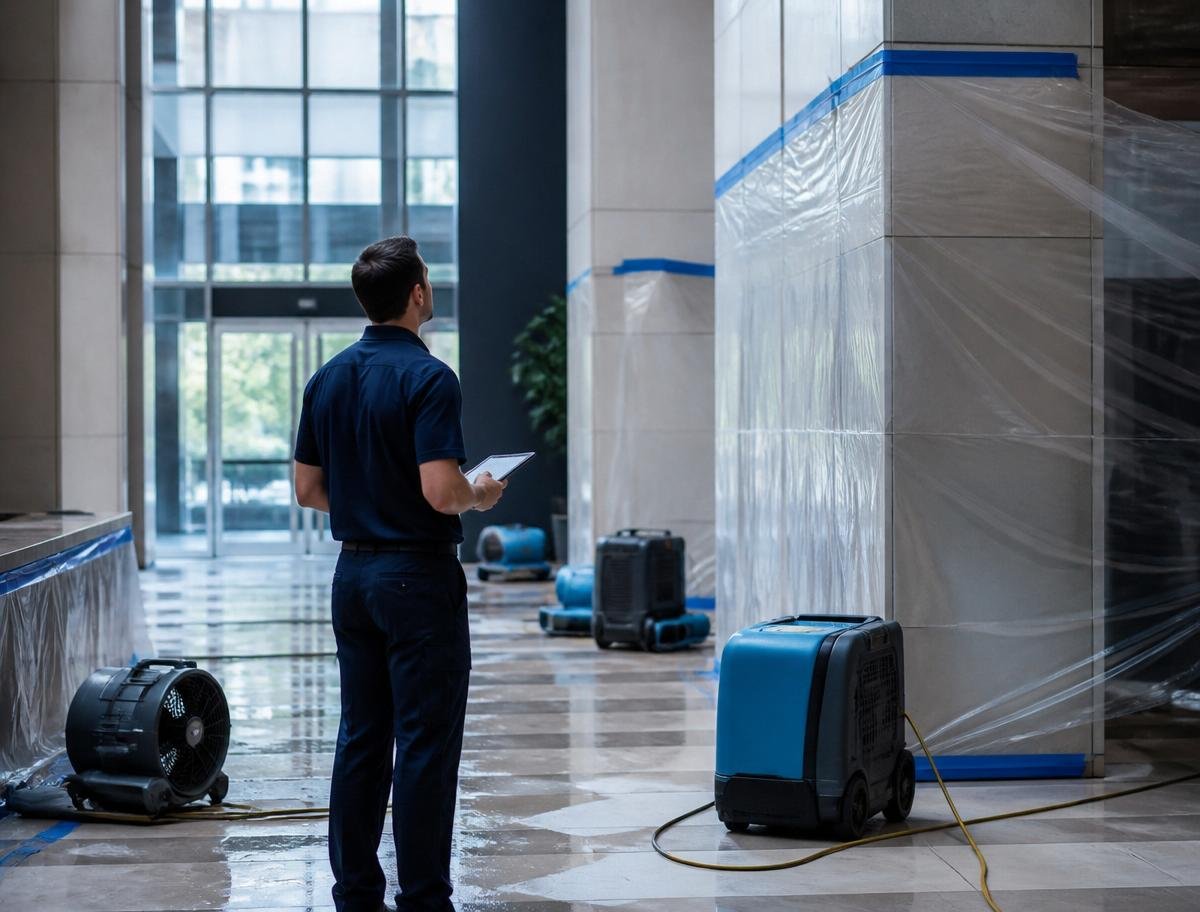
Daily thermal mapping & psychrometric records ensure complete structural dry-out before reconstruction.
Truck-mounted and portable extractors remove standing water from any surface — carpet, hardwood, tile, concrete slab.
Thermal imaging and pin/pinless meters identify hidden moisture in walls, cavities, and subfloor before it becomes a mold problem.
Commercial air movers and LGR dehumidifiers sized to the affected area — not a rental fan pulled off a shelf.
Furniture blocked, lifted, or removed so it isn't sitting in wet carpet while the room dries.
Moisture readings logged every 24 hours. Equipment repositioned as needed until the structure hits dry standard.
From initial thermal triage to final dry standard verification, here is how our certified technicians handle your loss.
We guide you on shut-off and safety before the truck even arrives, then dispatch the nearest crew.
Full walkthrough, moisture mapping, and Category 1/2/3 classification documented on-site.
Standing water removed with commercial-grade pumps and extractors, starting with the highest-risk areas.
Air movers and dehumidifiers calibrated to the affected square footage and material types.
Readings logged every 24 hours; equipment repositioned until the structure reaches documented dry standard.
Confirmation moisture readings, before/after photos, and a full written report delivered to you.
Every job runs on metered, documented drying — not guesswork. This is what arrives on the truck.
High-volume pump-out that removes standing water before it wicks into subfloor and drywall.
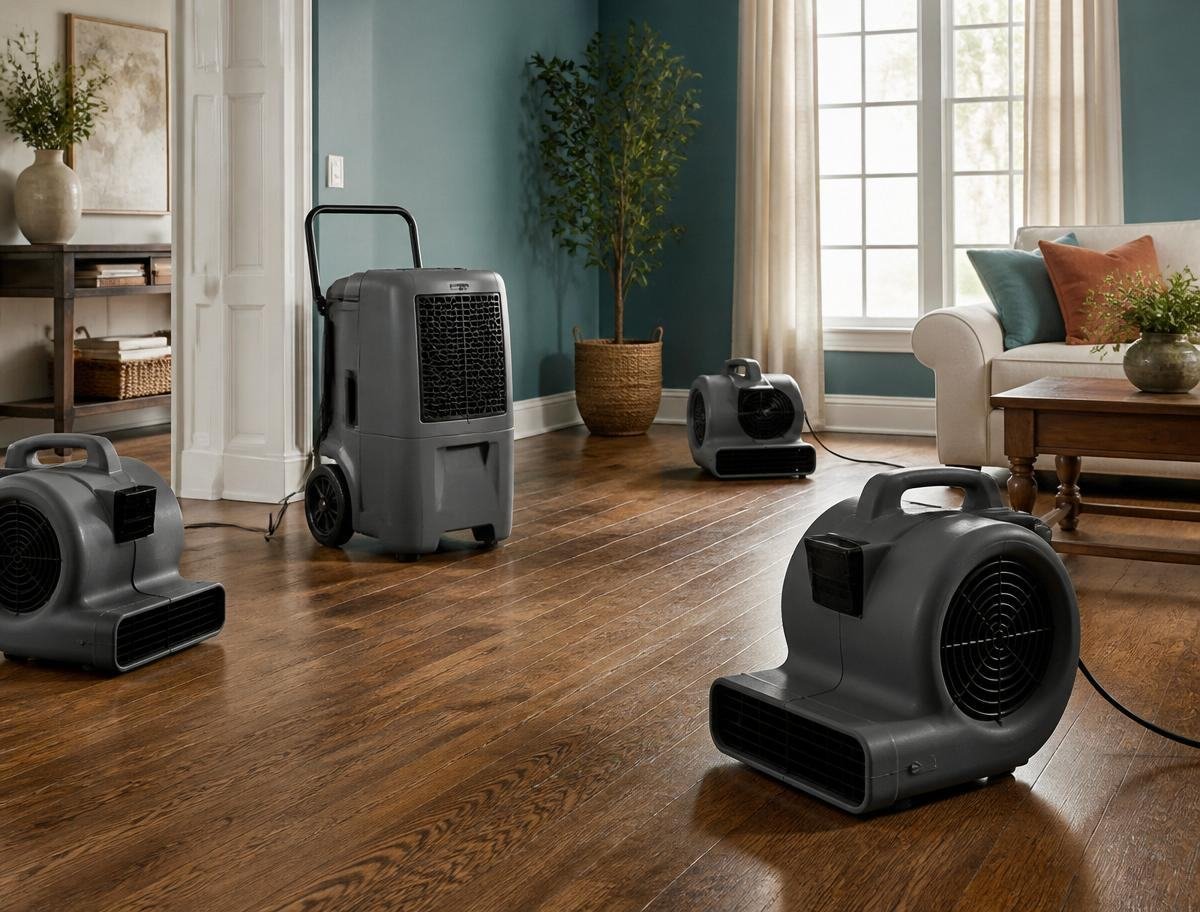
Directed airflow across wet materials to accelerate evaporation from framing and flooring.
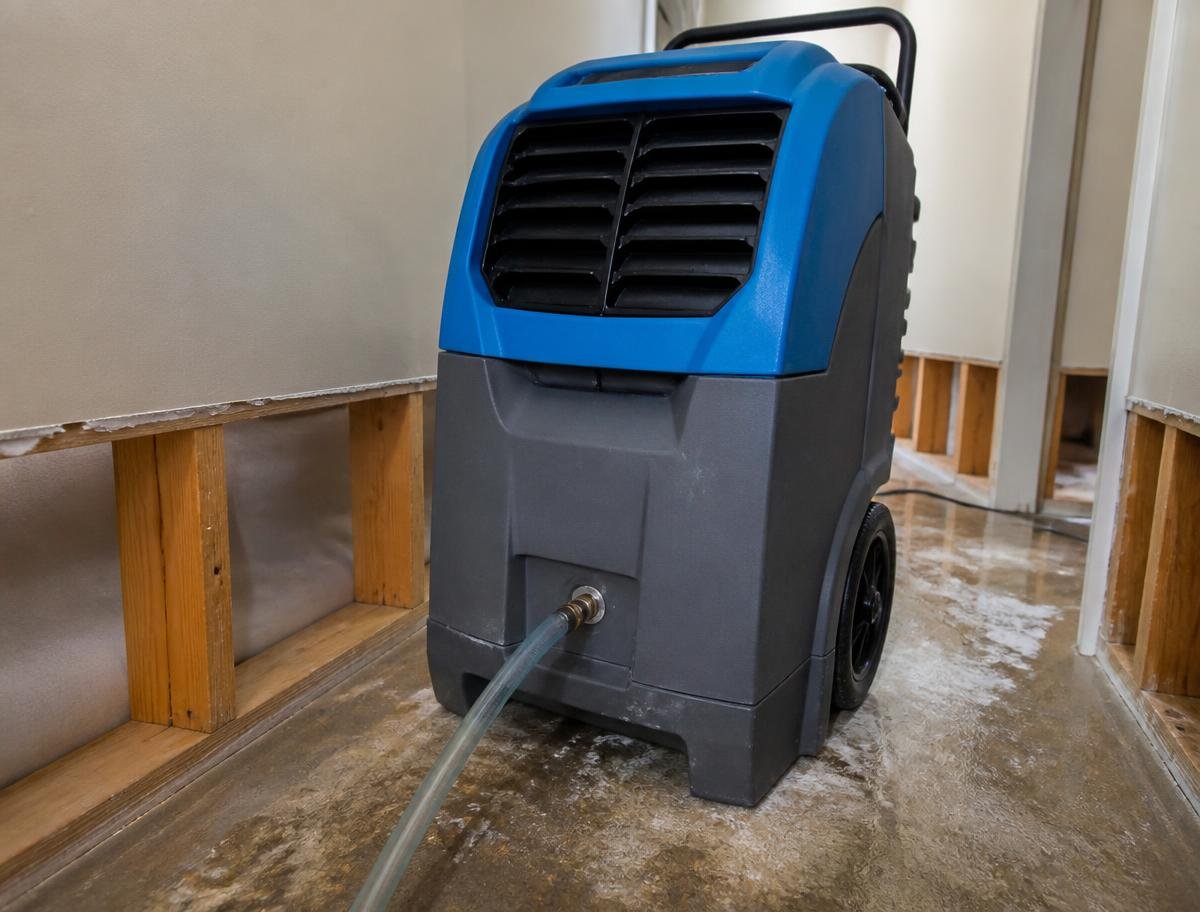
Low-grain refrigerant units pull the evaporated moisture back out of the air instead of moving it around.
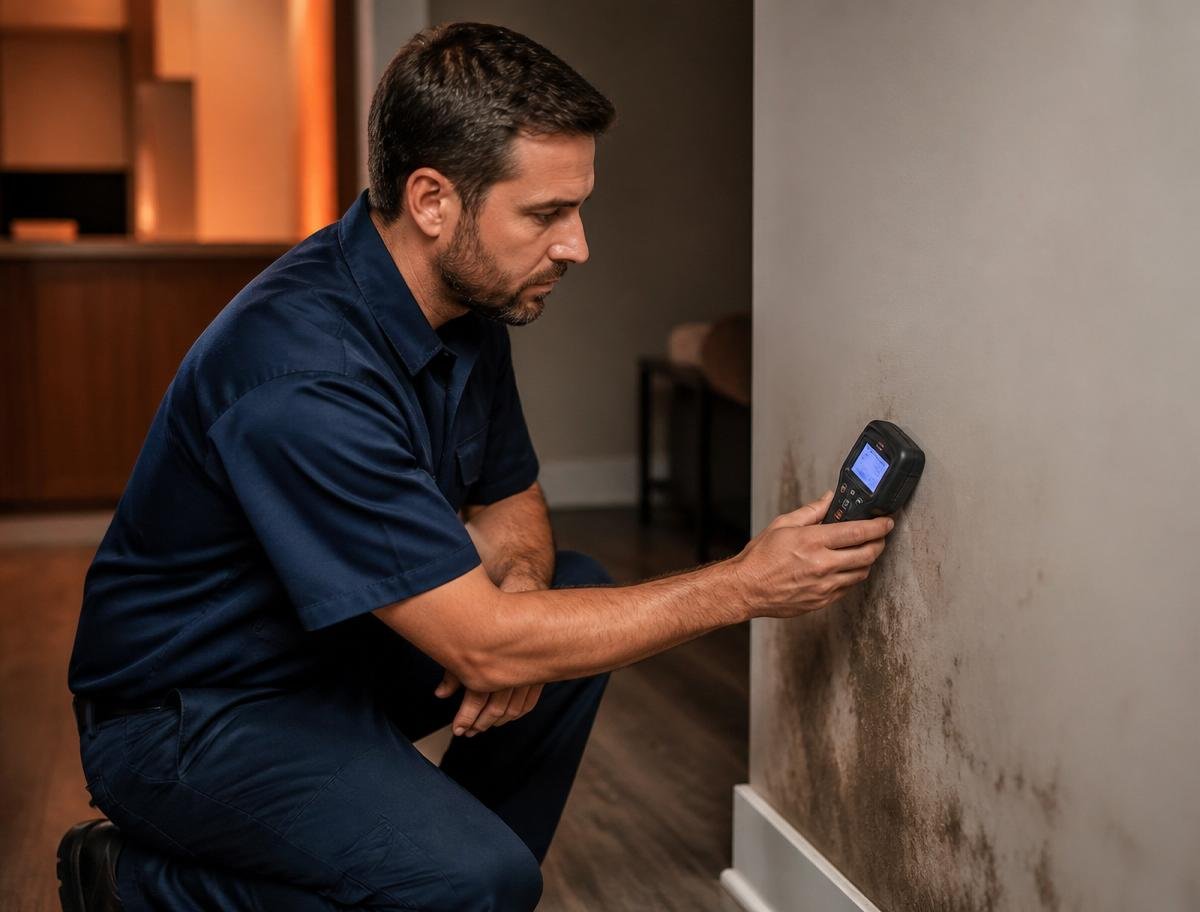
Daily documented readings that prove when a structure is actually dry — not just dry to the touch.
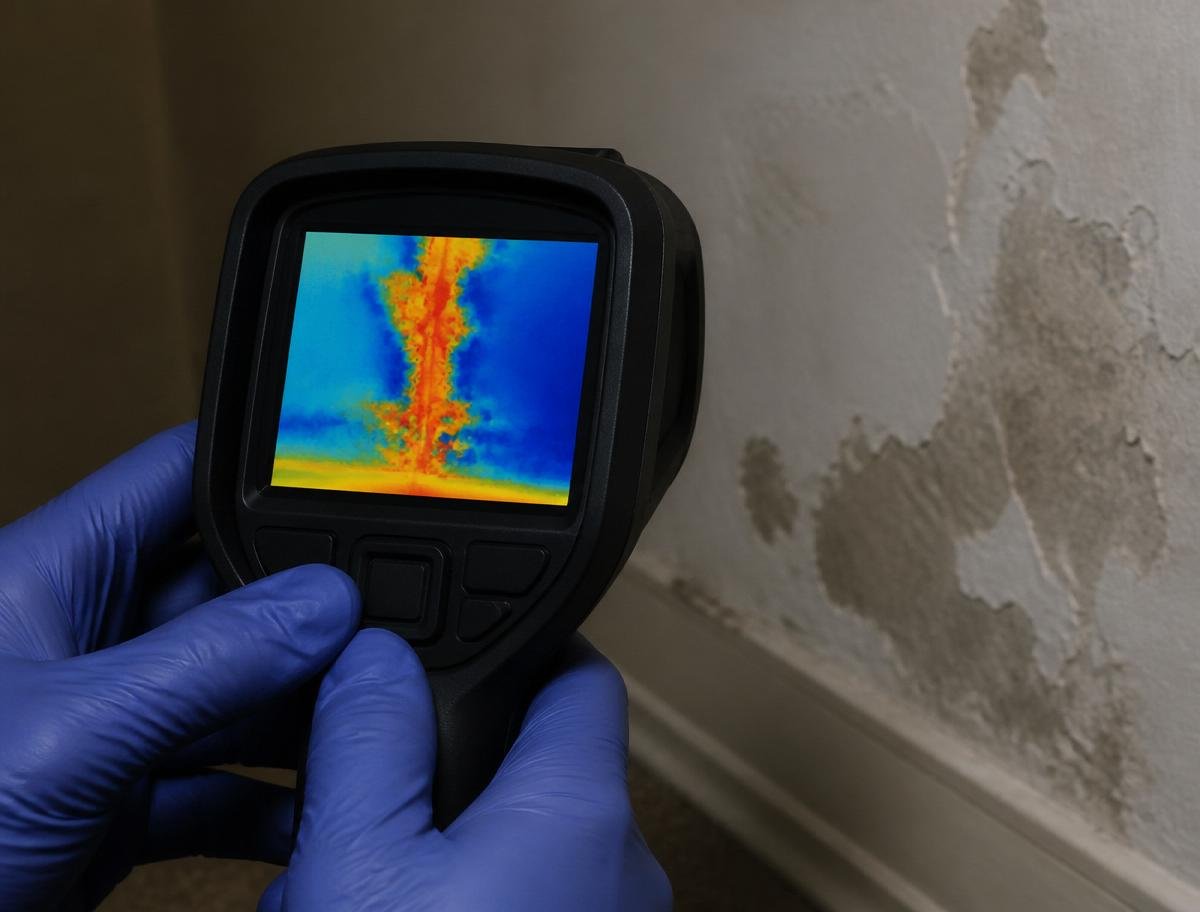
Infrared scanning locates water tracking behind walls and under cabinets before demolition starts.
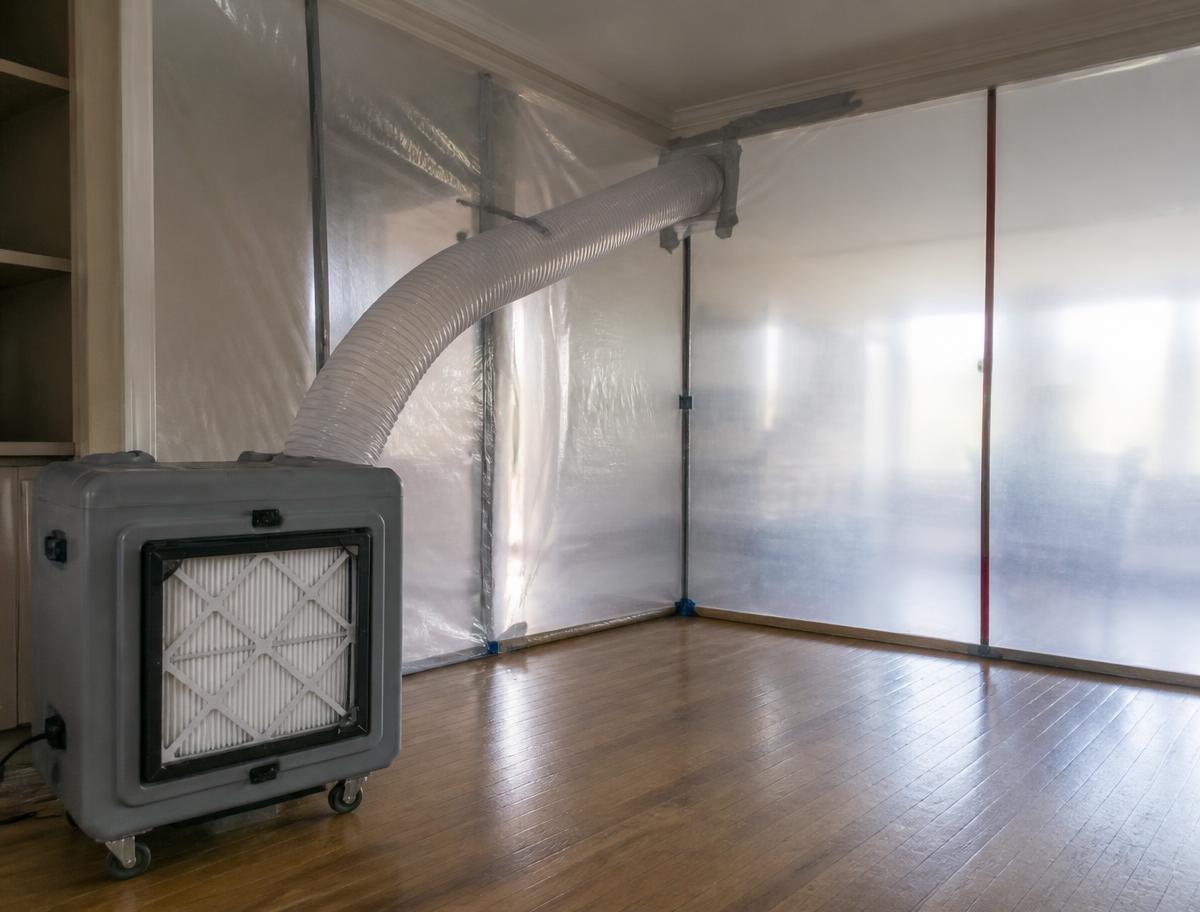
Negative-air containment that keeps spores and contaminants out of the rest of the property.
Why consumer wet-vacs and box fans cannot achieve the psychrometric lift required to prevent structural decay and mold growth.
| Extraction Metric | AZ Water Damage Fleet (IICRC S500) | Consumer Shop-Vac / Rental |
|---|---|---|
| Vacuum Lift / Water ColumnPulls bound water out of carpet pad, concrete pores, and subfloors. | 14–16 Inches of Mercury (Hg) High-Lift Vacuum | 1–2 Inches (Surface-only suction) |
| Extraction SpeedPrevents standing water from migrating 24+ inches up drywall studs. | Up to 500–1,200 Gallons Per Hour | 5–10 Gallons (Manual tank dumping) |
| Subfloor & Cavity ExtractionDries tile and subflooring in-place without destructive demolition. | Weighted suction rovers & sub-slab vacuum mats | None (Surface skimming only) |
| Air Filtration & Bio-ContainmentProtects indoor air quality and prevents secondary mold colonization. | HEPA 500 CFM air scrubbers + antimicrobial wash | Exhausts contaminated bio-aerosols back into room air |
| Verification ProtocolProvides defensible, certified S500 dry standard proof. | FLIR thermal imaging & daily digital moisture logging | Visual / touch check (Leaves 60%+ hidden moisture behind) |
A common misconception across the Valley is that 110°F summer heat will naturally dry a flooded room. In reality, outdoor heat causes surface materials to dry too quickly, forming a vapor barrier that locks moisture deep inside wall cavities, beneath tile subfloors, and inside baseboards.
During monsoon season (July–September), outdoor humidity spikes, meaning opening windows pumps moisture-laden air directly into wet building assemblies. Only balanced Low-Grain Refrigerant (LGR) dehumidification and high-velocity vortex airflow can extract bound water vapor down to <12% equilibrium moisture content.
Every comparison below is the exact same room from the identical camera angle — photographed upon initial emergency arrival versus after professional extraction and structural drying.
Drag · or use ← →
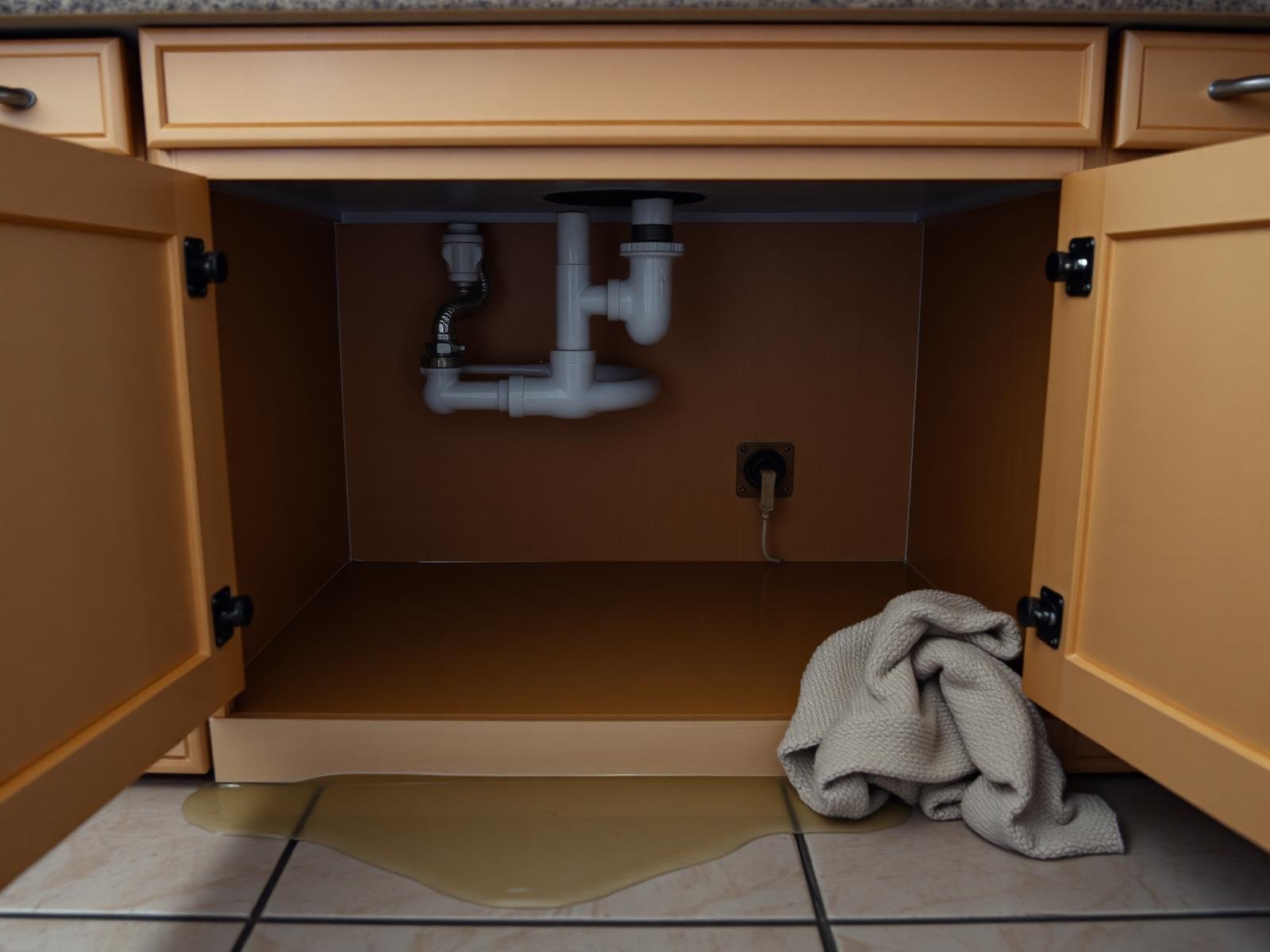
Gilbert, AZ — Braided supply-line burst overnight; rapid water extraction, subfloor moisture mapping, and structural drying.
Source, water category, and building assembly determine the work—not a one-size-fits-all equipment package. These are common Phoenix-metro situations our moisture mapping is designed to trace.
A blocked air-conditioning condensate line can wet insulation and ceiling drywall before staining appears below. We check the attic source, ceiling cavity, and connected walls instead of treating only the visible spot.
Water damage response in Phoenix, AZ →Dishwasher, refrigerator, water-heater, and washing-machine lines can spread water beneath cabinets and floating floors. Fast extraction is paired with cabinet-to-slab moisture mapping.
Water damage cleanup in Chandler, AZ →Wind-driven rain can enter around roof penetrations, doors, or low exterior openings. We evaluate the water category, extract affected rooms, and inspect concealed wall and flooring assemblies.
Storm-related water cleanup in Scottsdale, AZ →We provide an itemized, line-by-line written scope of work based on exact thermal moisture mapping before any equipment is powered on. You receive clear flat-rate and per-square-foot pricing with zero surprise demolition fees.
Before you call anyone, it's fair to ask who actually walks through your door. Here's the crew, the equipment they carry, and the person who stays accountable for your job.
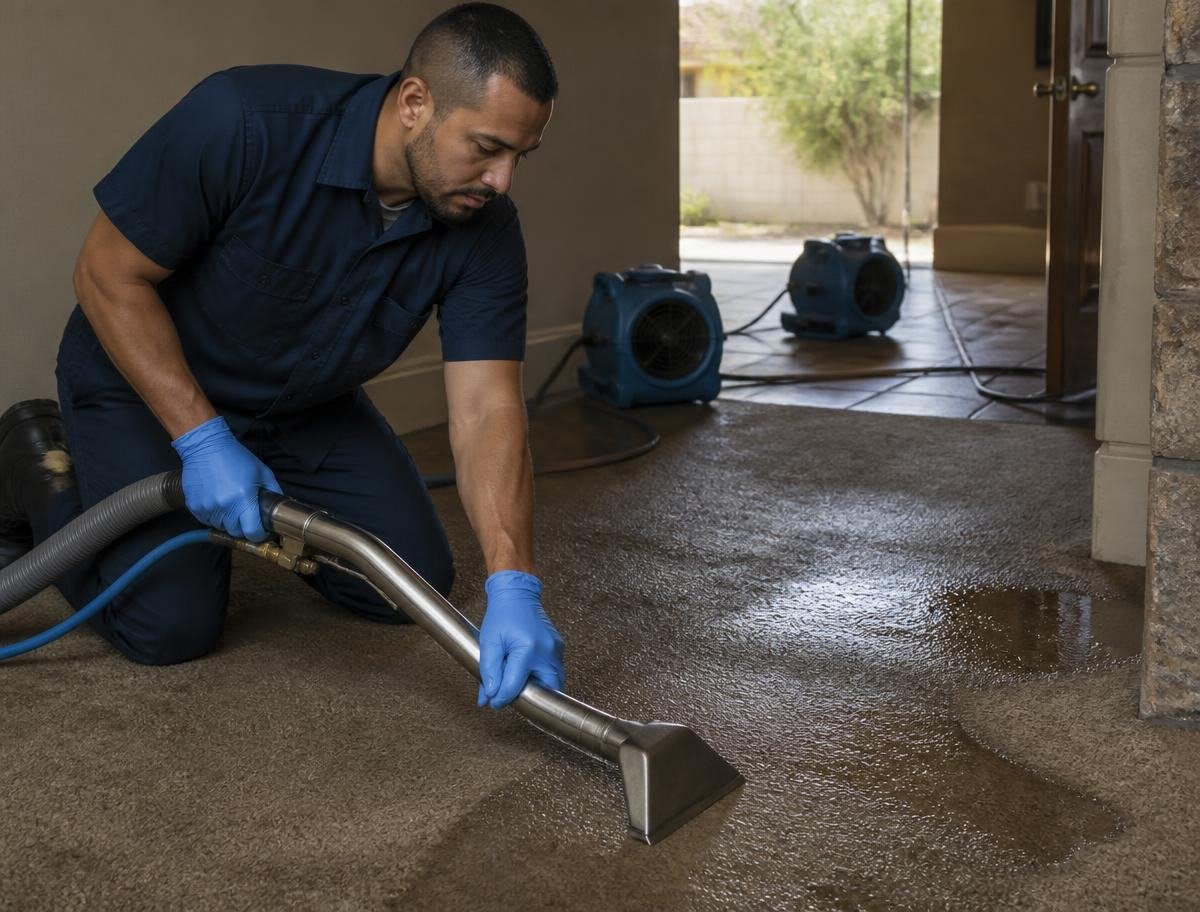
On site · Extraction in progress
The people who arrive are the people who finish the job — IICRC-trained, in uniform, with metered readings logged at every visit.
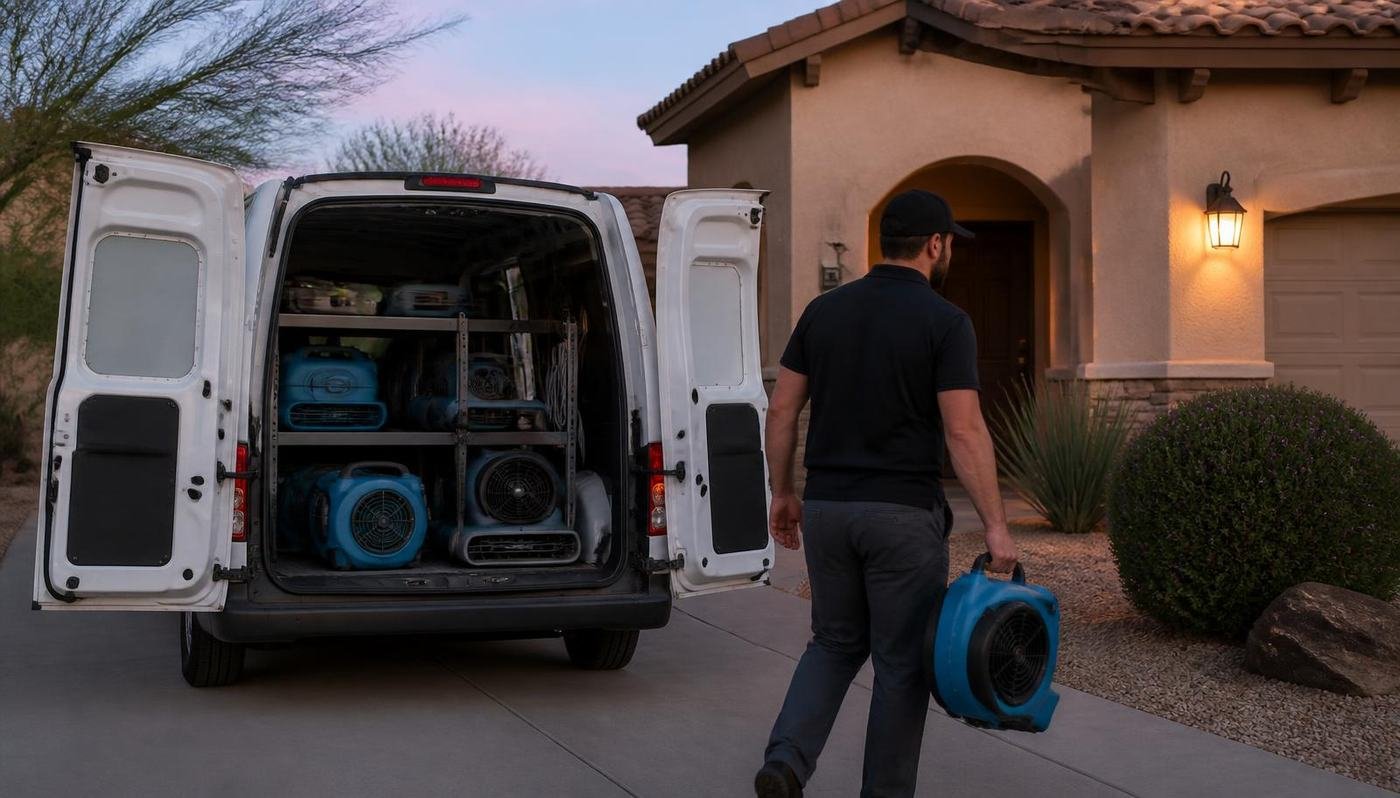
Dispatch · Stocked for same-day work
Extractors, air movers, dehumidifiers, and containment ride with every crew, so mitigation starts on the first visit instead of the second.
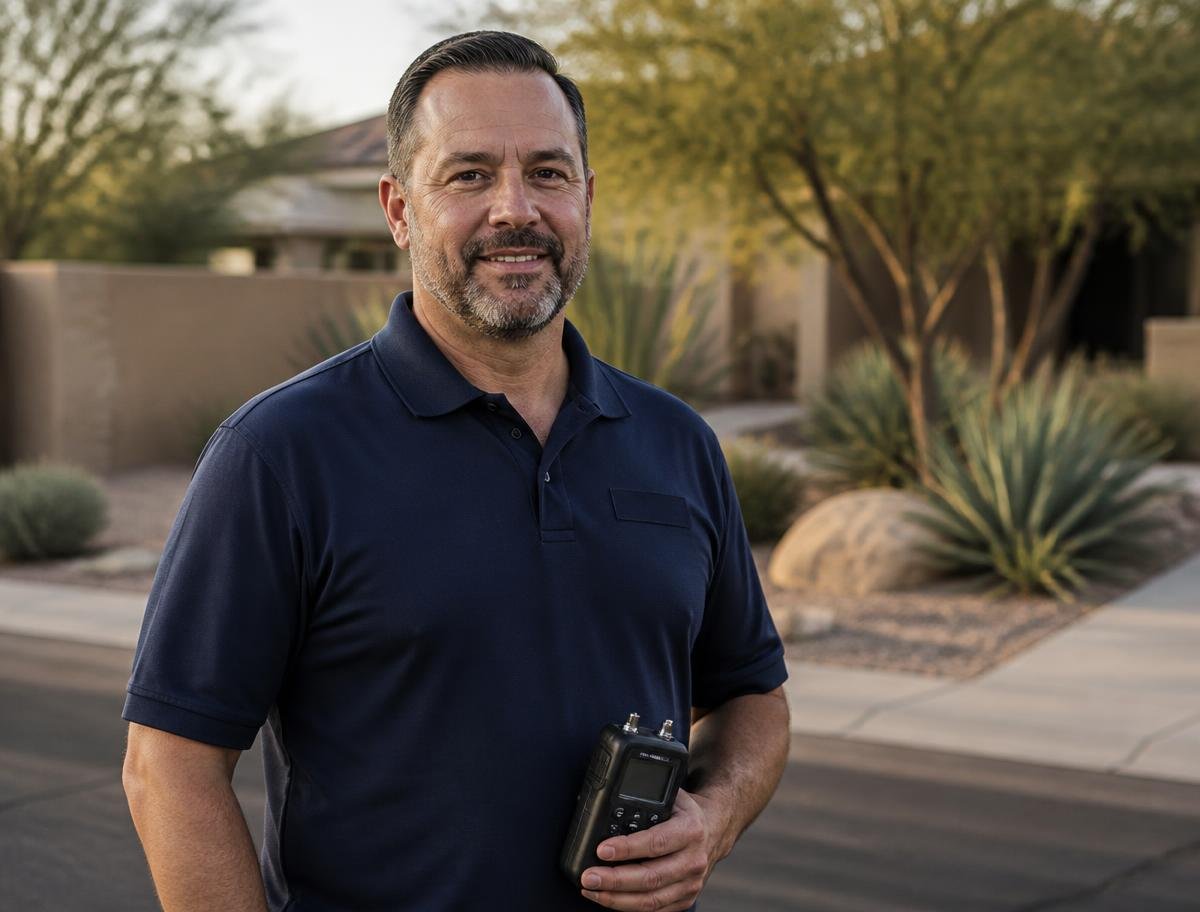
Crew lead · Single point of contact
A crew lead walks the property with you, explains the drying plan in plain language, and stays your contact through final sign-off.
When flooding or a pipe leak hits your home or business, the water damage restoration company you hire determines whether you get rapid, documented structural drying or weeks of secondary mold headaches. Compare our IICRC S500 certified standards to typical franchise outfits:
Real reviews from real homeowners across Phoenix, Scottsdale, Mesa, Chandler, and Gilbert.
Need emergency water damage restoration or cleanup near you? Our certified extraction and structural drying crews stage 24/7 across Central Phoenix, the East Valley, and the West Valley for rapid ~42-minute response.
We serve 12 cities across the Phoenix metropolitan area, organized into three regions. A tappable list follows the map; selecting a city highlights its marker and re-centers the map.
Central Phoenix
East Valley
West Valley
Prefer the full directory? Jump to the city list below.
Continuous 24/7 staging across downtown Phoenix, midtown, and north metro corridors.
Dedicated East Valley extraction trucks dispatched immediately across Mesa, Tempe, and Scottsdale.
Complete coverage across rapidly expanding West Valley residential subdivisions and commercial plazas.
Also providing 24/7 response to Cave Creek, Carefree, Fountain Hills, Anthem, New River, Laveen, Tolleson, Queen Creek, San Tan Valley, Apache Junction, Paradise Valley, and Wickenburg.
Don't see your specific city or zip code listed? Call our live dispatcher at (602) 755-0251 — we cover the entire Valley.
Extraction is removing standing water. Mitigation is everything after — drying, dehumidification, and monitoring — so damage doesn't get worse. Most jobs need both.
Full extraction, drying, and rebuild under one crew.
Learn more →Full rebuild, drywall, baseboard, and flooring restoration under ROC #331127.
Learn more →Non-invasive FLIR infrared leak pinpointing and moisture mapping.
Learn more →Pump-out, drying, and sanitation for flooded lower levels.
Learn more →IICRC-standard Category 3 cleanup, contained and disinfected.
Learn more →Certified containment, removal, and post-remediation verification.
Learn more →Our complete guide to IICRC standards, categories, and timelines.
Read full guide →Rapid standing-water removal and structural dry-down.
See mitigation details →Certified Category 3 biohazard removal and disinfection.
See sewage process →Certified containment and source removal (IICRC S520).
See mold protocols →Specialized below-grade extraction and airflow management.
See basement services →Soot removal, deodorization, and structural repair.
See fire services →Emergency tarping and monsoon-driven intrusion repair.
See storm services →Foundation-up drying and flooring repair for sub-slab leaks.
See slab leak services →High-volume extraction and structural drying for mass water.
See flood services →Homes, condos, and rentals in Water Extraction & Mitigation — end-to-end response.
See residential →Offices, retail, and industrial in Water Extraction & Mitigation — minimizing downtime.
See commercial →One direct call. Certified IICRC technicians on site in about 45 minutes across the Phoenix metro. Upfront written scopes and direct insurance billing.