A 1/4-inch plastic refrigerator line connected to 80+ PSI water pressure is one of the single biggest flood hazards in an Arizona home. Because leaks occur in dark, enclosed alcoves behind heavy appliances, they often go unnoticed for weeks, rotting subfloors, ruining hardwood, and breeding toxic mold. Learn the top causes, emergency shut-off steps, and prevention upgrades.
Last updated:Reading time:13 minStandards:IICRC S500 Verified
Kitchen Refrigerator Flood Mitigation: Emergency Water Line Containment & Subfloor Dehumidification · Phoenix Metro
Table of contents▾
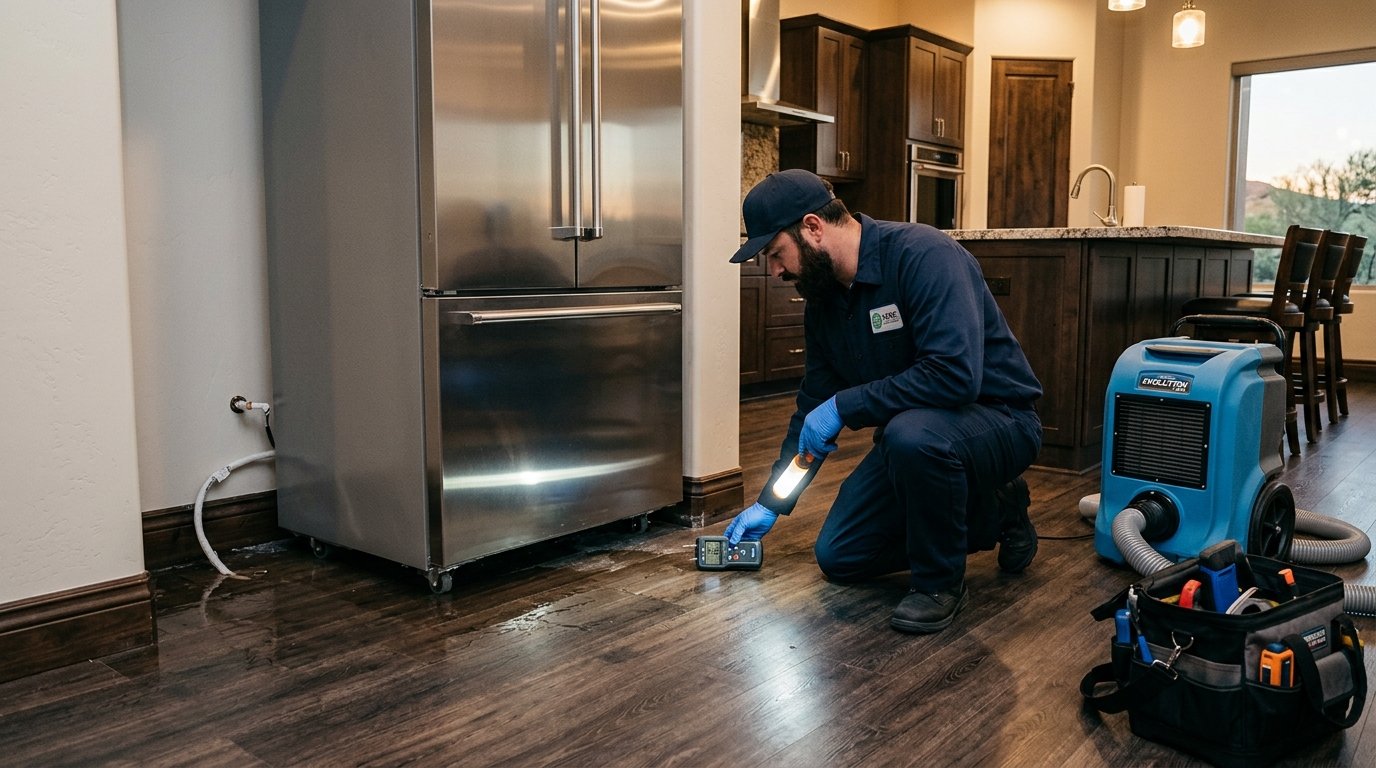
If your refrigerator or ice maker line is leaking, carefully slide the unit forward, turn off the dedicated shut-off valve located on the wall behind the fridge or under the sink, and unplug the appliance power cord. In Arizona, builder-grade 1/4-inch plastic polyethylene lines become brittle and crack from condenser heat and high municipal water pressure (often 80–110+ PSI). Because water pools invisibly inside the alcove, moisture rapidly travels beneath adjacent hardwood or vinyl plank flooring and wicks up drywall studs. Immediate professional extraction and IICRC structural drying are required within 24 to 48 hours to prevent severe subfloor decay and toxic black mold colonies.
The 6 Most Common Causes of Ice Maker & Refrigerator Leaks
Refrigerator water supply and ice dispensing systems contain several vulnerable connections. Here are the 6 primary failure mechanisms:
1Chafed or Pinched Plastic Polyethylene Tubing
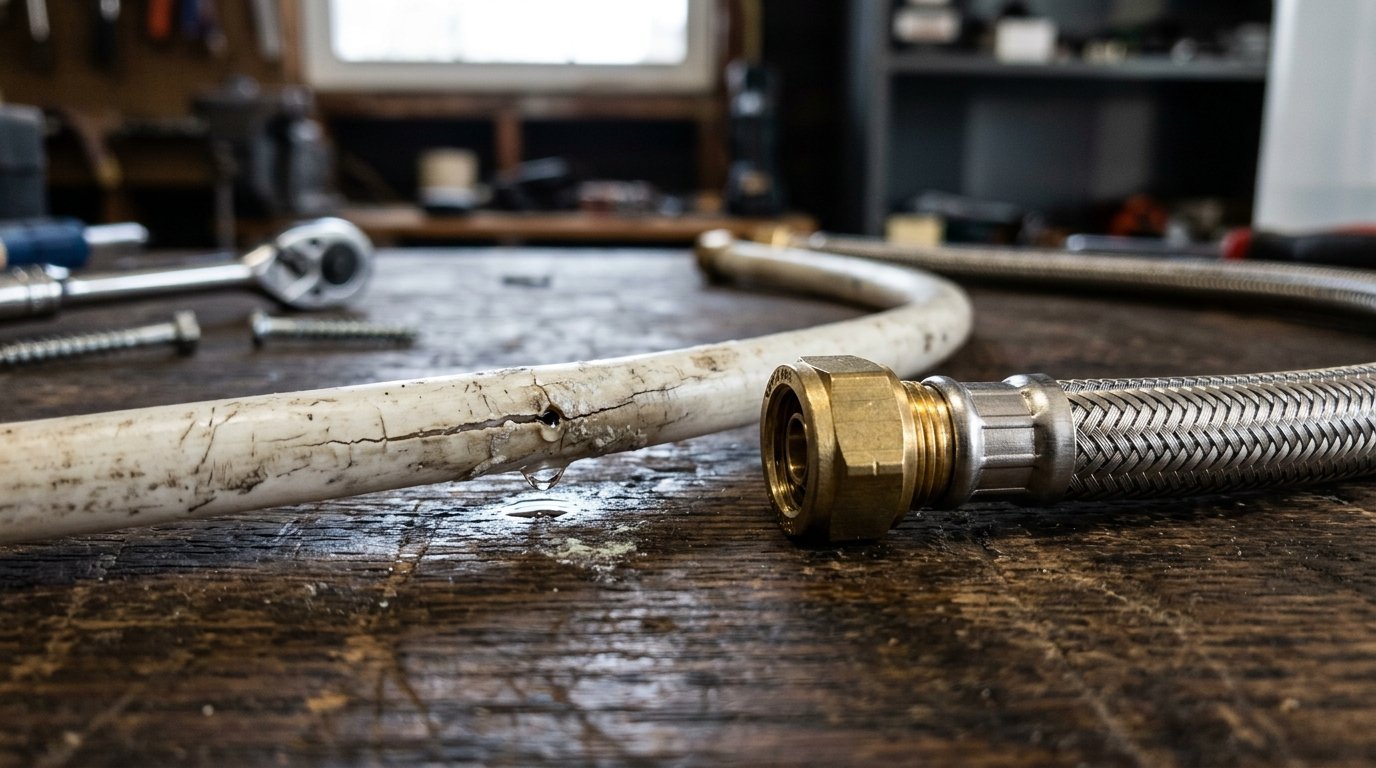
Cheap 1/4-inch white plastic tubing supplied with most installation kits. Heat from the rear condenser coil makes the plastic brittle. When the fridge vibrates or is shoved back, the line pinches against the baseboard or metal chassis, wearing a microscopic pinhole spray.
2Corroded Piercing Saddle Clamp Valves
A needle valve clamped onto a copper supply pipe. In Arizona's hard water, calcium scale eats away at the small rubber sealing gasket, causing slow continuous weeping inside wall cavities or beneath the kitchen floor.
3Failed Dual Water Inlet Solenoid Valve
The electronic valve at the bottom rear of the fridge that directs water to the ice maker and door dispenser. Hard water minerals cause the valve body to crack or the solenoid to stick open, allowing water to spray continuously into the rear drip pan or onto the floor.
4Clogged or Frozen Defrost Drain Line
During automatic defrost cycles, melted frost drains into an evaporation pan under the fridge. If the small drain tube becomes blocked with ice or algae, defrost water backs up and pools inside the freezer or spills out under the front crisper drawers.
5Kinked Copper Coiled Lines with Loose Ferrules
Coiled soft copper lines can kink easily when pushing the refrigerator into place. Work-hardened copper cracks at the kink, or the brass compression ferrule nut loosens from ongoing compressor vibration.
6Cracked Ice Maker Mold or Fill Tube Misalignment
The internal ice maker mold body or fill tube nozzle can crack from freezing expansion or freeze solid with mineral scale, causing incoming fill water to spray over the back of the freezer and run down interior wall channels.
Material Science / Plumbing SafetySupply Line Material Comparison: 1/4-inch polyethylene plastic lines are responsible for 85% of refrigerator flood claims due to heat embrittlement, while braided stainless steel provides 1,500+ PSI burst protection.
The Hidden Threat: Subfloor Rot & Toxic Black Mold
Because refrigerators sit enclosed in tight alcoves, a water line leak causes extensive damage long before anyone notices:
Hardwood Floor Ruin: Water travels under baseboards into finished hardwood, causing severe cupping, crowning, and buckling that extends across dining rooms and open floor plans.
The Waterproof LVP Mold Trap: Trapped moisture under luxury vinyl plank (LVP) flooring has zero escape path on concrete slabs, creating an airtight incubator for toxic mold.
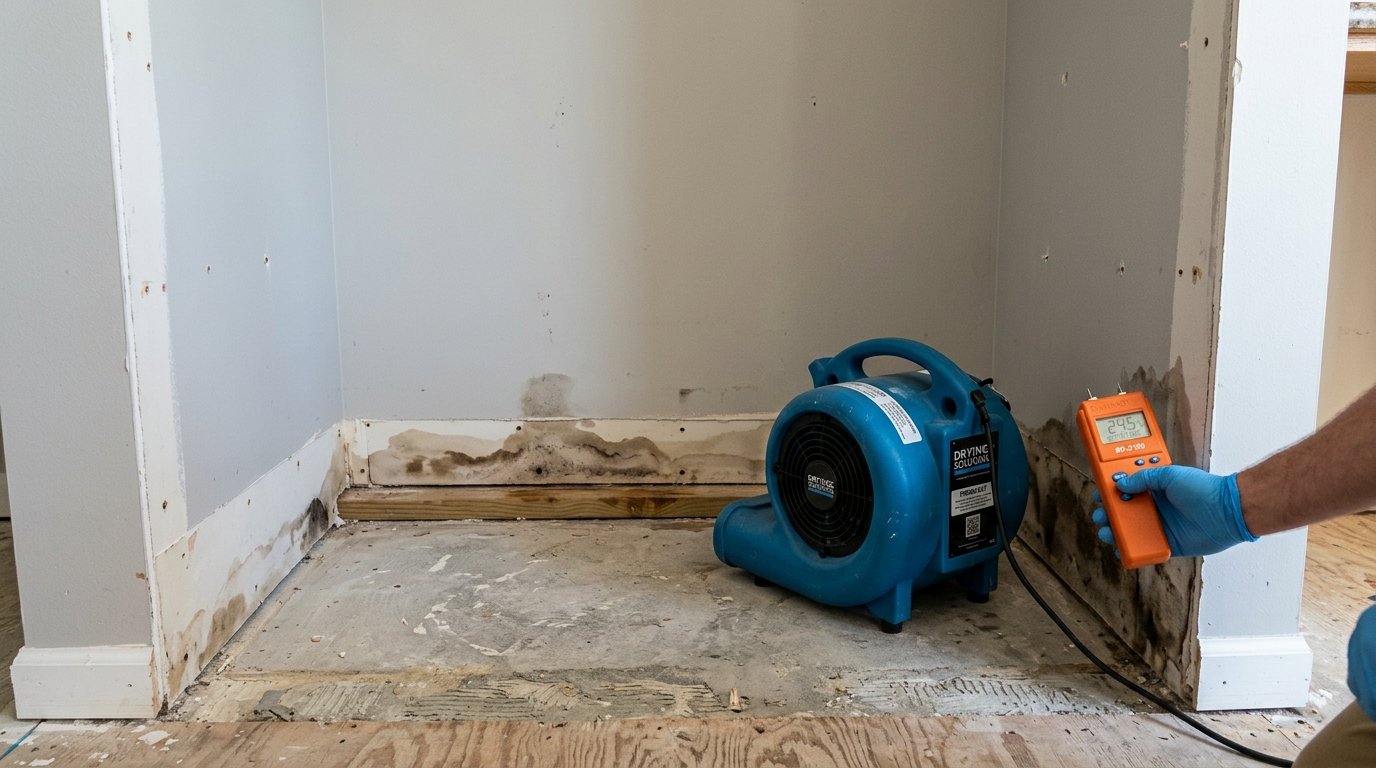
Drywall Capillary Wicking: Water standing in the alcove wicks 12 to 24 inches up interior wall drywall, rotting sill plates and feeding mold colonies behind cabinets and kitchen appliances.
What to Do Right Now: 5-Step Emergency Triage Sequence
If water is leaking or spraying from your refrigerator or ice maker line, execute this immediate containment sequence:
1
Step 1: Shut Off the Refrigerator Water Supply Valve
Carefully slide the refrigerator forward. Look for the small valve in the recessed wall box or under the adjacent kitchen sink. Turn the brass ball valve handle 90 degrees or turn the multi-turn handle clockwise until tight. If the valve is seized, shut off the home's main water meter valve.
Step 2: Isolate Electrical Power (Avoid Shock Hazards)
Unplug the refrigerator power cord from the wall receptacle. If standing in pooled water, do not reach behind the machine — switch off the dedicated kitchen appliance circuit breaker in your main electrical panel.
3
Step 3: Extract Standing Surface Water in the Alcove
Use a wet/dry shop-vac and towels to remove pooled water from the floor, rear wall channel, and surrounding cabinetry before liquid penetrates deeper into subfloors.
4
Step 4: Remove Perimeter Baseboards to Vent Moisture
Carefully pry off baseboards in the refrigerator alcove and along wet kitchen walls. This vents trapped humidity and reveals whether water has wicked into wall drywall or traveled under flooring.
5
Step 5: Call 24/7 Professional Structural Drying
Call our 24/7 emergency water restoration team for infrared moisture mapping, subfloor cavity drying, and commercial LGR dehumidification before toxic mold colonies form.
Structural Mitigation / Moisture ExtractionAlcove Moisture Extraction: Refrigerator line leaks funnel along wall cavities into adjoining rooms. Technicians use thermal imaging and LGR dehumidifiers to extract water before mold colonizes drywall studs.
How to Upgrade & Prevent Refrigerator Line Leaks (5 Proactive Steps)
Upgrading your refrigerator water supply connection prevents catastrophic kitchen water losses:
Replace Saddle Valves with a Recessed Wall Box: Have a licensed plumber replace corroded piercing saddle valves with a dedicated 1/4-turn brass ball valve inside a recessed ice maker outlet box.
Place a Smart Water Leak Sensor Disc: Place an inexpensive ($15–$30) WiFi or audible leak sensor disc directly on the floor behind the refrigerator.
Maintain a 2- to 3-Inch Wall Clearance: Never push the refrigerator completely flush against the back drywall. Leaving a small clearance prevents kinking and heat buildup.
Replace Internal Water Filters Every 6 Months: Clogged filters increase internal backpressure and cause sediment to foul the dual inlet solenoid valve.
24/7 Valley-Wide Emergency Response for Refrigerator Leaks
When an ice maker line fails, fast response prevents ruined hardwood and toxic mold. Our IICRC-certified crews arrive within 30 to 45 minutes across the entire Valley:
Why are refrigerator and ice maker line leaks so destructive in Arizona homes?
Unlike washing machines or dishwashers that only pressurize during wash cycles, refrigerator water lines are under continuous 24/7 municipal water pressure (often 80–110+ PSI in the Phoenix Valley). Furthermore, because the connection is hidden behind a heavy appliance in a dark alcove, a slow drip or pinhole spray can leak 10 to 30 gallons daily for weeks, silently rotting subfloors, warping hardwood, and breeding toxic black mold before water is ever spotted in the kitchen.
What should I do immediately if water is leaking from behind my refrigerator?
Follow these four steps immediately: (1) Pull the refrigerator out gently (avoiding yanking the water line) and turn off the dedicated 1/4-turn shut-off valve located on the wall behind the fridge or under the kitchen sink; (2) If the valve is stuck or missing, shut off the home's main water meter valve; (3) Unplug the refrigerator power cord to eliminate electrical shock hazards; (4) Extract surface water with a wet/dry shop-vac and call a professional restoration team for thermal moisture mapping.
Why do plastic ice maker water lines crack and fail so often?
Builder-grade 1/4-inch white plastic (polyethylene) tubing becomes brittle over time due to heat radiating from the refrigerator's rear condenser coils. Every time the refrigerator vibrates during compressor cycles or is pulled out for floor cleaning, the plastic rubs against the wall or metal frame, creating friction pinholes or kink fractures.
What is a saddle valve, and why is it dangerous for refrigerator lines?
A saddle valve is a cheap needle-clamp valve clamped directly onto a copper pipe that pierces a small hole to feed the fridge line. In Arizona, hard water calcium deposits rapidly corrode the needle seal and rubber gasket, making saddle valves notorious for sudden catastrophic bursts and seized handles that cannot be closed during an emergency. Plumbing codes in many municipalities now require dedicated 1/4-turn ball valves in recessed outlet boxes.
Can water-damaged hardwood or vinyl flooring under a refrigerator be saved?
Yes, if professional mitigation begins within 24 to 48 hours. Using directional air movers, negative-pressure vacuum mats (Injectidry), and commercial LGR dehumidifiers, technicians pull trapped moisture upward through plank seams and out of the concrete slab before adhesive delaminates or mold colonies form.
How can I upgrade my refrigerator line to prevent future leaks?
Four critical upgrades: (1) Replace plastic or copper tubing with high-grade braided stainless steel flexible hoses with brass compression nuts; (2) Install a braided hose equipped with an automatic flood-shutoff valve (which trips if high flow is detected); (3) Replace piercing saddle valves with a recessed wall box featuring a brass ball valve; (4) Place a $15 smart battery-powered water sensor disc behind the refrigerator.
Does homeowners insurance cover refrigerator ice maker line leaks?
Yes, standard homeowner insurance policies cover the resulting water damage from sudden and accidental pipe ruptures (including emergency water extraction, drywall excision, floor drying, and cabinet repair). However, policies typically exclude long-term neglected leaks or the cost of repairing the refrigerator appliance itself. Our team provides date-stamped thermal moisture logs to substantiate your claim with your insurance adjuster.
How much does it cost to clean up and restore water damage from an ice maker leak in Arizona?
Emergency extraction, baseboard removal, and structural cavity dehumidification for a contained kitchen alcove typically cost between $1,200 and $3,500. If water has migrated across adjoining dining rooms, warped hardwood floors, or saturated kitchen cabinetry, full structural restoration averages $3,500 to $9,000+.
About the author
AZ Water Damage Restoration Team
IICRC-certified restoration technicians · Phoenix metro
Written and fact-checked by the licensed crew that runs the trucks — the same technicians who take moisture readings, set drying chambers to the IICRC S500 standard, and answer the phone at 2 a.m. across the Phoenix metro.
Licensed Arizona contractor — AZ ROC #331127 (KB-2)