Tier 011 to 2 Days
Minor Contained Leak
$500 – $1,500
Category 1 · Clean WaterSingle-room supply line drips, minor sink overflows, or small localized drywall dampness with quick dry-out.
Scope Severity25%
When flooding strikes anywhere in Maricopa County, our licensed water damage restoration team delivers rapid 24/7 water extraction, thermal moisture mapping, and structural drying across all 12 Valley municipalities. Call now for live ~42-minute emergency dispatch.
45-Minute Valley-Wide Emergency Dispatch Guarantee
Live dispatcher answered in < 60 seconds · No automated answering loops
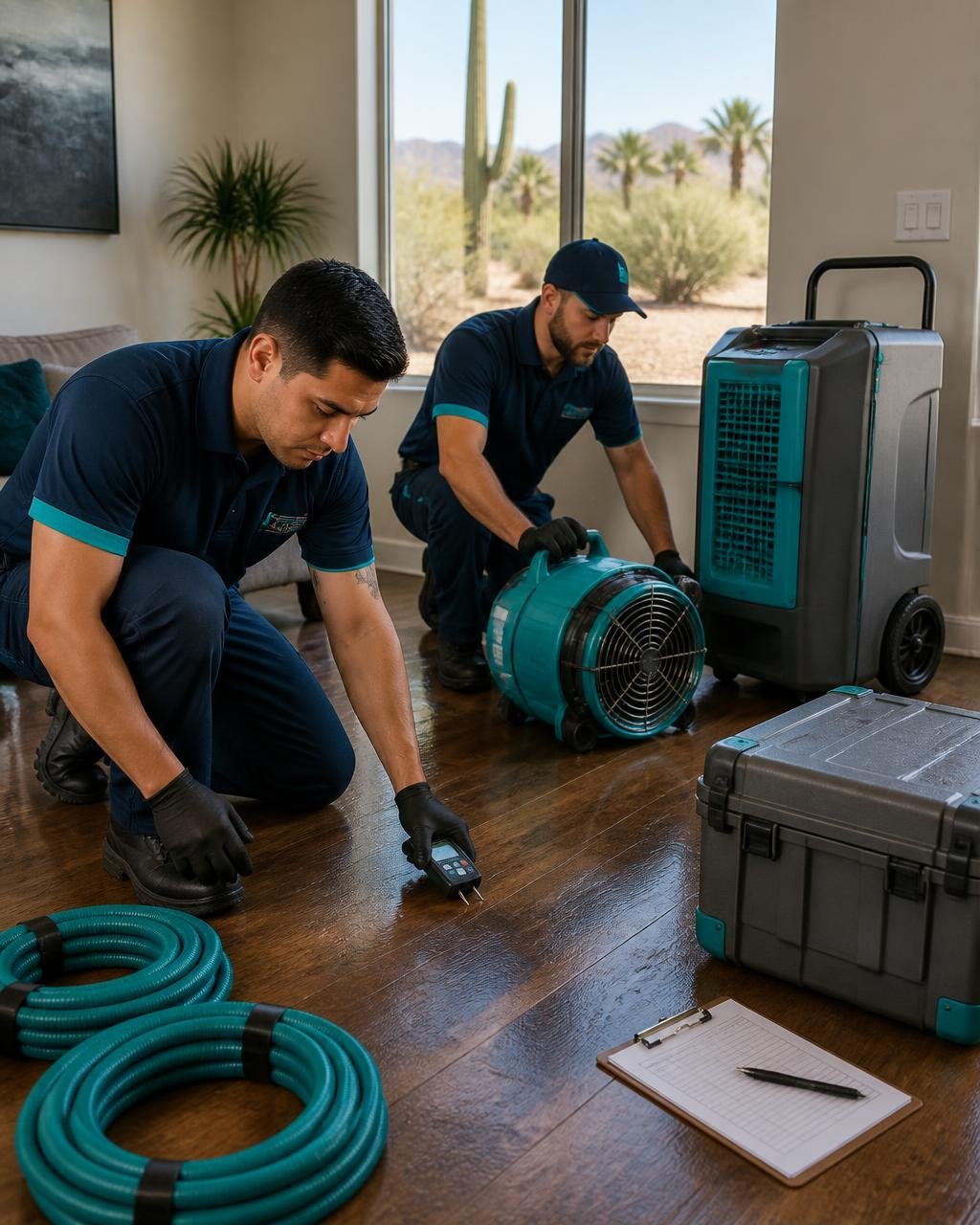
IICRC-Certified Water Damage Restoration Specialists with Industrial Extraction & Thermal Moisture Imaging
What you do before our emergency truck arrives dramatically reduces structural loss. Follow these four crucial steps to protect your property and family.
Every second water flows adds gallons to subflooring and drywall assemblies. Locate your main water shut-off valve — typically near your front hose bib, inside the garage, or at the street water meter box near the sidewalk. Turn the valve clockwise (or perpendicular to the pipe for ball valves) until tight.
When flooding or a pipe leak hits your home or business, the water damage restoration company you hire determines whether you get rapid, documented structural drying or weeks of secondary mold headaches. Compare our IICRC S500 certified standards to typical franchise outfits:
Real reviews from real homeowners across Phoenix, Scottsdale, Mesa, Chandler, and Gilbert.
Our technicians hold 6 IICRC certifications — including the IICRC S500 Standard for Professional Water Damage Restoration — across water damage restoration, applied structural drying, and mold remediation. Arizona Contractor's License #331127.
From initial emergency triage and thermal moisture assessment to industrial water extraction, psychrometric structural drying, and complete repairs — we follow strict IICRC S500 standards with zero handoffs.
Live dispatcher walks you through water shut-off and electrical safety while the nearest Valley crew is dispatched.
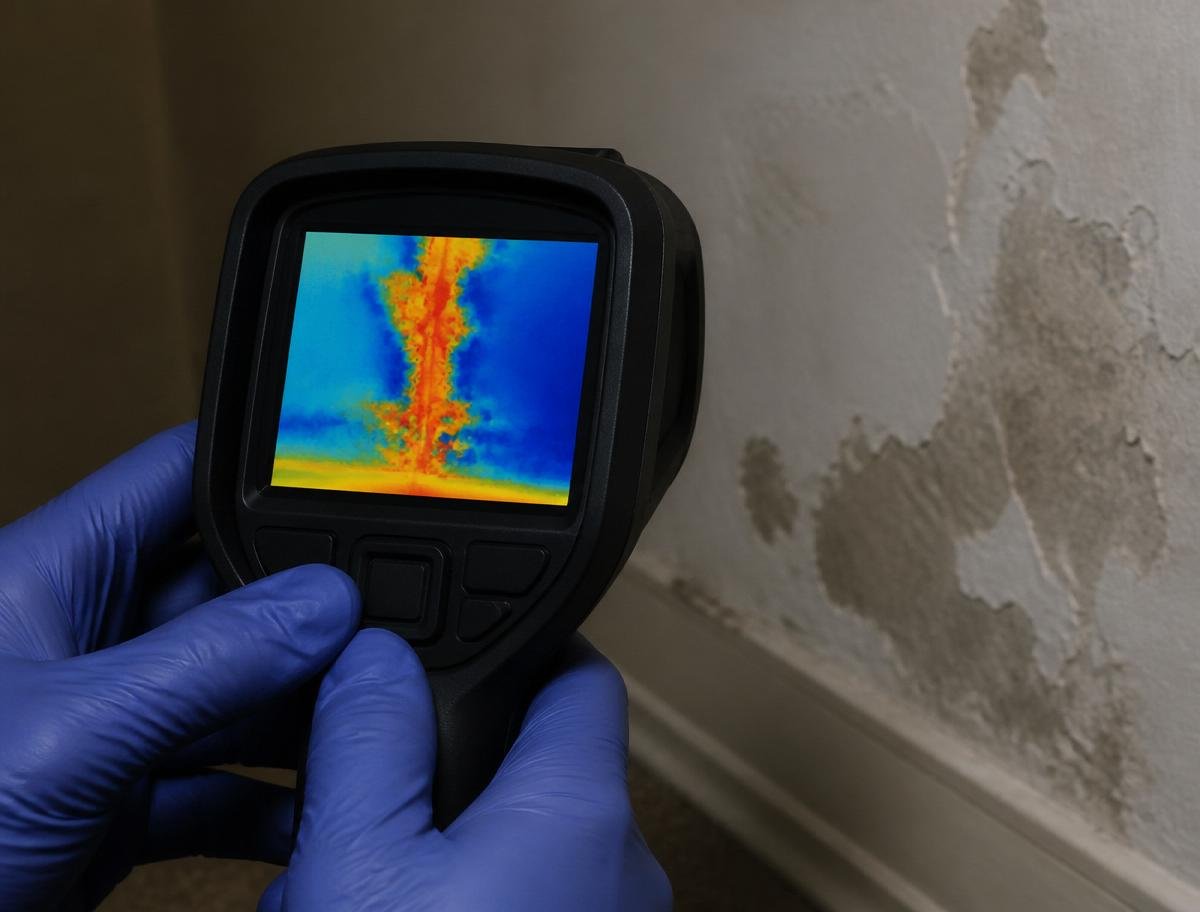
FLIR thermal cameras and non-invasive moisture meters detect hidden water paths behind drywall, baseboards, and under slabs.
Truck-mounted and high-volume commercial extractors pull thousands of gallons of standing water out of flooring and carpets.
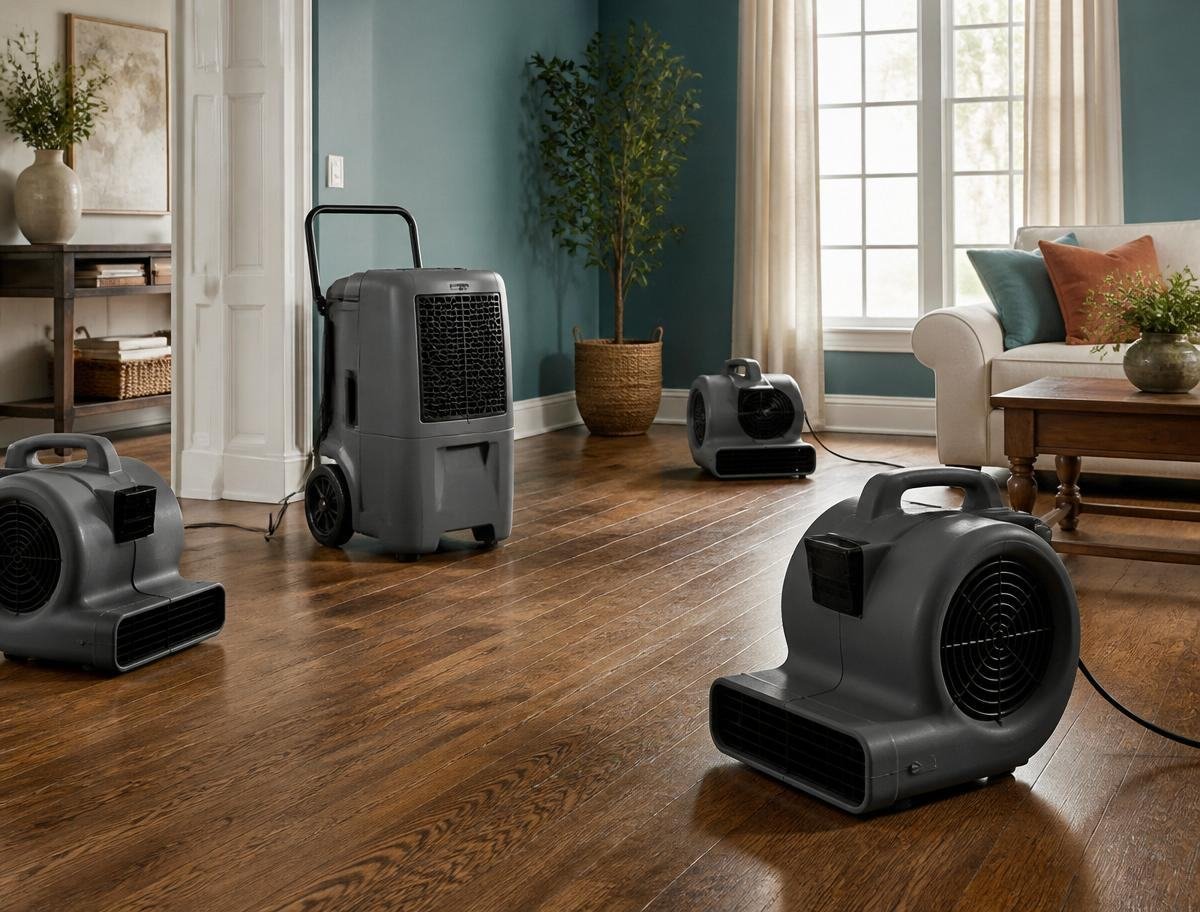
Industrial LGR dehumidifiers and high-velocity air movers establish a balanced drying vortex with daily psychrometric logs.
Final meter readings confirm the structure has reached equilibrium moisture standard. Itemized insurance packet provided.
Professional water restoration is an exact psychrometric science. We do not remove equipment based on a calendar — we remove it when calibrated instruments prove your structure is verifiably dry.
Water cools evaporating surfaces by 2°F–5°F. Using high-resolution FLIR thermal imaging cameras and RF pinless impedance meters, our technicians identify hidden moisture plumes behind drywall, beneath tile, and inside subfloors without cutting exploratory holes.
Drying is not guessing — it is physics. We calculate GPP (Grains Per Pound of specific humidity), ambient temperature, and vapor pressure differential to create a high-evaporation environment that draws bound water out of deep structural framing.
Standard fans create turbulent dead zones. We position 3,000+ CFM commercial axial air movers at calibrated 45-degree angles to create a continuous aerodynamic vortex across floor and wall boundaries, stripping moisture molecules from porous surfaces.
In Arizona's hot climate, ordinary dehumidifiers freeze or shut off under low humidity. Our commercial LGR units operate continuously down to 30 GPP, condensing up to 160+ pints of water per day and expelling bone-dry air into the drying envelope.
We provide a free, non-destructive on-site inspection with thermal imaging and moisture meters across the Phoenix metro.
From 24/7 emergency water damage cleanup and extraction in the first hour to deep structural drying, mold remediation, and full insurance rebuilds — one dedicated team, zero subcontractors, and complete accountability.
Comprehensive structural water damage restoration following IICRC S500 standards — from extraction to complete dry-out verification.
High-volume truck-mounted extraction units removing thousands of gallons per hour to halt moisture migration and dry subfloors fast.
HEPA air filtration, negative air containment, antimicrobial sanitization, and clearance testing to eliminate mold after water damage.
24/7 emergency fire damage cleanup, soot removal, thermal fogging deodorization, and complete structural fire damage reconstruction.
Emergency roof tarping, storm damage roof repair, tree debris cleanup, structural drying, and monsoon flood recovery.
24/7 raw sewage extraction, biohazard containment, hospital-grade disinfection, and contaminated porous material disposal.
24/7 emergency flooded basement cleanup, submersible water extraction, foundation leak drying, and subterranean LGR dehumidification.
24/7 certified trauma cleanup, biohazard containment, raw sewage overflow sanitization, and pathogen remediation under IICRC and OSHA standards.
24/7 emergency flood damage restoration, flood water removal & desert silt muck-out with truck-mounted pumps, structural LGR drying & licensed repair under ROC #331127.
No vague pricing games or post-demolition surprise invoices. Here are current 2026 Phoenix metro benchmarks — backed by our written scope before equipment starts.
Single-room supply line drips, minor sink overflows, or small localized drywall dampness with quick dry-out.
Full-room water heater bursts, dishwasher line failures, or multi-surface saturation needing industrial LGR dehumidification.
Slab leaks, sewage backups, roof monsoon breaches, or structural subflooring moisture requiring containment and rebuild.
Supply lines, ice-makers, rain through open windows
Washing machines, dishwashers, sump overflows
Sewage, groundwater floods, standing water >48hrs
We inspect the property with thermal imaging and give you a guaranteed itemized scope before starting.
We believe in 100% pricing transparency. You receive a complete, itemized written estimate before any equipment is deployed — with no hidden fees or aggressive sales tactics.
Category 1 clean water (broken supply lines) requires standard extraction and drying. Category 2 (appliance overflows) and Category 3 (sewage backups or floodwater) require biohazard PPE, containment barriers, and hospital-grade antimicrobial sanitation.
We use non-invasive FLIR thermal cameras and calibrated pin meters to calculate the precise square footage of saturation — including hidden moisture behind drywall baseplates and beneath tile/hardwood.
Drywall and carpet pad release moisture quickly (Class 1–2). Poured concrete slabs, hardwood, and multi-layer structural framing (Class 3–4) require specialty high-pressure injection mats and industrial LGR dehumidification.
Our mitigation-first standard prioritizes drying in place whenever safe. We only cut drywall or remove flooring when contamination (Category 3) or structural degradation makes salvaging impossible.
When disaster strikes, you deserve clarity and respect. We never begin drying or demolition until you have reviewed and signed the itemized scope.
We inspect your property with FLIR thermal cameras and moisture meters at zero upfront cost.
Every line item, equipment unit, and labor hour is documented in writing before any machine starts.
We never perform surprise teardowns or charge post-demolition extras without your prior written authorization.
Transparent, standardized rates based on IICRC S500 standards — no artificial emergency surcharges.
Every photo pair below is the same room from the exact same camera angle — captured on emergency arrival, and verified after complete structural drying, sanitization, and rebuild.

Drag · or use ← →
Job #WD-2411-018 — Arcadia, AZ — Upstairs supply-line burst dropped ~40 gallons into the kitchen below.
Whether it's a single residential bathroom or a 50,000 sq ft commercial facility, we dispatch certified equipment scaled to the loss.
 Residential Division
A burst supply line, slab leak, or flooded room disrupts your entire home. We handle rapid water extraction, structural drying, and full repair under a transparent written scope so your family can return to normal quickly.
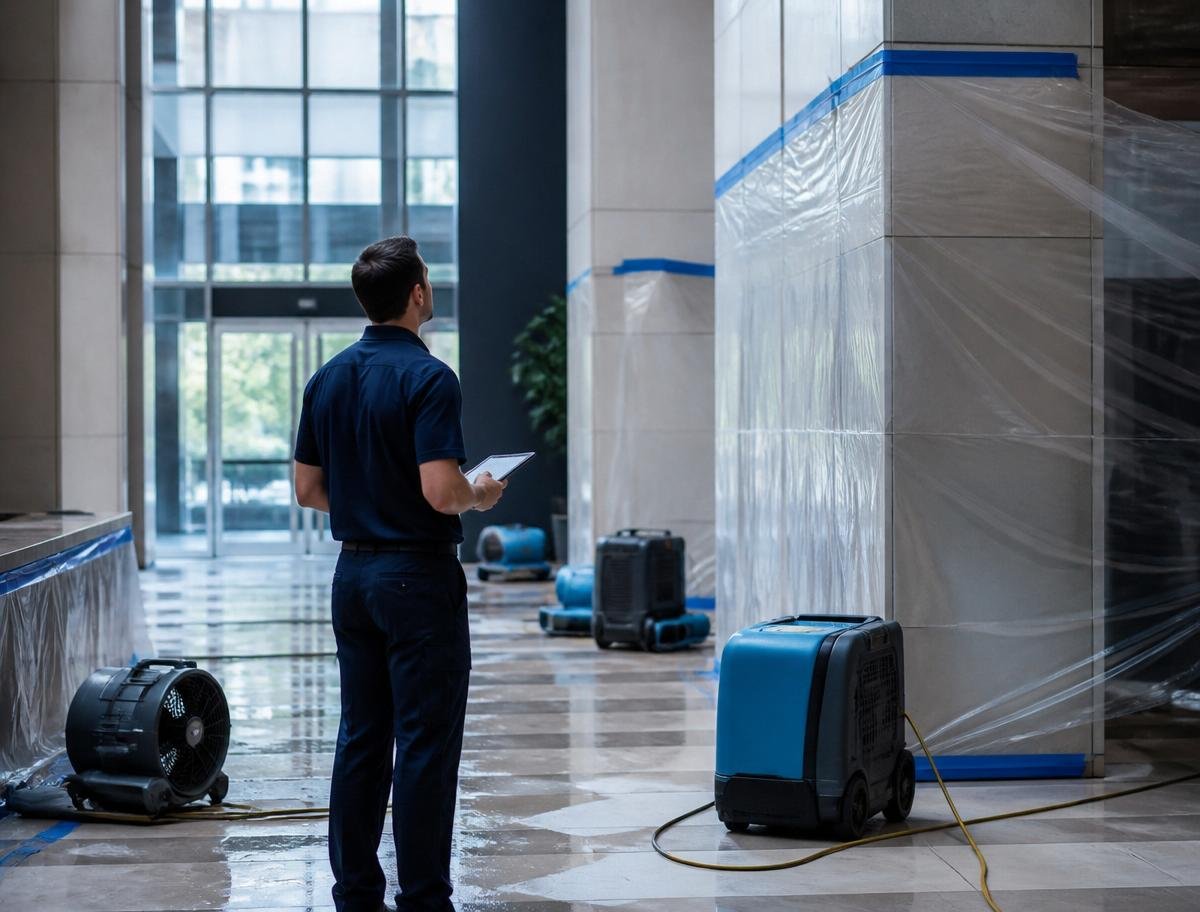 Commercial Division
Apartment complexes, retail centers, office buildings, medical clinics, and hotels cannot afford revenue downtime. We coordinate multi-crew extraction, containment, and night-shift drying with minimal disruption.
Arizona's harsh desert climate, caliche soil, hard municipal water, and unique home designs create distinct water damage challenges. From sudden monsoon ceiling leaks to slab pipe pinholes, identifying the source determines the proper structural drying protocol.
Sudden microbursts dump inches of water in minutes. Ponding water on roofs penetrates flashing, saturating attic insulation, drywall, and ceilings requiring emergency water extraction.
Phoenix's mineral-rich hard water corrodes underslab copper supply lines over time. Warm floor spots, rising water bills, and wet baseboards indicate hidden slab leak water damage.
Stuck autofill mechanisms push thousands of gallons across patio thresholds directly onto living room hardwood and subfloors, causing wood cupping and tile debonding.
Rooftop evaporative coolers with rusted drain pans leak down interior wall cavities and framing studs — often remaining hidden until drywall softens and stains appear.
Uninsulated garage lines, exterior hose bibs, and attic pipes freeze during desert overnight freezes — fracturing and flooding rooms under high water pressure when thawing.
Failed braided stainless steel lines on washing machines, dishwashers, and aging 10+ year water heater tanks represent the single most common residential flood source in Phoenix.
Speak directly with a certified technician. We will guide you through immediate shut-off and roll a thermal detection unit.
Need emergency water damage restoration or cleanup near you? Our certified extraction and structural drying crews stage 24/7 across Central Phoenix, the East Valley, and the West Valley for rapid ~42-minute response.
We serve 12 cities across the Phoenix metropolitan area, organized into three regions. A tappable list follows the map; selecting a city highlights its marker and re-centers the map.
Central Phoenix
East Valley
West Valley
Pinal County
Tucson & Pima County
Prefer the full directory? Jump to the city list below.
Continuous 24/7 staging across downtown Phoenix, Paradise Valley luxury estates, Cave Creek foothills, and north metro corridors.
Dedicated East Valley extraction trucks dispatched immediately across Mesa, Scottsdale, Fountain Hills, Tempe, and Chandler.
Complete coverage across West Valley subdivisions, active retirement communities in Sun City, and logistics corridors along I-10 and Loop 303.
Serving Tucson, Catalina Foothills, Oro Valley, and surrounding Pima County with rapid structural soot removal, thermal fogging deodorization, and licensed rebuild.
Also providing 24/7 emergency response to Paradise Valley, Cave Creek, Carefree, Fountain Hills, Sun City, Sun City West, Anthem, New River, Laveen, Tolleson, Queen Creek, San Tan Valley, Apache Junction, Wickenburg, and the Tucson metro area.
Don't see your specific city or zip code listed? Call our live dispatcher at (602) 755-0251 — we cover the entire Valley.
“Our upstairs bathroom flooded overnight and soaked half the ceiling. They had a crew at the door in under an hour and set up drying equipment right away. Zero pressure, clear pricing.”
“A slab leak in the kitchen turned into a much bigger job than we expected. The team explained the moisture readings step by step and kept us in the loop every single day. House was fully dry and back together sooner than we expected.”
“Called three companies. Only one picked up at 11 PM. They walked me through what to shut off while their truck was on the way and gave me a clear written scope before starting.”
A supply line under a second-floor laundry room failed while the family was out of town, releasing water for roughly six hours across two bedrooms and the great room below.
Crew on site 38 minutes after dispatch, extraction started immediately, 18 air movers and 4 dehumidifiers set to a targeted drying plan with daily moisture logs kept on file.
Structure dried in 4 days, containment removed on day 5, family back in the home ahead of the original estimate.
“Water heater burst at 6am. They answered on the first ring and had a crew at my house in under an hour. Handled everything start to finish, including dry-logs for insurance. Highly recommend.”
“Slab leak under our kitchen tile. The techs walked me through thermal camera readings and gave me a clear written scope before starting. Five days later the slab was fully dry without destroying our cabinets.”
“Called three companies after a washing machine flooded our laundry room. AZ Water Damage was the only one that picked up after 10pm and had a real technician on the line. Truck was here in 40 minutes.”
“Their documentation was incredibly thorough. Every moisture reading, photo, and psychrometric dry-log was ready and organized the whole way through for our adjuster. True professionals.”
“Our upstairs bathroom supply line flooded overnight and soaked half the ceiling below. They had a crew at our door in under an hour and set up drying equipment right away. Zero pressure, clear pricing.”
Straight answers on cost, process, and response — organized so you can scan first, then dig in.
Most Phoenix-area residential water damage repair and drying jobs range from $1,800 to $6,000 depending on affected square footage, water category, and depth of saturation. Contained small spills run $500–$1,500. Category 1 clean water averages $3.00–$4.50/sq ft; Category 2 gray water averages $4.50–$7.00/sq ft; Category 3 black water runs $7.00–$10.00+/sq ft. We provide an exact itemized written estimate and scope before any work begins.
Call a licensed, 24/7 water damage restoration company immediately. While a plumber can stop an active plumbing leak, only an IICRC-certified restoration contractor has the truck-mounted water extraction units, thermal moisture cameras, and industrial dehumidifiers required to extract water, dry subfloors, and prevent mold colonization.
Water damage mitigation is the immediate emergency phase: extracting standing water, mapping hidden moisture with thermal imaging, setting industrial LGR dehumidifiers, and halting microbial growth. Water damage restoration is the reconstruction phase that follows: replacing unsalvageable drywall, resetting baseboards, refinishing flooring, and repainting to restore the property to pre-loss condition.
Most standard homeowners and commercial insurance policies cover sudden and accidental water damage — such as supply line bursts, appliance overflows, water heater ruptures, and storm flood intrusion. We document all moisture readings with IICRC S500 standard logs and provide direct insurance billing so you don't pay out-of-pocket for covered restoration.
Our average arrival time is 42 minutes across the entire Phoenix metropolitan area. We stage emergency vehicles with truck-mounted extraction units in Central Phoenix, the East Valley, and the West Valley 24/7/365 to ensure immediate dispatch day or night.
Clear, science-backed guidance on cost factors, drying times, and what to do when water strikes.
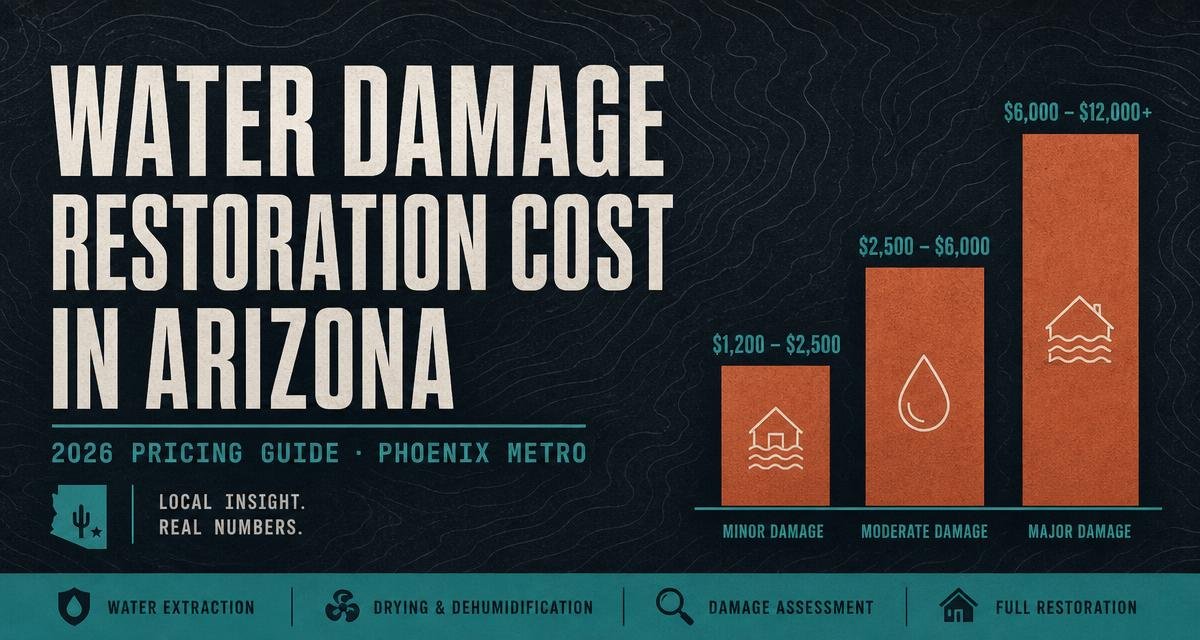 Cost Guide
Detailed Phoenix-market cost ranges per square foot across Category 1, 2, and 3 water losses.
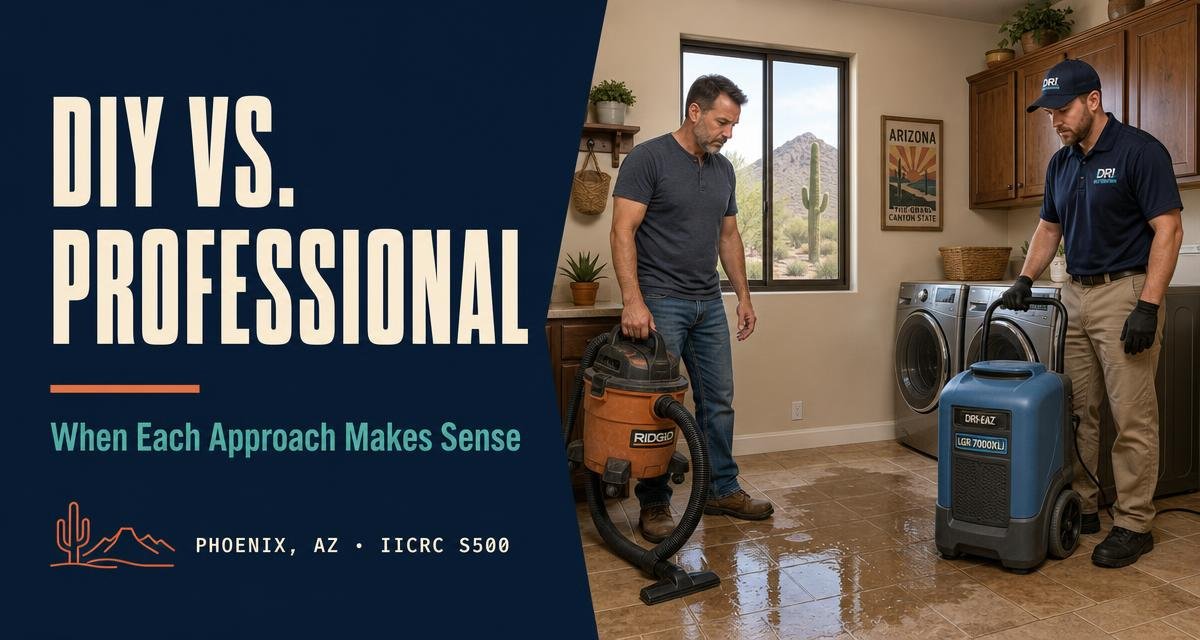 Decision Matrix
A decision matrix for Phoenix homeowners on slab leaks, moisture meters, and hidden saturation.
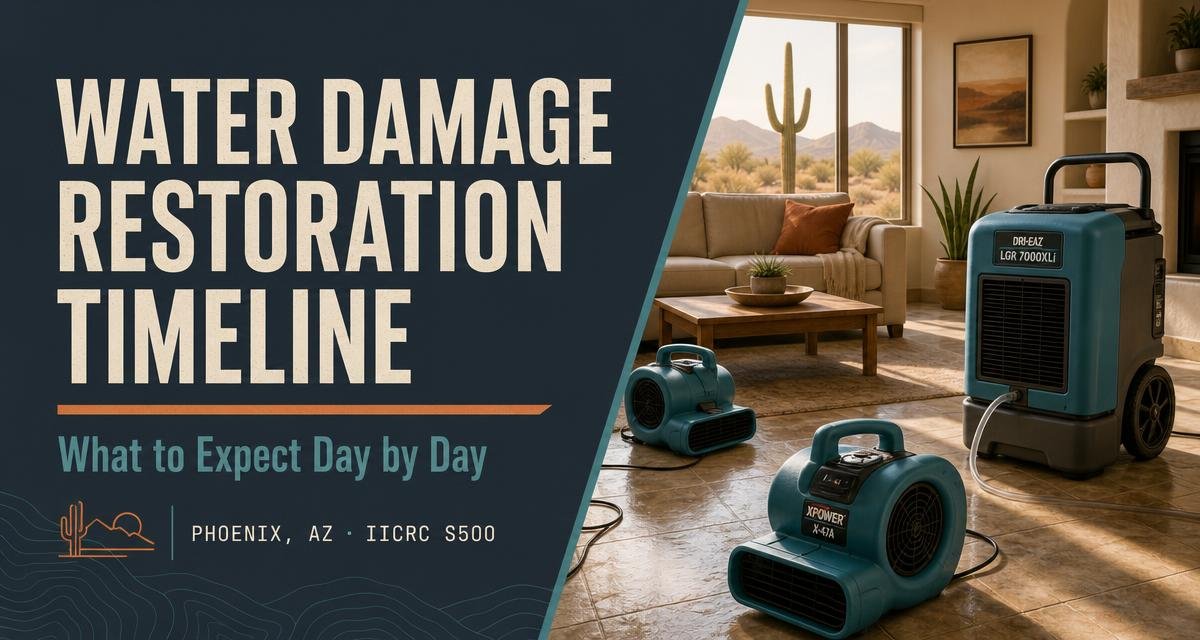 Timeline Protocol
Day-by-day roadmap: emergency extraction, structural drying, and rebuild within 3 to 5 days.
Every hour standing water sits in drywall, baseboards, and subflooring increases the risk of permanent structural damage and toxic mold growth. Contact our emergency water damage restoration specialists right now — live Valley dispatch with ~42-minute response.
