A puddle in front of your dishwasher is almost never an isolated surface spill. Because dishwashers are enclosed inside custom cabinetry, over 90% of leaks drip invisibly for weeks beneath toe-kicks, rotting subfloors, destroying particleboard cabinet bases, and breeding toxic black mold. Learn the top causes, emergency shut-off steps, and prevention techniques.
Last updated:Reading time:13 minStandards:IICRC S500 Verified
Kitchen Water Mitigation: Emergency Dishwasher Leak Containment & Sub-Cabinet Drying · Phoenix Metro
Table of contents▾
If your dishwasher is leaking, immediately cancel the wash cycle, disconnect power at the breaker, and shut off the dedicated hot water angle stop valve located under the kitchen sink. In Arizona homes, extreme water hardness (15–25+ GPG) and high municipal water pressure (80–110+ PSI) cause rapid solenoid valve calcification, door gasket embrittlement, and supply hose ruptures. Because water becomes trapped in the dark, warm cavity beneath kitchen cabinets, immediate IICRC structural drying is essential within 24 to 48 hours to save custom cabinetry and adjacent hardwood or vinyl plank flooring before mold colonies take hold.
The 6 Most Common Causes of Dishwasher Leaks
Dishwashers contain multiple pressurized connections, electronic solenoids, and rubber seals that operate under high heat and vibration. Here are the 6 primary failure points:
1Failed Water Inlet Solenoid Valve
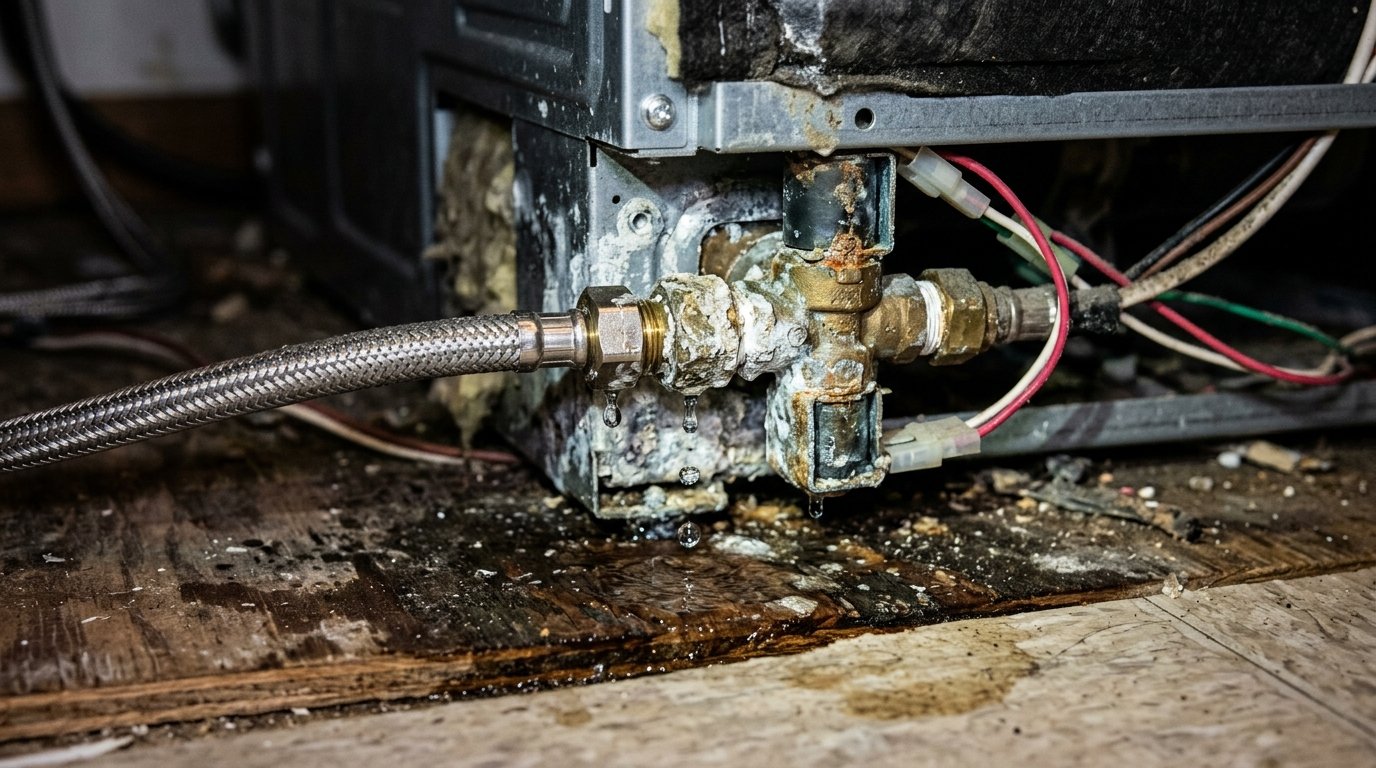
The electronic valve that opens to fill the tub with hot water. In Phoenix, calcium mineral scaling causes the plastic valve housing to crack or the internal spring plunger to seize open, allowing pressurized water to leak continuously under the machine.
2Ruptured Braided Supply Line & Loose 90° Elbow
The flexible stainless steel hose supplying hot water from under the sink. High water pressure, constant motor vibration, and degraded rubber compression washers cause fittings to loosen or burst, discharging 3 to 5 gallons per minute.
3Cracked Door Gaskets & Bottom Baffle Seals
The rubber weatherstripping around the door tub. Over time, hard water mineral deposits and food grease cause the rubber to harden, shrink, and crack, allowing wash water to escape down the front of the machine and under the kickplate.
4Clogged Drain Hose & Garbage Disposal Air Gap
The corrugated plastic hose draining dirty grey water into your sink disposal. Food debris, calcium scale, or a missing "high loop" causes wastewater to back up, overflow the disposal air gap on the countertop, or crack the brittle plastic hose.
5Stuck Float Switch & Overfill Sensor
The plastic float inside the front corner of the tub that triggers the water fill shutoff. When coated in mineral scale, soap scum, or trapped food bones, the float sticks in the down position, causing the tub to overfill and flood through the door seam.
6Circulation Pump & Wash Arm Cracks
A split in the lower plastic wash arm directs high-pressure water jets directly at the door threshold instead of upwards into dish racks, forcing water past bottom gaskets during wash cycles.
Use this quick troubleshooting matrix to diagnose where your dishwasher is leaking and what action is required:
Visible Leak Symptom
Most Likely Failure Point
Water Contamination Level
Required Action
Water pooling under kitchen sink cabinet
Loose supply line nut or split drain hose at disposal
Category 1 (Supply) or Category 2 (Drain)
Tighten brass compression nut or replace cracked drain hose
Water oozing from under front toe-kick plate
Inlet solenoid valve crack or circulation pump seal leak
Category 1 or Category 2
Remove toe-kick panel, inspect valve with flashlight, replace valve
Water dripping down the front door corners
Worn door perimeter gasket or split lower wash arm
Category 2 (Soapy wash water)
Clean or replace rubber door gasket and inspect spray arm nozzles
Foamy, soapy froth bubbling onto kitchen tile
Incorrect detergent (regular dish soap) or severe overfill
Category 2 (Detergent overflow)
Add 1/2 cup vegetable oil to break foam, run drain cycle
Continuous dripping when dishwasher is OFF
Inlet solenoid valve jammed open by calcium sediment
Category 1 (Constant municipal pressure)
Shut off hot water supply valve under sink immediately
Diagnostic Matrix: Identifying Dishwasher Leak Points, Contamination, and Remediation
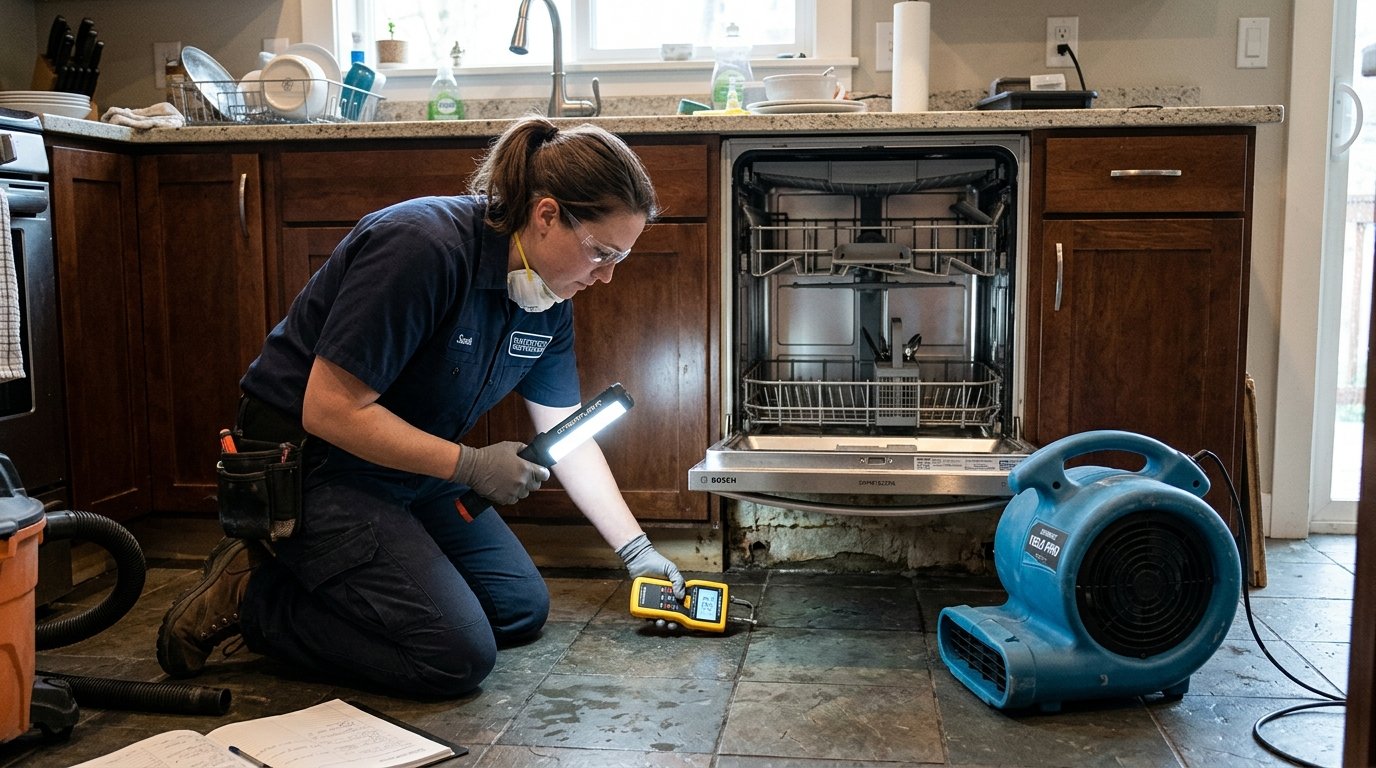
Plumbing Diagnostics / Failure PointsMechanical Failure Map: The 3 major dishwasher leak points. Solenoid valves under continuous 80+ PSI municipal pressure account for 40% of kitchen flooding claims.
The Hidden Threat: Sub-Cabinet Rot & Flooring Ruin
The most dangerous aspect of a dishwasher leak is what happens behind the scenes:
Cabinet Box Delamination: Modern kitchen cabinets sit directly on raw concrete or subflooring. Saturated particleboard swells, loses its structural strength, and crushes under the weight of granite or quartz countertops.
Subfloor Lateral Moisture Migration: Water travels along the concrete slab beneath hardwood flooring and luxury vinyl plank (LVP), causing severe cupping, buckling, and squishing seams across the entire kitchen.
Sub-Cabinet Mold Colonization: The dark, unventilated void beneath kitchen cabinets maintains 100% relative humidity. In Arizona's warm indoor temperatures, toxic stachybotrys black mold colonies flourish within 48 hours, requiring certified antimicrobial mold remediation.
What to Do Right Now: 5-Step Kitchen Emergency Sequence
If your dishwasher is actively flooding your kitchen floor, execute this immediate containment protocol:
Step 1: Cancel Cycle & Cut Electrical Power
Press the "Cancel / Drain" button to pump standing water out of the tub. Unplug the power cord beneath the sink or switch off the dedicated kitchen dishwasher circuit breaker. Never touch electrical plugs while standing in water.
2
Step 2: Shut Off the Hot Water Angle Stop Valve
Open the cabinet under the sink and locate the hot water valve supplying the dishwasher. Turn the handle clockwise until tight. If the valve is seized, shut off the home's main water meter valve.
3
Step 3: Remove the Bottom Toe-Kick Panel
Remove the two screws securing the metal kickplate at the base of the machine. This allows trapped water vapor to vent and reveals whether water is pooling across the subfloor cavity.
4
Step 4: Extract Standing Surface Water
Use a wet/dry shop-vac and towels to remove surface puddles. Remove area rugs, runners, and kitchen floor mats that trap water against tile grout and plank seams.
5
Step 5: Call 24/7 Professional Structural Drying
Call our 24/7 emergency restoration team for thermal moisture mapping, sub-cabinet cavity drying, and commercial LGR dehumidification to save your cabinets and flooring.
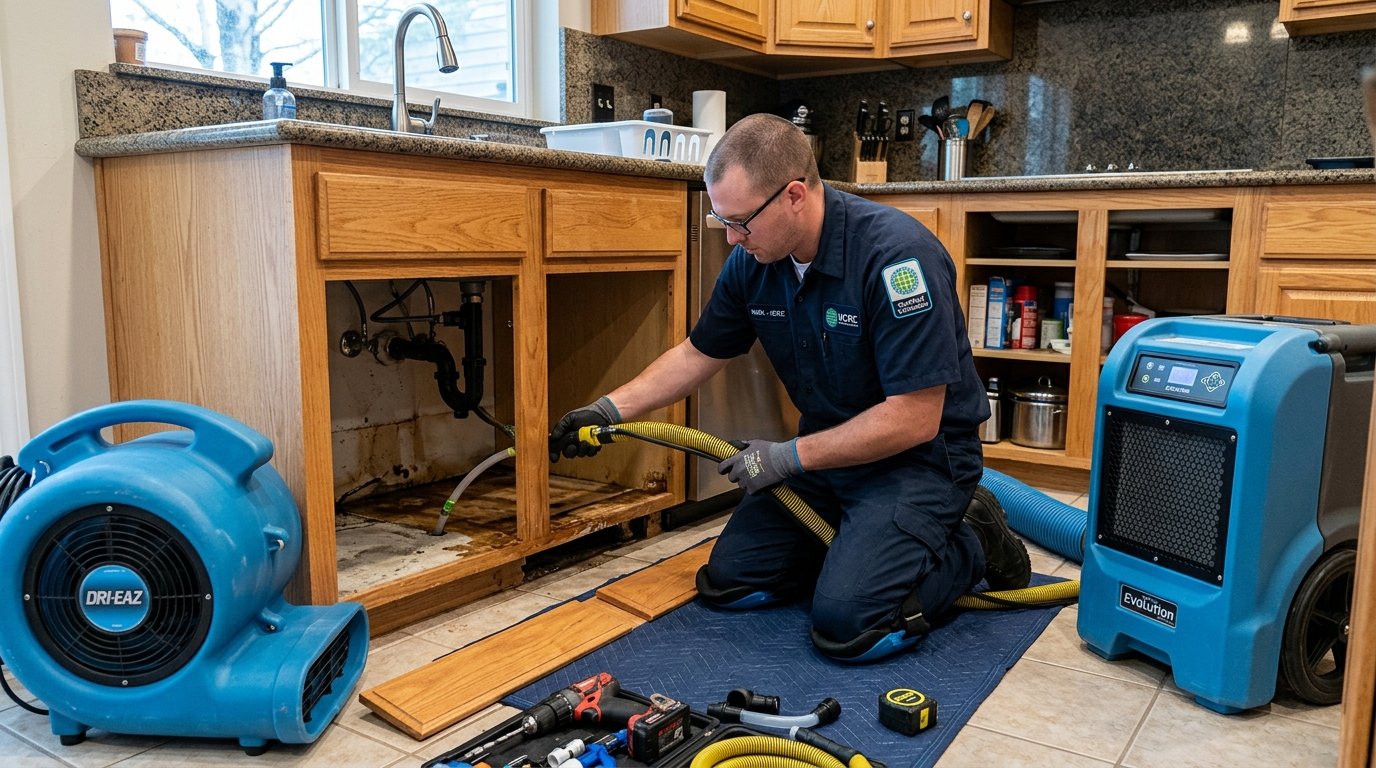
Structural Mitigation / Cabinetry SalvageSub-Cabinet Structural Drying: Specialized toe-kick air injectors and commercial LGR dehumidifiers extract trapped moisture to salvage custom kitchen cabinets without countertop demolition.
How to Prevent Future Dishwasher Leaks (5 Proactive Steps)
A few simple preventative maintenance habits can protect your home from thousands in kitchen flooding repairs:
Install Stainless Steel Braided Auto-Shutoff Supply Hoses: Replace plastic lines with stainless steel braided hoses equipped with mechanical flood-stop valves that instantly shut off water if a rupture occurs.
Place a Smart Water Leak Sensor Disc: Place an inexpensive ($15–$30) WiFi or audible water sensor on the floor directly beneath the dishwasher. The alarm alerts you the second the first drop hits the floor.
Clean the Door Gasket Quarterly: Wipe down the rubber perimeter door gasket with warm water and mild soap to remove mineral scale and food grease that degrade the seal.
Verify the Drain Hose "High Loop": Ensure the corrugated drain hose under your sink loops up higher than the sink basin before connecting to the garbage disposal to prevent sink dirty water from back-siphoning.
Test Home Water Pressure: Keep household water pressure between 55 and 75 PSI using a Pressure Reducing Valve (PRV) to prevent high-pressure blowouts.
24/7 Valley-Wide Emergency Response for Kitchen Floods
When a dishwasher floods your kitchen, immediate response saves thousands in custom cabinet and flooring replacement. Our IICRC-certified crews arrive within 30 to 45 minutes across the entire Valley:
Why are dishwasher leaks considered one of the most destructive kitchen water losses?
Over 90% of dishwasher leaks occur behind the front toe-kick panel or deep inside cabinet chases. Because the water is hidden, a slow leak can drip 5 to 10 gallons daily for weeks before liquid pools onto visible kitchen tile. By then, water has already saturated particleboard cabinet boxes, soaked into drywall, and migrated under adjacent hardwood or vinyl plank flooring, triggering extensive black mold colonization.
What should I do immediately if my dishwasher is leaking onto the kitchen floor?
Follow these four steps immediately: (1) Press the 'Cancel / Drain' button on the control panel to empty the wash basin; (2) Cut electrical power by unplugging the unit beneath the sink or switching off the kitchen appliance circuit breaker; (3) Turn off the dedicated hot water angle stop supply valve located under the kitchen sink; (4) Remove the bottom toe-kick panel and call a professional restoration team for thermal moisture mapping and cavity dehumidification.
What is the most common cause of a dishwasher leaking underneath the unit?
The most common culprit is a cracked or mineral-clogged water inlet solenoid valve. In Arizona, hard water calcium deposits cause the plastic valve housing to crack or the internal plunger to stick open, allowing pressurized water to spray or drip continuously beneath the unit whenever the home's water is on.
Can kitchen cabinets and flooring be saved after a dishwasher leak?
Yes, if professional mitigation begins within 24 to 48 hours. Using directional air movers, negative-pressure cavity drying systems (Injectidry), and commercial LGR dehumidifiers, technicians force dry, heated air into the toe-kick cavity and pull moisture out from beneath cabinets and subfloors without tearing out custom countertops.
Does homeowners insurance cover water damage from a leaking dishwasher?
Yes, standard homeowner insurance policies generally cover sudden and accidental water discharges (such as a burst braided supply hose or sudden valve failure). However, claims may be contested if the adjuster finds evidence of a slow, neglected leak that rotting cabinets over several months. Detailed date-stamped thermal moisture reports establish the sudden nature of the loss.
How can I prevent my dishwasher from ever leaking in the future?
Five high-impact prevention steps: (1) Replace basic rubber or plastic supply lines with stainless steel braided flood-safe auto-shutoff hoses; (2) Place a $15 battery-operated smart water leak sensor under the unit; (3) Clean door gaskets and lower spray arms quarterly to remove hard water scale; (4) Ensure the drain hose has a proper high loop or air gap; and (5) Test home water pressure to ensure it remains below 75 PSI.
What causes water to leak around the front door of the dishwasher?
Front door leaks are typically caused by a hardened, warped, or food-grease-coated perimeter door gasket, a cracked lower spray arm that directs pressurized water jets straight at the bottom door seal, or using regular dish soap instead of non-foaming detergent (which causes massive soap froth overflows).
How much does it cost to restore kitchen water damage from a dishwasher leak in Arizona?
Emergency water extraction, toe-kick removal, and structural cavity dehumidification typically cost between $1,200 and $3,500. If water has penetrated under hardwood floors or behind custom kitchen cabinetry, comprehensive drying and repairs range from $3,000 to $8,500+.
About the author
AZ Water Damage Restoration Team
IICRC-certified restoration technicians · Phoenix metro
Written and fact-checked by the licensed crew that runs the trucks — the same technicians who take moisture readings, set drying chambers to the IICRC S500 standard, and answer the phone at 2 a.m. across the Phoenix metro.
Licensed Arizona contractor — AZ ROC #331127 (KB-2)