A burst washing machine supply hose can discharge over 500 gallons of pressurized water in under an hour. In two-story Arizona homes with upstairs laundry rooms, a single failure cascades through ceilings, ruins hardwood floors, and causes tens of thousands in structural damage. Learn why washing machines leak, how to execute emergency shut-offs, and how to bulletproof your laundry setup.
Last updated:Reading time:14 minStandards:IICRC S500 Verified
Washing Machine Flood Mitigation: Emergency Water Extraction & Multi-Room Structural Drying · Phoenix Metro
Table of contents▾
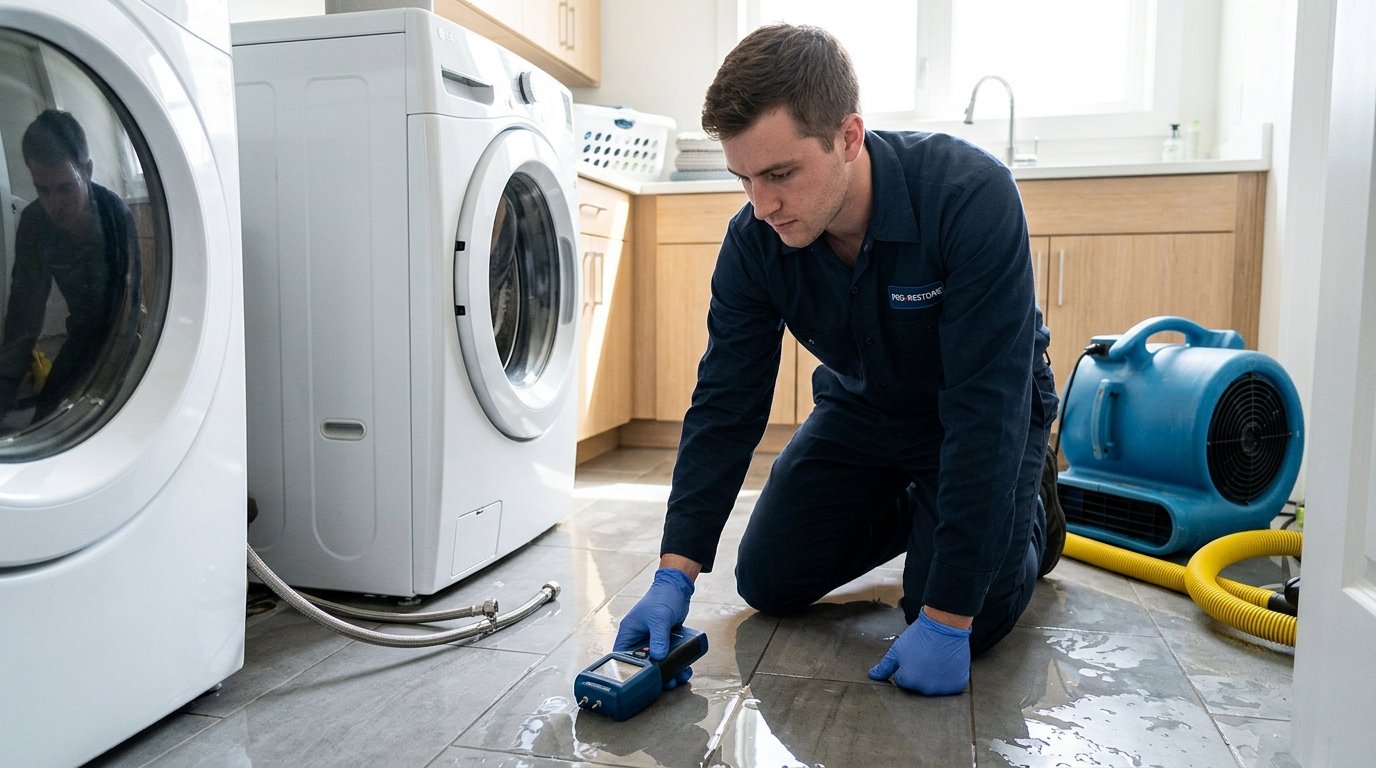
If your washing machine is actively leaking or overflowing, immediately cancel the wash cycle, cut power at the breaker panel, and turn off the dual hot and cold supply valves located in the wall recess box behind the machine. Washing machine supply lines operate under continuous 60–90+ PSI municipal pressure. In Arizona, intense water hardness (15–25+ GPG) and high municipal pressure spikes degrade unreinforced rubber hoses, causing sudden catastrophic ruptures. In two-story homes, upstairs laundry floods penetrate joist bays and collapse downstairs ceilings within minutes, making immediate IICRC structural extraction and dehumidification essential within 24 to 48 hours to prevent toxic mold colonization.
The 6 Most Common Causes of Washing Machine Leaks
Washing machines operate under violent centrifugal spin forces, high water pressure, and chemical detergents. Here are the 6 primary failure points:
1Ruptured Rubber Supply Hoses (The #1 Flood Cause)
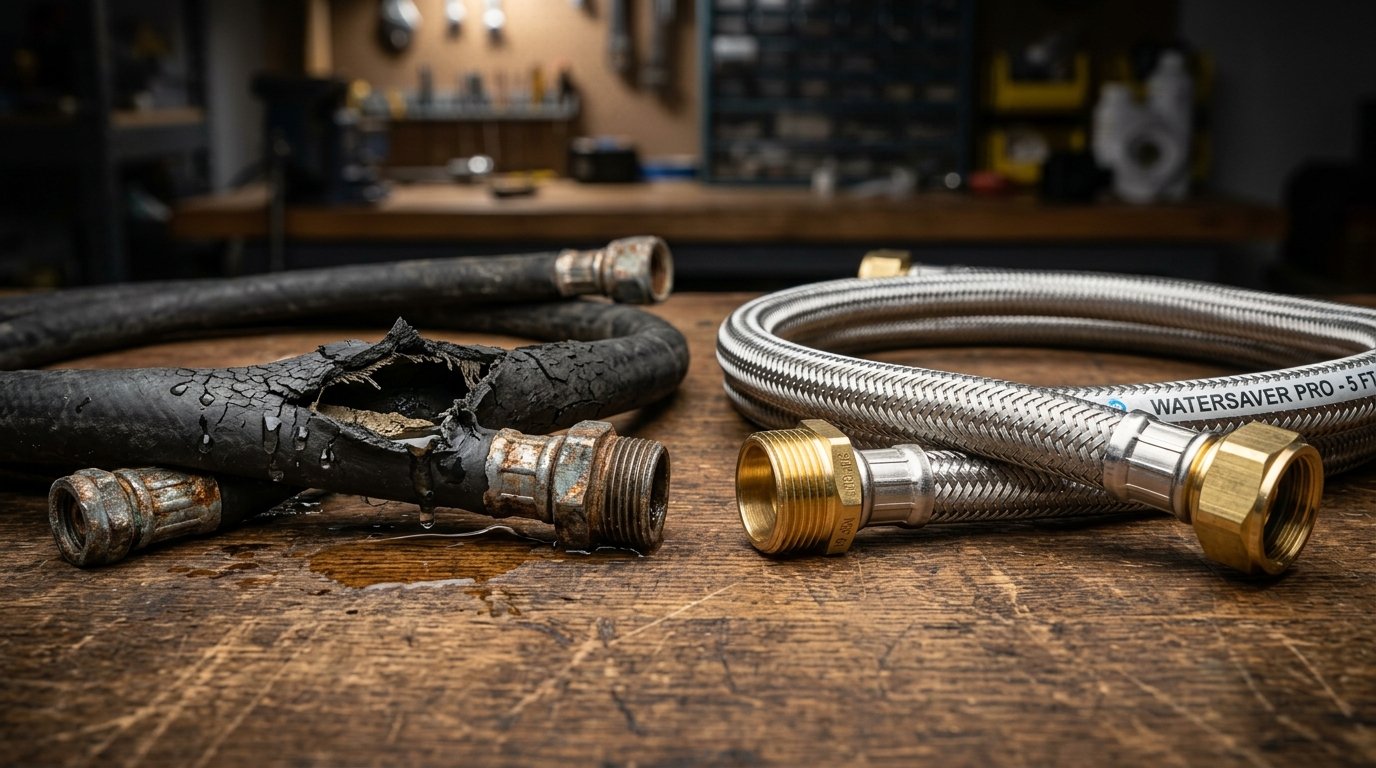
Standard black rubber hoses deteriorate from constant water pressure, heat cycling, and mineral hardness. The internal lining balloons into a bubble and ruptures violently, discharging full municipal pressure 24/7 until the main valve is closed.
2Dislodged or Clogged Drain Standpipe
During the high-speed drain cycle, the pump discharges 15 to 20 gallons of water in under 90 seconds. If the standpipe is clogged with lint or the hose recoils and jumps out of the pipe, gallons of grey water dump directly behind the wall.
3Cracked Water Inlet Mixing Valve
The plastic solenoid valve at the back of the washer where hot and cold hoses connect. In Arizona, calcium sediment buildup clogs the valve screens and cracks the plastic threaded housings, causing slow, continuous weeping inside the machine chassis.
4Torn Door Bellows Gasket (Front-Load Washers)
Front-load washing machines rely on a thick rubber door boot seal. Coins, zippers, and hard water scale tear or puncture the rubber folds, allowing soapy wash water to gush out the front of the machine during wash and rinse cycles.
5Internal Tub-to-Pump Hose or Circulation Hose Failure
Internal rubber hoses connecting the outer wash tub to the drain pump experience intense vibration. Friction against the outer metal frame wears holes in the rubber, discharging water underneath the unit during agitation.
6Pressure Switch Failure & Over-Sudsing
A clogged air dome tube prevents the water level pressure sensor from signaling the inlet valve to close, causing continuous overfill. Using regular dish soap or non-HE detergent creates a massive foam eruption that overflows the tub vent.
Diagnostic Matrix: Identifying Washing Machine Leak Mechanisms and Remediation Protocols
Plumbing Safety / Hose Failure AnatomyHose Failure Anatomy: Black rubber hoses expand under constant static pressure, developing micro-tears and ballooning blisters before blowing out at 6 to 10 GPM.
The Catastrophe of Second-Floor Laundry Room Leaks
In modern Arizona two-story homes in Gilbert, Scottsdale, Peoria, and Goodyear, upstairs laundry rooms offer great convenience — but represent the single highest flood risk in the house:
Cascading Multi-Room Destruction: Water moves downward along gravity paths. An upstairs flood saturates second-floor carpeting and subflooring, travels through floor joist bays, and collapses ceiling drywall across downstairs kitchens, living rooms, and dining areas.
Saturated Attic / Joist Insulation: Blown-in fiberglass and cellulose insulation in floor cavities absorbs water like a sponge. Saturated insulation cannot dry in place and must be extracted to prevent joist dry rot and mold amplification.
Hardwood & Floating Floor Ruin: Water pooling on downstairs floors migrates invisibly beneath hardwood flooring and luxury vinyl plank (LVP), causing severe cupping and mold colonies over concrete slabs.
What to Do Right Now: 5-Step Laundry Emergency Sequence
If your washing machine is actively flooding your home, execute this exact containment protocol:
Step 1: Cancel the Wash Cycle & Cut Electrical Power
Press the "Cancel / Stop" button on the washer console. With dry hands and dry footwear, unplug the power cord or go to your main electrical panel and flip the dedicated laundry room circuit breaker to OFF. Never stand in pooled water to touch electrical plugs.
2
Step 2: Shut Off Both Hot & Cold Supply Valves
Locate the recessed wall box behind the washing machine. Turn both round valve handles clockwise until tight, or pull/flip the single-lever shutoff arm down firmly. If valves are stuck or corroded, shut off the home's main water meter valve.
3
Step 3: Extract Standing Surface Water
Use a wet/dry shop-vac, rubber squeegees, and heavy towels to remove standing puddles from the laundry floor before water wicks into baseboards and adjacent carpet padding.
If water is leaking through a ground-floor ceiling, place large buckets underneath active drips and move furniture away. Relieve hydraulic pressure by piercing a small pinhole in the center of sagging paint blisters with a nail to drain water safely into containers.
5
Step 5: Call 24/7 Professional Structural Drying
Call our 24/7 emergency restoration team for thermal moisture mapping, subfloor cavity drying, and commercial LGR dehumidification to save your floors and prevent toxic mold.
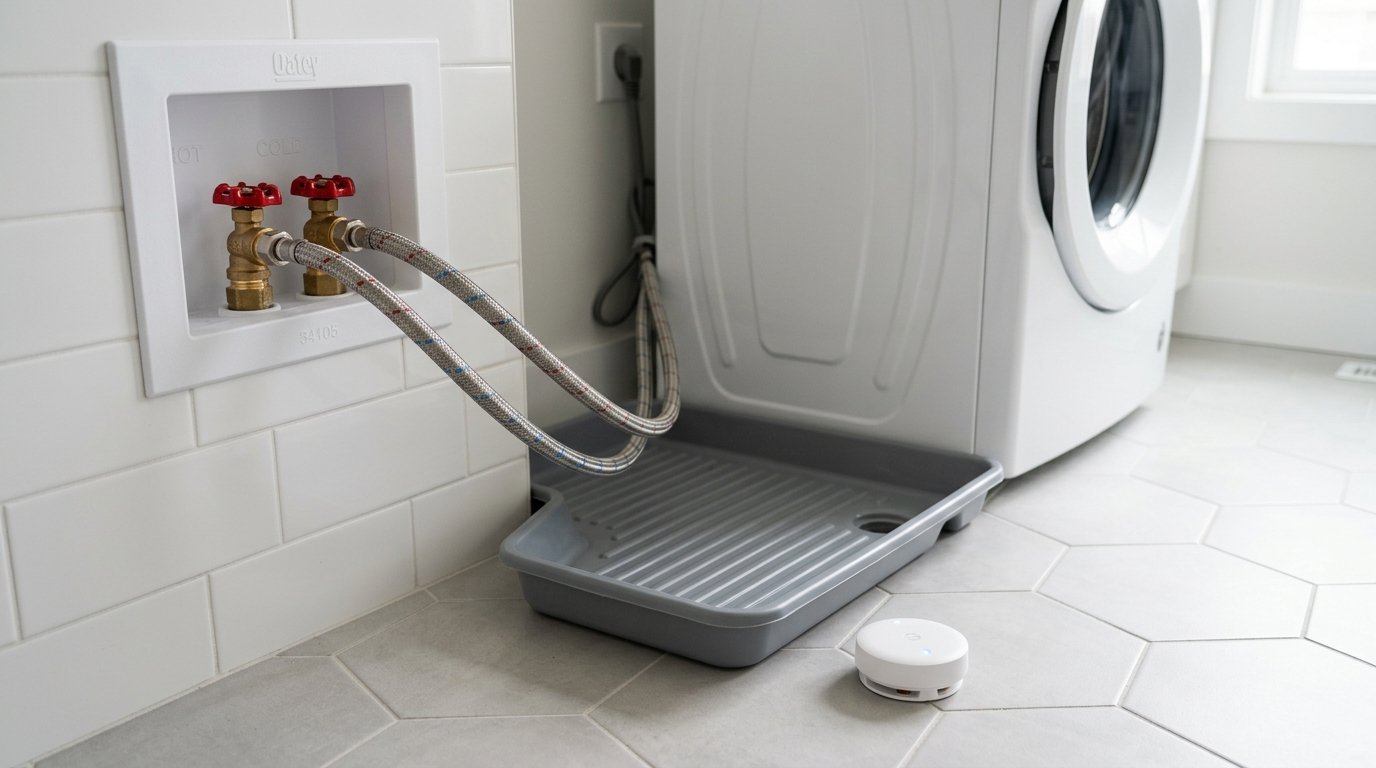
Flood Prevention / Hardware BlueprintTriple-Layer Defense: Single-lever supply valves, 2-inch drain standpipes, and automated sensor shutoff valves protect modern homes from catastrophic laundry floods.
How to Prevent Future Washing Machine Floods (5 Essential Upgrades)
Upgrading your laundry setup with modern flood protection stops disaster before it starts:
Install Braided Stainless Steel Auto-Shutoff Supply Hoses: Replace black rubber hoses with stainless steel braided lines featuring internal mechanical flood-stop fuses that instantly trip if an excess flow rate is detected.
Install an Automatic Electronic Water Shut-Off Valve: Install an automated laundry valve kit (such as Watts IntelliFlow or FloodStop) that only opens water supply lines when the washing machine is actively drawing electrical current, keeping lines depressurized 95% of the time.
Install a Heavy-Duty Drain Pan with a Plumbed Discharge: Ensure your washing machine sits inside a 2-inch deep polymer or stainless steel drain pan connected directly to an exterior drain line or laundry standpipe.
Secure the Drain Hose with Heavy-Duty Zip Ties: Never just hang the drain hose loosely in the standpipe. Fasten it securely to the water supply box with cable ties to prevent recoil dislodgment during high-speed spin cycles.
Always Use HE Detergent & Avoid Overloading: Over-sudsing causes suds to overflow air vents, while severe out-of-balance overloading violently shakes internal hoses loose.
24/7 Valley-Wide Emergency Response for Laundry Room Floods
When a washing machine line bursts, rapid response stops water from spreading across your home. Our IICRC-certified crews arrive within 30 to 45 minutes across the entire Valley:
Why are washing machine supply line bursts considered one of the top causes of catastrophic home floods?
Standard 3/4-inch washing machine supply hoses operate under constant 60 to 90+ PSI municipal water pressure, delivering 6 to 10 gallons per minute. If an unreinforced rubber hose ruptures while you are at work or asleep, it can pump 350 to 600+ gallons of water per hour directly into your laundry room. In two-story Arizona homes with upstairs laundry rooms, this flood collapses ceilings and destroys multiple ground-floor rooms within minutes.
What should I do immediately if my washing machine starts flooding the room?
Take four emergency steps immediately: (1) Press 'Cancel / Stop' on the washer control panel; (2) Cut electrical power by unplugging the unit with dry hands or flipping the dedicated laundry circuit breaker in the main electrical panel; (3) Shut off the dual hot and cold water supply valves located in the wall box behind the machine (or shut off the home's main water meter); (4) Use a wet/dry shop-vac to extract standing water and call a 24/7 restoration team before water wicks into subfloors.
How often should washing machine supply hoses be replaced?
Standard black rubber hoses should be replaced every 3 to 5 years, regardless of visual appearance. In Arizona, high municipal water pressure (often 80–110+ PSI) and hard water mineral degradation cause rubber hoses to develop microscopic bubbles, swell, and burst unexpectedly. Replace them with heavy-duty braided stainless steel hoses.
What is the difference between a supply hose leak and a drain hose leak?
A supply line leak is continuous and pressurized (Category 1 clean water), discharging full street volume whether the machine is running or turned off. A drain hose or standpipe leak only occurs during the drain/spin cycle (Category 2 grey water containing soapy surfactants, lint, and body oils) and is typically caused by a clogged drain pipe, missing standpipe clamp, or split corrugated hose.
Can water damage from an upstairs laundry room leak be dried without tearing down the ceiling below?
If the flood is caught within hours and the ceiling drywall has not sagged or softened, technicians can sometimes use directional air movers, cavity injection drying, and commercial LGR dehumidifiers to dry the joist bay in place. However, if saturated insulation rests on the drywall, the wet insulation acts like a sponge and must be extracted through small ceiling cutouts to prevent microbial mold growth and catastrophic ceiling collapse.
Does homeowners insurance cover washing machine water damage in Arizona?
Yes, standard homeowner insurance policies (HO-3) cover the resulting water damage from sudden and accidental washing machine hose bursts, drain overflows, and tub leaks (including emergency extraction, drywall excision, floor drying, and structural repairs). However, insurance typically does not pay to repair or replace the washing machine appliance itself.
How can I prevent my washing machine from overflowing or leaking in the future?
Five essential preventative upgrades: (1) Upgrade to braided stainless steel hoses with auto-shutoff flood valves; (2) Install an automatic laundry shut-off valve kit with floor moisture sensors (like Watts or FloodStop); (3) Install a heavy-duty laundry drain pan plumbed to an exterior drain; (4) Secure the drain hose to the wall standpipe with zip ties to prevent recoil dislodgment; and (5) Always use HE (High-Efficiency) detergent to avoid massive suds overflows.
How much does it cost to clean up water damage from a washing machine flood in Arizona?
Emergency extraction, baseboard removal, and structural cavity dehumidification for a ground-floor laundry room typically range from $1,200 to $3,500. If an upstairs washing machine flooded through the ceiling into ground-floor kitchens, living rooms, and hardwood flooring, complete multi-room structural restoration averages $4,500 to $12,000+.
About the author
AZ Water Damage Restoration Team
IICRC-certified restoration technicians · Phoenix metro
Written and fact-checked by the licensed crew that runs the trucks — the same technicians who take moisture readings, set drying chambers to the IICRC S500 standard, and answer the phone at 2 a.m. across the Phoenix metro.
Licensed Arizona contractor — AZ ROC #331127 (KB-2)