Is it a minor spill or a structural emergency? Use this sense-based diagnostic guide to identify visible, hidden, and Phoenix-specific slab leak signs before they cause catastrophic damage.
Last updated:Reading time:12 minStandards:IICRC S500 Verified
Visible and Hidden Signs · Moisture Detection · Phoenix, AZ
Table of contents▾
Signs you need emergency water extraction fall into three categories: visible signs like standing water and ceiling stains; sensory signs like musty odors, 'ghost faucet' sounds, and warm floor spots; and utility signs like unexplained water bill spikes. If moisture meter readings exceed 15-20% or water has reached porous materials like drywall, it is an emergency requiring professional extraction.
New to the process? Start with our pillar guide on what water damage restoration actually involves, then use the sense-based checklist below to identify what is happening in your own home.
The Obvious Signs: What You Can See
For many homeowners, the first sign of trouble is undeniable. Visible water is the most direct indicator that the volume of moisture has exceeded your home's natural ability to manage it. However, the way water appears can tell you a lot about the severity of the situation.
Standing or Pooling Water: If water is actively collecting on your floors, it has already bypassed your home's drainage and is likely wicking into baseboards and subflooring.
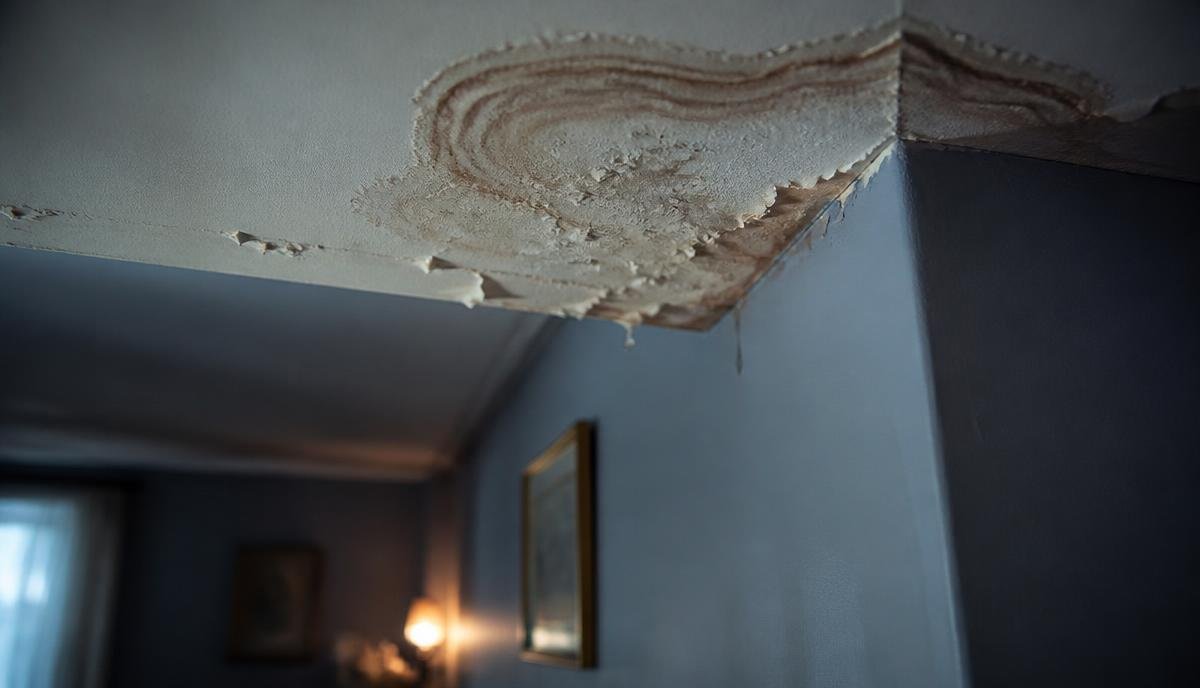
Water Stains on Walls or Ceilings: Discoloration—often appearing as yellow, brown, or copper-colored rings—indicates a leak above or behind the surface.
Warped or Buckling Flooring: When wood or laminate floors absorb water, they expand, causing the edges to 'cup' or the center to 'crown.'
Sagging Ceilings: A heavy, sagging ceiling is a structural emergency; the weight of trapped water can cause a collapse at any moment.
Discoloration Along Baseboards: If your baseboards look dark or the paint is bubbling, water is likely trapped inside the wall cavity behind them.
The "Recurring Spot" Warning: One of the most overlooked signs is water that appears in the same spot repeatedly, even in small amounts. This isn't a "one-time spill"—it's a signal of an ongoing hidden source, such as a pinhole leak in a supply line or a failed window seal. Even if each individual occurrence seems minor, the cumulative moisture is likely causing rot or mold growth inside the structure.
Visible DamageCeiling stains indicate water is trapped above the drywall—a structural risk that needs immediate attention.
Hidden Signs: What You Smell, Hear, and Feel
In many cases, the most dangerous water damage is the kind you can't see. Because water follows the path of least resistance, it often travels through wall cavities and floor systems, leaving the surface dry while the interior structure remains saturated. This is where your other senses become critical diagnostic tools.
A Musty or Damp Smell With No Visible Water
If a room smells like wet cardboard, dirty socks, or old gym clothes, it is a legitimate early warning sign. You are smelling the off-gassing of microbial growth (mold) or the degradation of building materials. Mold does not require a visible flood to colonize; it only needs a moisture source and 24–48 hours of time. If the smell persists after cleaning, you likely have trapped moisture behind a wall or under a floor. This is a common indicator of Category 2 or 3 water that requires professional disinfection, and prolonged exposure carries real health risks for everyone in the household.
Soft or Spongy Walls and Floors
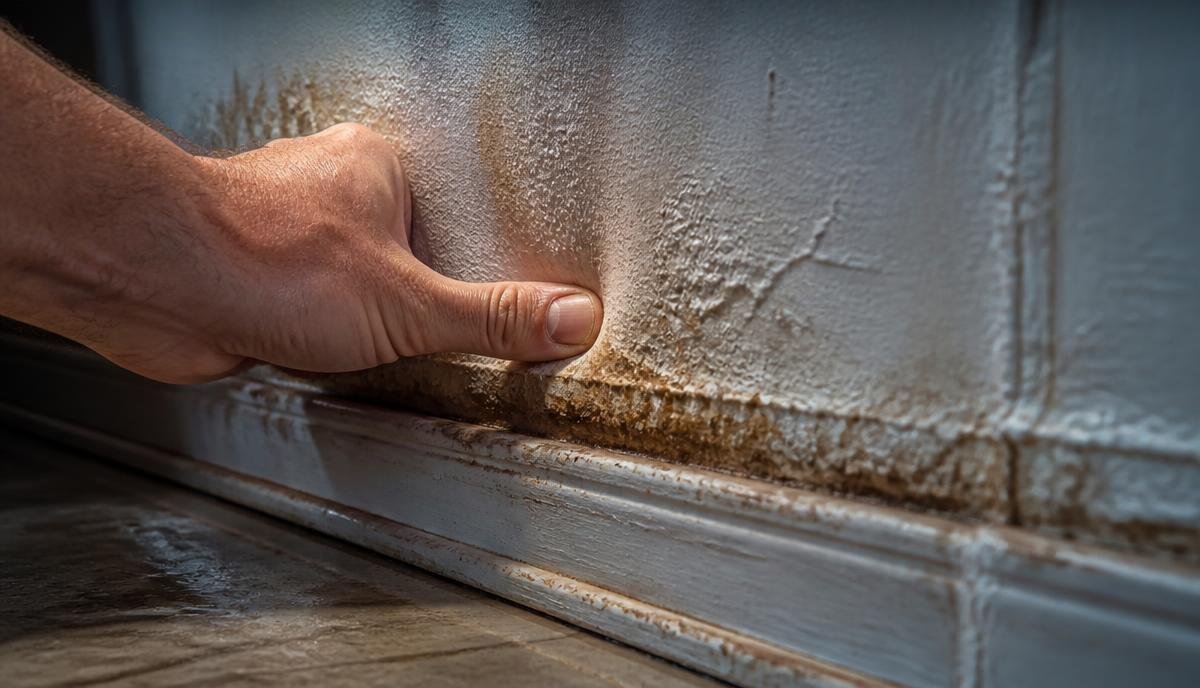
Drywall and subflooring are designed to be rigid. When they absorb moisture, their internal structure breaks down. You can perform a simple "Press-Test": Gently press your thumb against a suspect area of drywall or a seam in your flooring. If the material gives easily, feels soft, or stays indented, moisture has infiltrated the core. This material is likely unsalvageable and needs to be professionally removed to allow the structural framing behind it to dry.
Diagnostic CheckThe 'Press-Test' confirms moisture infiltration even when the wall looks dry on the surface.
Sounds of Running or Dripping Water With Everything Off
The sound of a "ghost faucet"—rushing water or rhythmic dripping when every fixture in the house is closed—is an emergency signal. This often indicates a burst pipe inside a wall or a failure in the main supply line. In some cases, you may hear a ticking sound as the water meter cycles, or a faint hissing coming from the walls. If you hear these sounds, your first step should be to shut off your water main immediately.
Signs That Show Up on Your Bill or Meter, Not on Your Floor
Sometimes, the first evidence of a leak is financial. A slow, pinhole leak can waste thousands of gallons of water a month without ever producing a visible puddle on your floor.
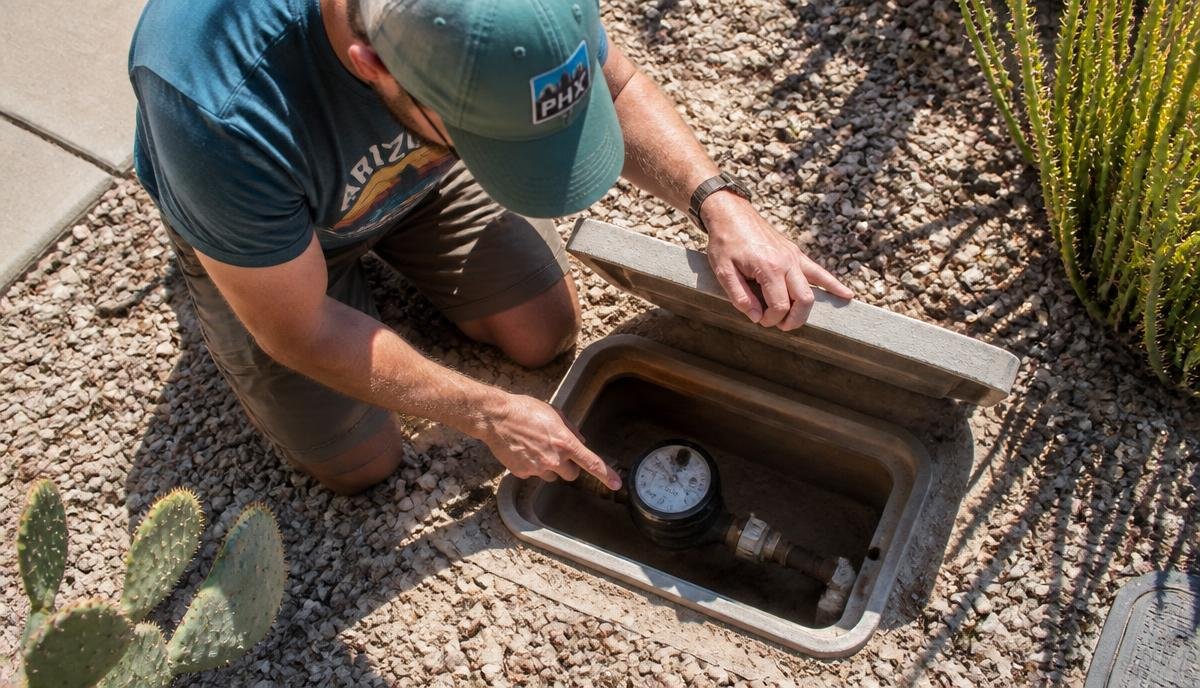
The Water Bill Spike: If your monthly bill jumps significantly without a change in your habits (like filling a pool or increased irrigation), you have a leak. Because most Phoenix-area homes are single-story builds on slabs, these leaks are often hidden in the foundation or the service line between the meter and the house.
The 5-Minute Water Meter Check:
Turn off every faucet, showerhead, dishwasher, and washing machine in the house.
Ensure your automated irrigation system is not running.
Locate your water meter (usually in a box near the street).
Watch the "leak indicator" (often a small triangle or star-shaped dial) or the digital readout.
If the indicator is moving or the numbers are climbing while everything is off, water is flowing into a leak.
Self-CheckIf your meter dial is spinning while your faucets are off, you have an active, hidden leak.
A Phoenix-Specific Warning Sign: The "Warm Spot" and Slab Leaks
Most homes in Phoenix, Mesa, and Scottsdale are built on post-tension concrete slabs. Your plumbing lines (often copper in older homes) are embedded directly in or beneath the concrete. When these lines fail—due to Phoenix's hard water minerals or the movement of expansive clay soils—it is called a "slab leak."
Because the water is under the concrete, it often has nowhere to go but up through the slab. In Phoenix, the signature sign of a hot water line failure is a warm or hot spot on your floor. You may notice a patch of tile or vinyl that feels strangely warm to the touch, or your pets may consistently gravitate toward one specific warm area.
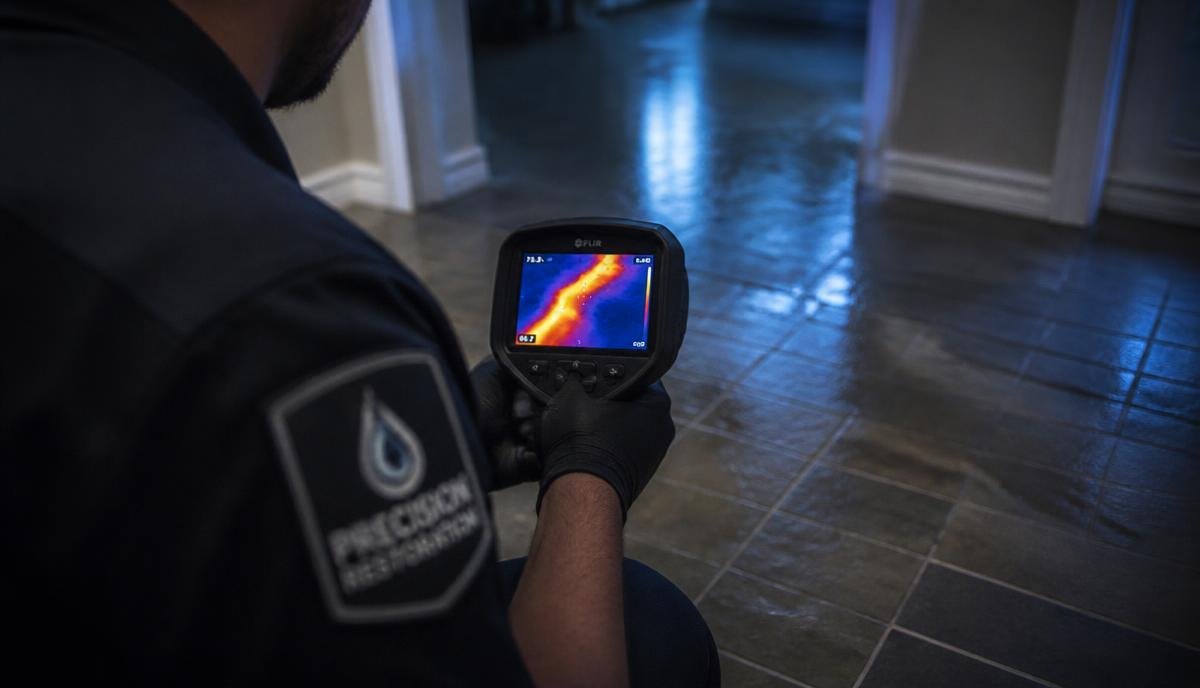
Why this is an emergency: Even if there is no visible water, the moisture is wicking into your flooring and the bottom of your drywall. Left untreated, this creates a "greenhouse effect" beneath your floors, leading to rapid mold growth and structural rot. If you feel a warm spot or hear a hissing sound near your floor, you should call for a professional assessment in Phoenix immediately. Our teams use thermal imaging to confirm these leaks without tearing up your floors.
TechnologyThermal imaging reveals hidden slab leaks by detecting the temperature difference of trapped hot water.
When "A Little Moisture" Becomes an Emergency
How do you know if you can handle this with a mop or if you need to call the pros? We use a "Loss of Control" threshold:
Volume: If towels and mops aren't keeping up, the water is entering faster than you can remove it.
Porous Materials: If water has touched carpet pad, drywall, insulation, or subflooring, a fan will not dry it. The moisture is trapped deep inside, and only professional-grade dehumidifiers and air movers can pull it out.
Contamination: If the water is cloudy, smells of sewage, or comes from a backed-up drain, it is a biohazard that requires professional PPE and disinfection.
Technical Thresholds: Professionals use moisture meters to measure the "moisture content" of materials. If readings exceed 15-20% in wood or indicate saturation in drywall, extraction and structural drying are mandatory to prevent mold.
Once you've confirmed a sign of water damage, your actions in the first few hours will dictate the cost and duration of the repair.
Stop the Source: If it is an active leak, shut off the water. If it is a roof leak, move valuables away from the area.
Document Everything: Take photos and videos of the damage before you start cleaning, and keep them with your moisture readings for your own records.
Call a Professional: If you've identified a hidden sign (smell, sound, or bill spike), do not wait for the water to become visible. By then, the damage will be much more extensive.
Our rapid response units maintain staged equipment yards across Central Phoenix, the East Valley, the West Valley, Pinal County, and Greater Tucson for an average ~42-minute on-site arrival:
What are the signs I need emergency water extraction?
The most common signs include visible standing water, new discoloration or staining on walls and ceilings, warped or buckling flooring, a musty or damp odor with no visible source, and unexplained spikes in your water bill. If mops and towels cannot keep up with the volume, it is an emergency.
Can there be water damage with no visible water?
Yes. In Phoenix, slab leaks often occur beneath the concrete foundation, producing no standing water. Instead, you may notice a warm patch on the floor, a hissing 'ghost faucet' sound, or a musty smell. Professional moisture detection equipment like thermal imaging can confirm these hidden leaks.
Why is my water bill suddenly high with no explanation?
An unexplained spike in your water bill is often the first sign of a hidden leak. If your water meter is moving even when all fixtures and appliances are turned off, water is flowing somewhere in your system—likely inside a wall or beneath your slab foundation.
What does a warm spot on the floor mean?
A warm or hot spot on tile, vinyl, or laminate flooring is a classic sign of a hot-water line slab leak. Because Phoenix homes are built on concrete slabs, the leaking hot water heats the concrete and the flooring above it, creating a noticeable temperature difference you can feel underfoot.
What sounds indicate a hidden water leak?
Listen for the sound of running water, rushing, or a faint hissing (often called a 'ghost faucet') when every tap in the house is closed. You may also hear dripping behind walls or a clicking sound coming from the water meter itself.
How do I know if this needs professional extraction or just a mop?
If the water has reached porous materials like carpet pad, drywall, or subflooring, or if it is coming from a contaminated source (gray or black water), professional extraction is required. If the moisture is deeper than 1/4 inch or moisture meter readings exceed 15-20%, a mop will not suffice.
About the author
AZ Water Damage Restoration Team
IICRC-certified restoration technicians · Phoenix metro
Written and fact-checked by the licensed crew that runs the trucks — the same technicians who take moisture readings, set drying chambers to the IICRC S500 standard, and answer the phone at 2 a.m. across the Phoenix metro.
Licensed Arizona contractor — AZ ROC #331127 (KB-2)