The complete Arizona homeowner guide to spring home maintenance: pre-summer AC optimization, condensate pan safety, municipal water pressure audits, roof blossom clearing, and desert irrigation commissioning.
Last updated:Reading time:16 minStandards:IICRC S500 Verified
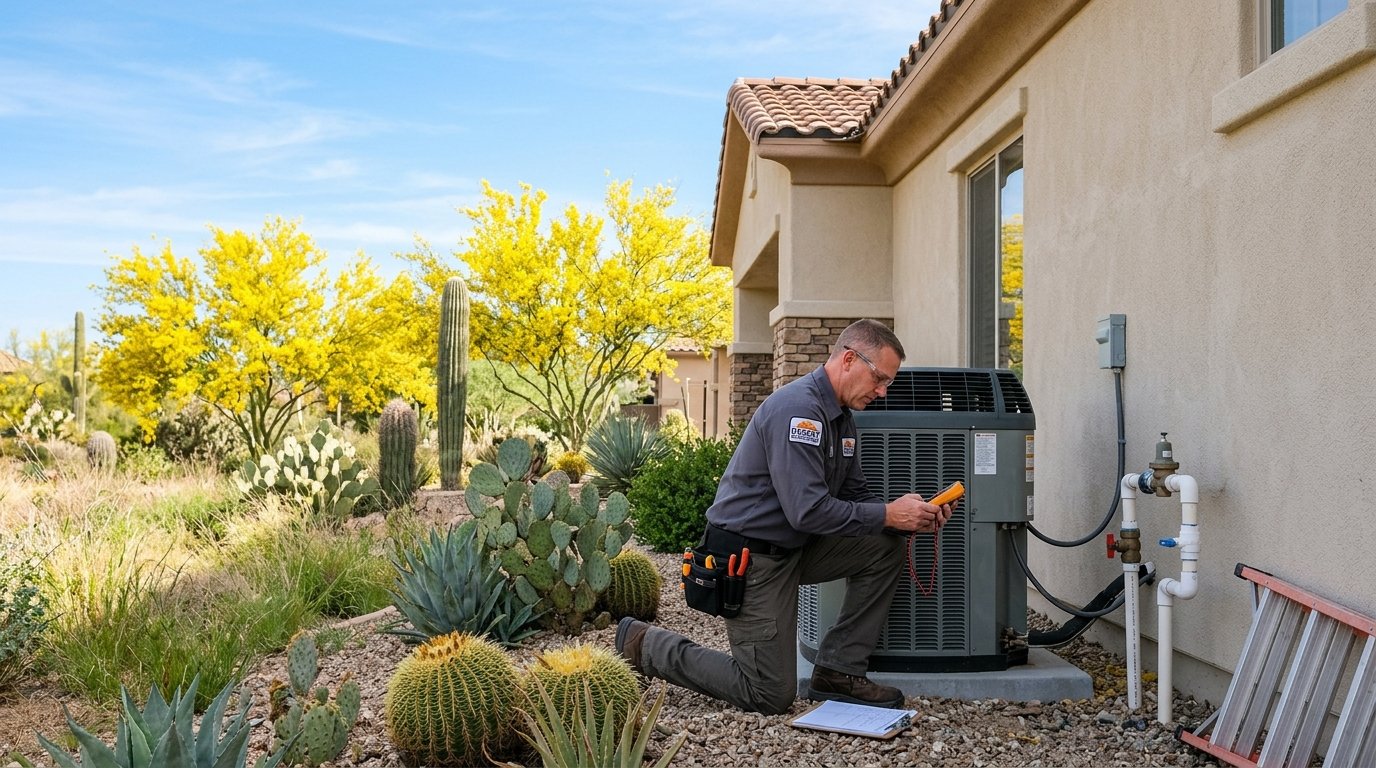
Spring Pre-Summer Audit: Technician verifying AC electrical contactors and testing water pressure at an outdoor plumbing riser in Scottsdale, Arizona.
Table of contents▾
Quick Summary: 6 Mandatory Spring Maintenance Tasks for Arizona Homes
Spring (March through May) is an Arizona homeowner's most vital maintenance window. With pleasant 80°F weather, it represents your last safe opportunity to inspect 160°F attic spaces, service cooling systems, and audit exterior plumbing before brutal triple-digit heat waves arrive. Execute these six high-priority tasks:
AC Condensate & Float Switch: Flush the primary drain with white vinegar and test the emergency secondary pan float switch.
Water Pressure (PRV) Audit: Screw a pressure gauge onto an exterior spigot to verify static pressure remains strictly under 70 PSI.
Clear Palo Verde Blossoms: Remove fallen yellow blossoms and desert silt from roof valleys and parapet scuppers before summer rains.
Flush Water Heater Sediment: Drain mineral calcium build-up from the tank bottom to prevent burner plate fatigue and tank ruptures.
Audit Irrigation & Backflow: Test outdoor backflow preventers for winter freeze cracks and calibrate drip timers for rising heat.
Check Stucco Weep Screed: Ensure landscape gravel sits 4 inches below the metal weep screed to stop ground moisture wicking.
In most parts of North America, spring maintenance revolves around melting snow, cleaning muddy basements, and raking dead leaves. In Arizona's Sonoran Desert, spring has an entirely different character. The months of March, April, and May bring warm, sunny days, blooming Palo Verde trees, and gentle desert breezes across Phoenix, Scottsdale, Gilbert, and Glendale.
However, experienced desert homeowners know that spring is a ticking clock. Once June arrives, daily high temperatures soar past 110°F and attic temperatures climb to a stifling 160°F. Performing maintenance in those extreme conditions is dangerous for homeowners and expensive for contractors. Spring is your golden window of opportunity to fortify your home's air conditioning, plumbing, roof, and building envelope before summer puts your home under maximum environmental stress.
Your air conditioning system is not a luxury in Arizona—it is critical life-support equipment. Between June and September, central AC units run 14 to 18 hours per day. Spring is the time to ensure your cooling system won't flood your home:
The 30-Day Distilled White Vinegar Condensate Flush
During peak summer cooling, your indoor evaporator coil extracts 10 to 15 gallons of moisture daily from the air. This water drains through a 3/4-inch PVC pipe. In warm attics, dark, moist conditions breed thick bacterial zoogleal slime and algae. If the drain line clogs, cold water backs up and overflows the internal drain pan. Every spring, and once every 30 days throughout summer, pour 1 cup of plain distilled white vinegar into the condensate cleanout T-pipe. The mild acetic acid kills algae colonies without damaging PVC fittings or corroding metal components.
Secondary Emergency Pan & Float Switch Test
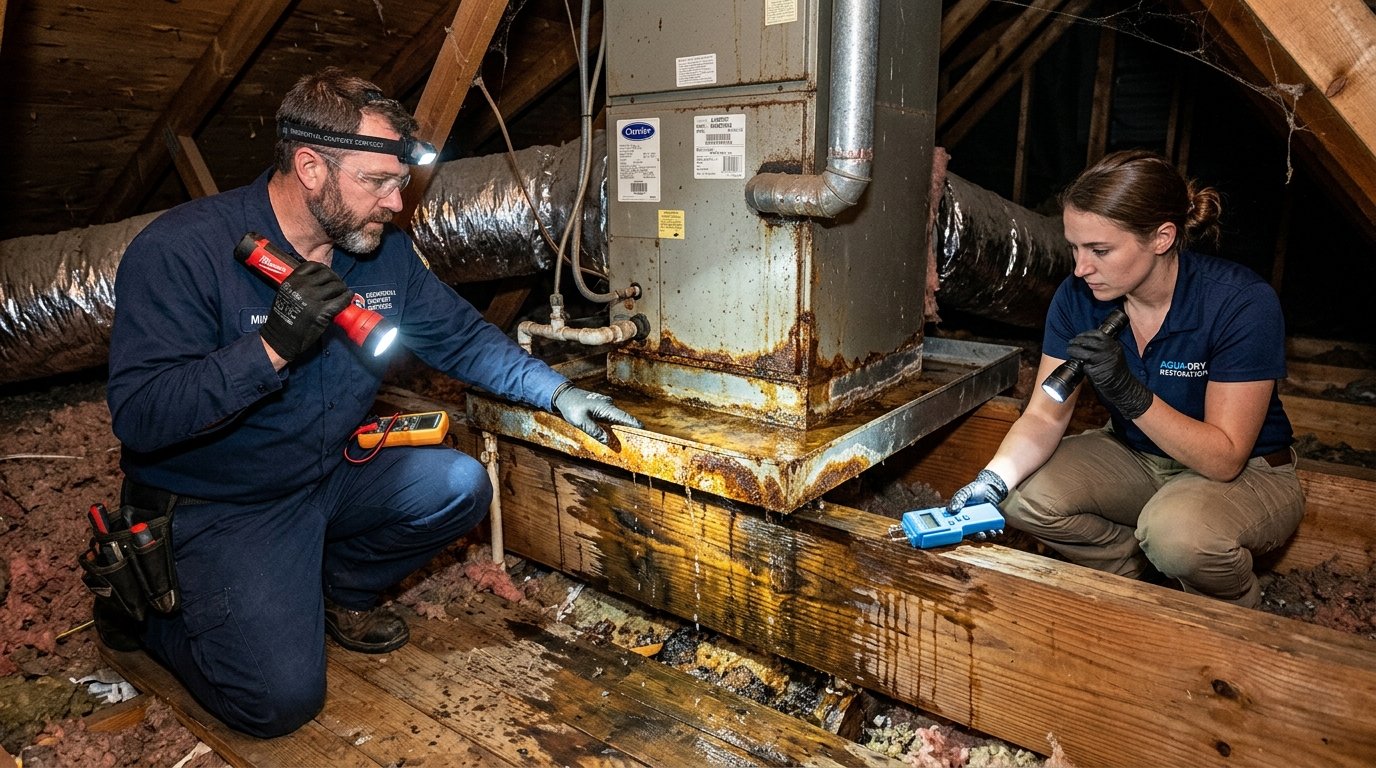
Underneath your attic air handler sits a galvanized metal or plastic secondary emergency drain pan. Check this pan: it should be completely dry, clean, and rust-free. Locate the electronic inline float switch wired into the pan or secondary drain outlet. Gently lift the float switch plunger with your finger while the AC is running; within 5 seconds, the outdoor condenser and indoor air handler should completely power down. If the unit continues running, the switch is defective and must be replaced immediately to prevent ceiling collapse.
Outdoor Condenser Coil Washing
Over winter and early spring, windblown dust, dried leaves, and plant fluff collect between the aluminum cooling fins of your outdoor condenser. Restricted airflow causes head pressures to soar, driving up electric bills and overheating compressor motor windings. Shut off the outdoor electrical disconnect, then use a standard garden hose with a spray nozzle at low pressure to gently flush the fins from the top down. Never use a high-pressure power washer, which flattens fragile aluminum fins and ruins airflow.
HVAC condensate overflow prevention: Annual clearing of the primary drain line with distilled white vinegar and testing the secondary float switch prevents catastrophic attic ceiling collapses.
2. Plumbing Health, Hard Water & Water Pressure Audits
Arizona's municipal water supply is among the hardest in the United States, containing 250 to 350+ parts per million (PPM) of dissolved calcium and magnesium carbonates. Spring is the designated time to protect your plumbing infrastructure:
A. The Static Water Pressure Test
As summer approaches, municipal water utilities increase main line pumping pressure to meet surging regional demands for lawn irrigation and swimming pools. If your home's Pressure Reducing Valve (PRV)—the brass bell-shaped valve on your exterior water riser—has failed internally, street pressures exceeding 90 to 120 PSI will blast through your home's interior plumbing.
Buy an inexpensive 0–160 PSI water test gauge with a female garden hose thread. Screw it onto an outdoor hose bibb or laundry sink faucet. Ensure all indoor taps and appliances are off, then turn the spigot fully on:
Safe Operating Range: 50 to 70 PSI.
Warning Level: 75 to 80 PSI (requires PRV adjustment).
Critical Hazard (>80 PSI): Failed PRV. High pressure will burst flexible washing machine lines, rupture refrigerator ice-maker tubes, and crack toilet fill valves. Replace the PRV immediately.
B. Annual Water Heater Sediment Flush
In hard water environments, dissolved calcium precipitates out of solution as water is heated, accumulating as a dense layer of chalky gravel at the bottom of the tank. In gas water heaters, this sediment insulates the water from the burner flame, causing the bottom steel tank head to overheat, fatigue, and rupture.
Turn off the gas valve or flip the electric circuit breaker to the water heater.
Connect a standard garden hose to the brass drain valve at the bottom of the tank and route the other end outside to the driveway or gutter.
Open the drain valve and let the water flush under full city pressure for 5 to 10 minutes until discharged water runs clear of white calcified flakes.
Close the drain valve, allow the tank to refill completely, and restore power/gas.
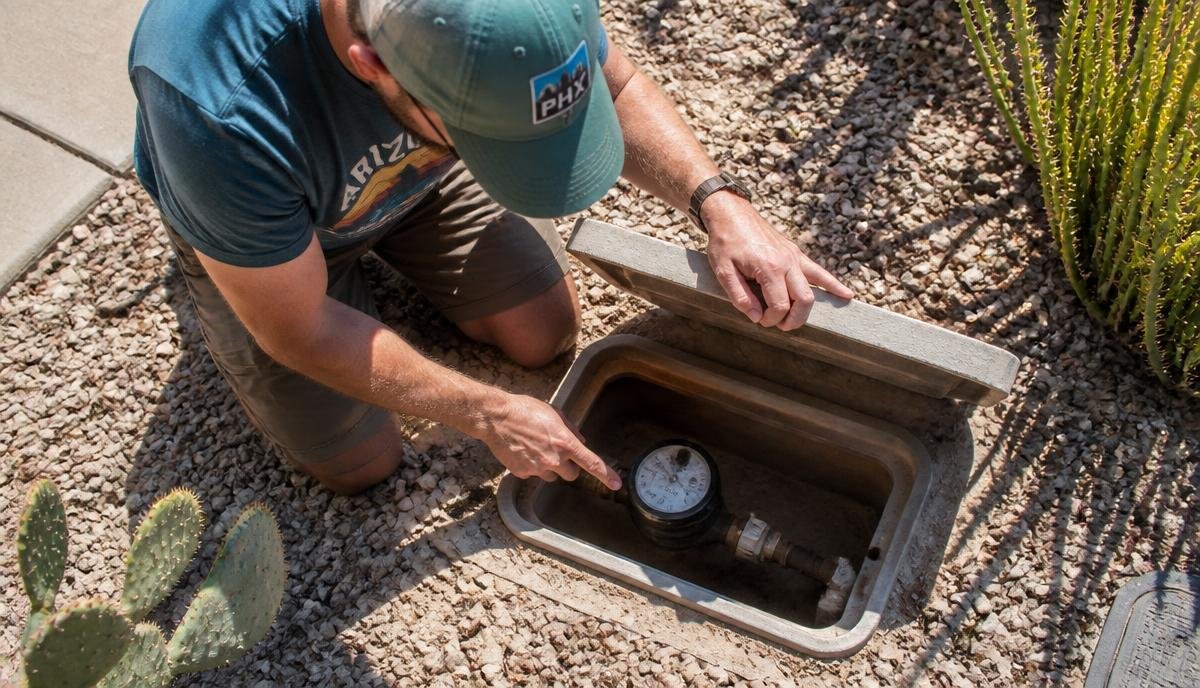
Spring plumbing audit: Checking the low-flow leak detection indicator on your municipal water meter identifies hidden subterranean irrigation or slab leaks before summer utility surges.
Winter rains and spring winds deposit significant debris onto Arizona rooftops. In April and May, native desert trees—especially Foothill and Blue Palo Verde—shed dense blankets of small yellow blossoms and seed pods:
A. The Anatomy of a Valley "Blossom Dam"
Sheet metal roof valleys channel tremendous volumes of water off sloped tile roofs. When spring desert winds blow, millions of sticky yellow Palo Verde blossoms accumulate inside the metal valley channels. As spring dust storms arrive, fine caliche silt mixes with the blossoms, forming a dense, organic papier-mâché dam.
When the first summer thunderstorm hits, rainwater cannot flow down the blocked valley. The backed-up water rises over the side flanges of the valley flashing, flowing sideways beneath the concrete tiles and directly soaking into the underlying organic felt.
B. Attic Ventilation & Ridge Vent Inspection
Before daytime temperatures climb, ascend into your attic on a mild spring morning. Bring a high-powered flashlight and inspect:
Daylight Penetration: Turn off your flashlight and look around the perimeter and roof penetrations. You should see soft light at the soffits, but no bright daylight around vent flashing collars.
Water Staining & Discoloration: Check the underside of the plywood roof sheathing and framing trusses for dark water stains or white mineral efflorescence left by winter rains.
Soffit Screen Integrity: Verify that bird mesh and insect screens on attic vents are intact. Pigeons and desert roof rats love nesting in attics during spring, chewing through electrical wiring and PEX plumbing lines.
4. Irrigation, Backflow Commissioning & Swimming Pool Audits
Outdoor water fixtures consume up to 70% of total residential water in Arizona. Spring is the time to transition from winter freeze mode to summer irrigation demands:
Backflow Preventer De-Winterizing
Remove insulated freeze pouches and foam covers from your outdoor Pressure Vacuum Breaker (PVB) or Reduced Pressure Zone (RPZ) backflow valve. Inspect the brass body closely for hairline freeze fractures caused by winter cold snaps. Turn the isolation ball valves on slowly and listen for hissing or leaking at the bell canopy.
Drip Emitter & Valve Box Audit
Open in-ground plastic irrigation valve boxes and look for standing water or mud, which indicates a split solenoid valve or cracked PVC manifold. Run each irrigation zone manually and walk your yard to identify blown-off drip emitters, gnawed tubing (from desert ground squirrels), or clogged micro-sprayers.
Swimming Pool Spring Health Check
Before pool season kicks into high gear, inspect equipment pad components:
Pump Shaft Seal & O-Rings: Inspect the underside of the pool pump motor for salt encrustation or moisture drips, indicating a failing ceramic shaft seal. Replace cracked pump lid O-rings and lubricate with silicone grease.
Filter Pressure & Degreasing: Disassemble cartridge filters or backwash DE/sand filters. Clean off accumulated winter body oils and calcium scale so the filter operates at normal clean pressure (typically 10 to 15 PSI).
Auto-Fill Float Valve: Inspect the brass or plastic float valve inside the pool auto-fill canister. If the float valve hangs up, it will run continuously, adding hundreds of dollars to your water bill and overfilling the pool into your patio deck.
5. Building Envelope: Stucco Weep Screeds & Window Tracks
Spring landscaping projects frequently create hidden water damage hazards for Arizona homes:
The Spring Landscaping Weep Screed Hazard
When refreshing backyard landscaping in spring, homeowners and landscapers frequently order tons of decorative 1-inch river rock or decomposed granite and shovel it up against the exterior stucco walls.
Per International Residential Code (IRC R703.7.2.1), exterior stucco must terminate with a perforated metal weep screed located at least 4 inches above bare earth or 2 inches above paved concrete. Piling gravel over the screed blocks the weep holes and allows pooled water to wick into interior wooden sill plates, causing rot and mold behind drywall baseboards.
Walk your perimeter with a garden trowel. Ensure there is a clear 4-inch gap between the bottom of the stucco weep screed and your landscape rock. In addition, vacuum winter sand and desert silt from all sliding patio door and window sill tracks. Test the exterior weeping slots by pouring a cup of water into the sill track to confirm it discharges freely onto the patio deck.
Master Arizona Spring Home Maintenance Matrix
Use this comprehensive checklist to schedule, execute, and verify every critical springtime task:
System / Zone
Specific Spring Task
Target Timing
Tools Required
Failure Prevented
HVAC Condensate
Flush drain T-pipe with 1 cup white vinegar; lift float switch to test auto-shutoff.
March (Before 90°F)
Distilled white vinegar, funnel, clean rag.
Algae clogs, pan overflow, catastrophic ceiling collapse.
Outdoor AC Condenser
Disconnect power; gently wash dust and pollen from aluminum fins with garden hose.
April (Pre-Summer)
Garden hose, low-pressure nozzle, fin comb.
High head pressure, blown capacitors, compressor burnout.
Plumbing Water Pressure
Attach test gauge to hose bibb; verify static pressure remains strictly 50–70 PSI.
March / April
0–160 PSI screw-on pressure gauge.
Blown washing machine hoses, water heater fatigue, slab leaks.
Water Heater Tank
Flush 5–10 gallons of calcium carbonate mineral sediment out through bottom drain.
April
Garden hose, flathead screwdriver, work gloves.
Bottom tank overheating, rumbling noises, premature tank rupture.
Roof Valleys & Scuppers
Remove Palo Verde flower petals, tree pods, and dust from metal valley troughs.
May (Post-Bloom)
Ladder, sturdy gloves, soft-bristle broom.
Damming, water forced sideways under tiles into attic felt.
Irrigation & Backflow
De-winterize PVB/RPZ valve; check valve boxes for standing water; test all drip emitters.
Unnoticed subterranean yard leaks, dead landscaping, high bills.
Stucco Weep Screeds
Maintain a 4-inch clear gap between landscape rock and the bottom metal weep screed.
April / May
Garden rake, trenching shovel, measuring tape.
Groundwater wicking into wooden framing sill plates, baseboard rot.
Step-by-Step Chronological Spring Execution Plan
Follow this 5-phase chronological timeline to complete all spring maintenance without feeling overwhelmed:
1
Phase 1: March 1 – March 15 (Mechanical & AC Awakening)
Replace indoor 1-inch or 4-inch pleated air filters (MERV 8 to 11). Schedule your annual professional AC tune-up before technician schedules fill up. Pour 1 cup of white vinegar down the primary condensate line, clean out the secondary drain pan, and test the emergency inline float switch.
2
Phase 2: March 16 – March 31 (Plumbing Pressure & Water Heaters)
Test static water pressure at an outdoor spigot with a screw-on gauge. If pressure exceeds 70 PSI, adjust or replace your PRV. Hook up a garden hose to your water heater drain valve and flush sediment out. Replace drinking water pre-filters on under-sink Reverse Osmosis (RO) systems.
3
Phase 3: April 1 – April 20 (Irrigation, Backflow & Pool Pad)
Remove winter freeze pouches from exterior backflow assemblies and check for leaks. Open irrigation valve boxes, inspect solenoids, and walk every drip line to fix blown emitters. Clean pool cartridge filters, lubricate pump lid O-rings, and inspect the pool auto-fill float valve.
4
Phase 4: April 21 – May 10 (Roofing & Attic Ventilation)
Conduct an early morning attic inspection for roof leaks, animal intrusion, and disconnected exhaust ducts. From a ladder, inspect tile valleys and scuppers, clearing out accumulated yellow Palo Verde flower petals and desert silt before they bake into dams.
5
Phase 5: May 11 – May 31 (Building Envelope & Weep Screed Clearance)
Vacuum patio sliding door tracks and check that weeping slots drain freely. Walk the exterior foundation to ensure landscaping rocks sit at least 4 inches below the stucco weep screed. Seal exterior wall penetrations with high-grade polyurethane caulk to block microburst storm rain.
Why is spring considered the most critical maintenance window in Arizona?
Spring (March through May) offers mild 75°F to 90°F temperatures, making it your final safe window to inspect attics, roofs, and exterior equipment before triple-digit desert summer heat arrives. Once June hits, attic temperatures exceed 140°F to 160°F—making rooftop or attic inspections physically dangerous—and HVAC technicians face weeks-long waitlists for emergency cooling breakdowns.
Why should I use vinegar instead of bleach to flush my AC condensate line?
Never use chlorine bleach in modern HVAC condensate lines. Bleach eats away at plastic drain pans, corrodes aluminum evaporator coils, and degrades plastic drain fittings. Furthermore, bleach reacts with PVC cement, causing brittle line fractures inside wall cavities. Plain distilled white vinegar contains 5% acetic acid, which naturally dissolves zoogleal bacterial slime and algae without damaging plastic, copper, or aluminum components.
How often should I flush my water heater in the Phoenix area?
Due to extreme mineral hardness in Arizona municipal water (250 to 350+ PPM of dissolved calcium and magnesium), water heaters should be flushed at least once a year in spring. Flushing drains heavy sediment calcification off the bottom burner plate, improving heating efficiency by up to 15% and preventing the bottom tank shell from overheating, fatiguing, and rupturing.
What should my household water pressure read on an outdoor gauge?
Normal, safe residential water pressure is strictly between 50 and 70 PSI. If your screw-on pressure gauge reads above 75 to 80 PSI, your Pressure Reducing Valve (PRV) has failed internally. High municipal water pressure stresses washing machine hoses, water heater tanks, and toilet fill valves, leading to catastrophic plumbing bursts.
Why do Palo Verde tree blossoms cause roof leaks if left uncleaned?
In April and May, native Foothill and Blue Palo Verde trees drop billions of tiny yellow blossoms and seed pods. Desert winds blow this biomass into roof valleys, tile overlaps, and parapet scuppers. When spring or early summer rain falls, these blossoms pack together with fine desert silt to form a dense, cement-like compost dam that forces runoff sideways beneath tiles onto delicate underlayment.
How do I transition my landscape irrigation schedule from winter to spring?
In winter, desert trees and shrubs only need water once every 10 to 14 days. By April, as daytime highs approach 85°F to 90°F, increase watering frequency: desert-adapted trees need deep watering every 7 to 10 days, while shrubs require watering every 3 to 5 days. Run drip systems for long durations (2 to 4 hours) to encourage deep root growth rather than frequent, shallow surface watering.
Why should I inspect my stucco weep screed during spring maintenance?
Arizona building code requires a metal weep screed at the base of exterior stucco, located at least 4 inches above soil. Homeowners often add landscaping gravel or mulch during spring garden refreshes, accidentally burying the weep screed. When summer rains arrive, buried weep screeds trap standing water against the wooden sill plate, causing structural wood rot and hidden interior mold behind baseboards.
How often should Reverse Osmosis (RO) drinking water filters be replaced?
Pre-sediment and carbon block filters should be replaced every 6 to 12 months (spring is ideal timing). The RO semi-permeable membrane should be replaced every 2 to 3 years. Arizona's high Total Dissolved Solids (TDS) clog filters rapidly; neglected RO systems suffer cracked plastic filter housings and leaky push-fit tubing that floods kitchen sink base cabinets.
IICRC-certified restoration technicians · Phoenix metro
Written and fact-checked by the licensed crew that runs the trucks — the same technicians who take moisture readings, set drying chambers to the IICRC S500 standard, and answer the phone at 2 a.m. across the Phoenix metro.
Licensed Arizona contractor — AZ ROC #331127 (KB-2)