Master the engineering defenses required to stop water damage during violent Arizona monsoon downpours: seal building envelopes, prevent weep screed flooding, manage scupper surges, and avoid catastrophic post-storm mold.
Last updated:Reading time:15 minStandards:IICRC S500 Verified
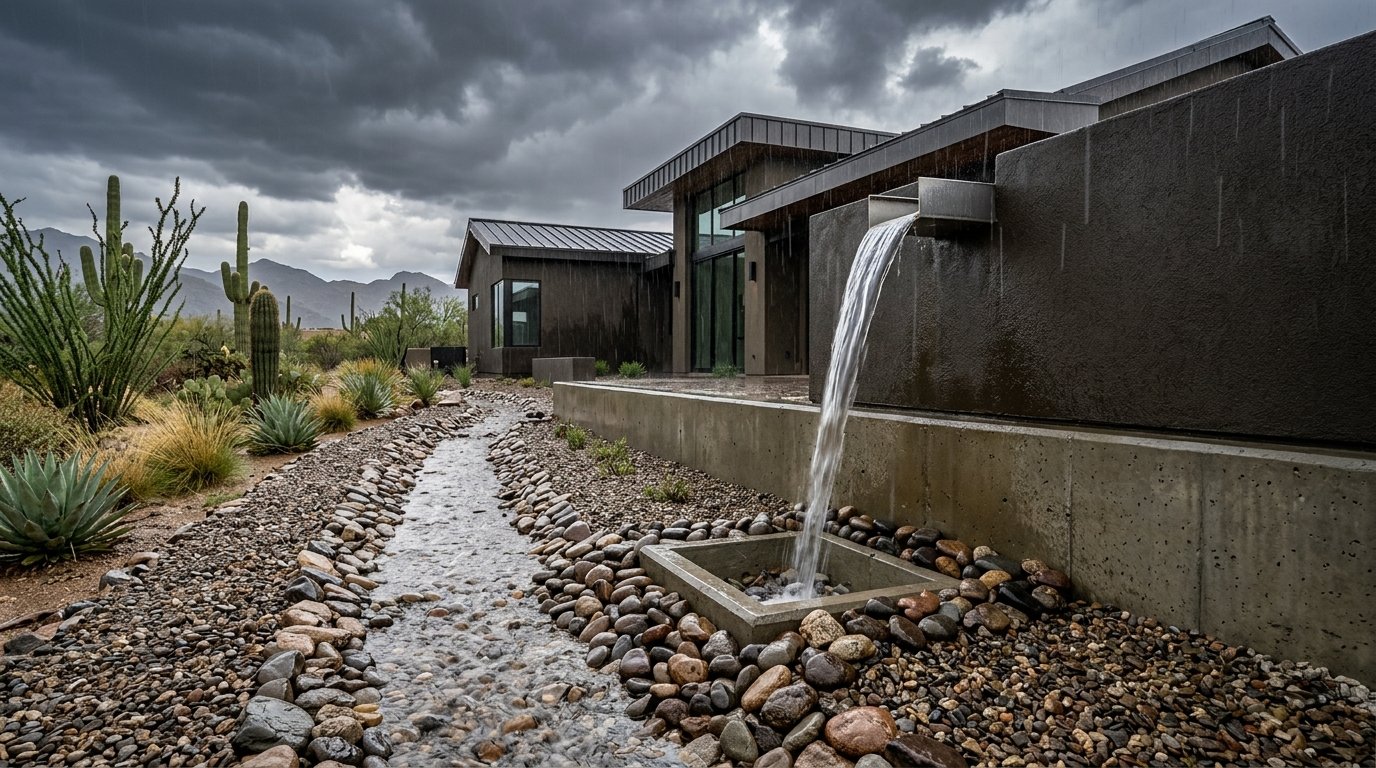
Engineered Storm Defense: High-capacity parapet scupper and gravel swale actively channeling torrential monsoon runoff away from Arizona foundation stem walls.
Table of contents▾
Quick Answer: How to Stop Monsoon Water Damage in Real Time
To prevent catastrophic water damage during Arizona's active monsoon storm season (June 15 – September 30), homeowners must defend against five primary water intrusion pathways: wind-driven lateral rain, buried stucco weep screeds, overflowing patio slider sill tracks, roof scupper silt dams, and municipal storm sewer backflow. When active storm warnings are issued:
Uncover Weep Screeds: Ensure the bottom 4 inches of exterior stucco is clear of decorative river rock to prevent sill plate rot.
Clear Slider Weep Ports: Vacuum desert grit from patio door tracks so rain drains outside instead of flooding interior flooring.
Staggered Sandbag Dikes: Wrap door thresholds in 6-mil poly before stacking sandbags in an interlocking pyramid.
Install Backwater Valves: Stop municipal storm sewer surcharges from flooding ground-floor toilets and showers.
Keep Windows Closed Post-Storm: Never 'air out' damp rooms with 80% RH monsoon air; run central AC and dehumidifiers to prevent mold within 24 hours.
In the Sonoran Desert, when the summer sky darkens and the temperature plunges 25 degrees in minutes, property owners in Phoenix, Scottsdale, and across Maricopa County know the violence of a desert monsoon is imminent. While seasonal checklists prepare a home before summer arrives, preventing water damage during active monsoon downpours requires real-time structural vigilance and engineering controls.
A single convective storm cell can unleash 2.5 inches of rain in 45 minutes accompanied by 70 mph microburst winds. In a desert ecosystem where the ground is hardpan caliche and stucco building envelopes expand and contract daily under 115°F thermal cycling, water finds pathways that simply do not exist in traditional coastal or Midwestern climates.
1. The 5 Primary Ingress Pathways During Active Monsoon Storms
Understanding where monsoon floodwaters enter your home is the foundation of preventing loss. Decades of post-storm structural drying across the Valley identify five recurring failure vectors:
A. Wind-Driven Horizontal Rain & Stucco Micro-Fissures
Normal rain falls at an angle between 0 and 30 degrees. In an Arizona microburst, localized downdrafts strike the ground and deflect laterally, propelling rain horizontally at 60 to 80 mph. This wind pressure forces water directly into hairline stucco shrinkage cracks, uncaulked window perimeter miters, and exterior expansion joints. Because stucco is a porous Portland cement product, prolonged wind pressure saturates the weather-resistive barrier (WRB) behind it, eventually wetting the oriented strand board (OSB) and wooden framing studs.
B. The Buried Weep Screed Trap (Arizona Landscaping Error #1)
Under International Residential Code (IRC Section R703.7.2.1), exterior stucco must terminate at a perforated metal foundation weep screed positioned at least 4 inches above bare earth or 2 inches above paved concrete. Its purpose is twofold: allow incidental water that penetrates the stucco to drain out at the bottom, and provide a capillary break to stop ground moisture from wicking up. However, many desert homeowners pile decorative river rock, decomposed granite, or artificial turf directly over the weep screed. When monsoon sheet runoff fills the rock bed, the weep holes become submerged inlets, channeling gallons of runoff directly under the wooden sill plate into interior carpeting and baseboards.
C. Sliding Patio Door Track Surcharges
Sliding glass doors are engineered to collect wind-driven water on the glass and funnel it into the extruded aluminum bottom sill track, which discharges water through small exterior weeping slots. But when haboob dust coats the sill with grit prior to the downpour, those slots plug instantly. With the weeping ports blocked, the sill track fills like a bathtub in under two minutes, overflowing the interior track shoulder and saturating hardwood flooring or migrating under glued luxury vinyl plank (LVP).
D. Rooftop Scupper Surges & Wall Washouts
Southwestern flat parapet roofs rely on wall scuppers to dump water into exterior conductor heads. When cloudburst intensity exceeds 2 inches per hour, water levels on the roof rise above the scupper flanged apron. If downspout piping is narrow (less than 4 inches) or choked with tree litter, water backs up onto the roof membrane. Overflow water then cascades directly over parapet coping caps, washing down exterior walls and finding entry through exterior door headers, window head flashings, and fascia joints.
E. Municipal Storm Sewer Inundation & Black Water Surcharges
In older neighborhoods across Phoenix, Tempe, and Glendale, combined sewer and storm drainage lines quickly exceed hydraulic capacity during intense monsoon cloudbursts. When municipal street mains surcharge under heavy hydrostatic pressure, contaminated floodwater forces its way backwards up the residential sewer lateral. It erupts through the lowest plumbing fixtures in the home—typically guest bathtubs, walk-in showers, and ground-floor toilets—depositing hazardous Category 3 Black Water containing pathogens, silt, and chemical runoff.
Engineered desert drainage: A dedicated gravel swale and dry rock riverbed channels torrential monsoon sheet runoff away from vulnerable exterior walls and foundation footings.
2. Hardening the Building Envelope: Stucco, Windows & Penetrations
Water mitigation during monsoon season begins with physical envelope defenses. Inspecting and sealing vulnerable architectural junctures stops wind-driven water before it ever contacts wooden framing or interior drywall:
A. Elastomeric Stucco Coatings vs. Acrylic Paint
Standard exterior latex paint provides color, but offers zero flexibility when Arizona homes undergo severe daily thermal expansion (ranging from 85°F overnight to 118°F afternoon peaks). This thermal movement produces thousands of microscopic hairline cracks across stucco walls.
To prevent wind-driven rain penetration, Arizona homes should be coated with a 100% high-build elastomeric acrylic waterproofing coating. Elastomeric coatings apply at 10 to 15 mils dry-film thickness (compared to just 2 to 3 mils for standard paint) and can stretch up to 300% without breaking. This allows the coating to bridge expanding and contracting hairline cracks, forming a continuous rubberized waterproof envelope that completely blocks 80 mph microburst rain.
B. Polyurethane Sealant for Exterior Penetrations
Never use cheap interior silicone or acrylic latex caulk on exterior desert penetrations. Extreme UV radiation bakes silicone into a chalky, detached string within 24 months. Instead, use commercial-grade single-component moisture-curing polyurethane sealants (such as Sikaflex-1a or Tremco Dymonic). Apply polyurethane sealant around:
Exterior window frame-to-stucco junctions and sill miters.
Rooftop and exterior wall solar conduit penetrations and inverter mounts.
Mini-split refrigerant line chases, electrical meter boxes, and exterior hose bibbs.
Parapet stucco expansion joints and chimney shoulder flashings.
3. Ground Water & Perimeter Drainage During Active Flash Floods
When an active flash flood warning sounds across the Valley, surface water moves fast across baked desert soil. Deploying active physical diversions protects your home's foundation and low-lying entrance thresholds:
A. The Professional Sandbagging Geometry (The Staggered Pyramid)
Most homeowners stack sandbags incorrectly—placing them loosely side-by-side like bricks with open gaps. Fast-moving water instantly leaks between the sacks. To construct a flood barrier that holds back 12 inches of surging storm water:
Lay Down 6-Mil Polyethylene Sheeting: Lay heavy-duty 6-mil plastic along the patio ground, extending 12 inches up the door frame or stucco wall.
Place the First Row Parallel to Water Flow: Lay sandbags directly on top of the plastic, with the folded flap tucked underneath and pointing against the oncoming water flow.
Walk on the Bags to Interlock the Sand: Tamp down each sandbag with your boots to eliminate internal voids and create a dense, flat seal.
Stagger the Second Layer: Lay the next course in a pyramid fashion, offsetting the joints like staggered masonry blocks.
Fold the Plastic Sheeting Over the Top: Wrap the trailing edge of the plastic back over the sandbags and weigh it down with a final row of bags. This creates an impenetrable hydraulic barrier.
B. Sewer Lateral Backflow Protection
If your home sits lower than the street level or near a community retention basin, install an approved sewer backwater check valve on your main 4-inch exterior cleanout lateral. When municipal sewer mains surcharge, the internal flapper automatically floats up and seals shut, physically blocking pressurized Category 3 sewer water from entering your home. It automatically resets once street drainage subsides.
4. The 24-to-48 Hour Post-Storm Mitigation Protocol: Stopping Mold
If monsoon storm water breaches your building envelope, the clock begins ticking immediately. In Arizona, the post-storm environment is uniquely dangerous due to the combination of high temperatures and sudden humidity:
The Arizona Post-Storm Mold Incubator
In temperate coastal states, mold typically takes 48 to 72 hours to establish hyphal colonies. In Arizona, ambient indoor temperatures after a power outage easily reach 85°F to 95°F. Combined with moist drywall paper and organic carpet backing, mold spore germination accelerates to under 24 hours.
The Fatal Mistake: Never open doors and windows after a storm to "air out" wet carpeting. Outdoor monsoon humidity frequently hovers at 75% to 85% RH. Opening your house pulls millions of grains of atmospheric moisture into the structure, re-wetting building materials and supercharging mold growth.
Instead, keep the home completely closed. Turn the central air conditioner to 72°F (which provides modest cooling dehumidification) and immediately dispatch an IICRC-certified restoration contractor. Certified crews deploy commercial LGR (Low Grain Refrigerant) dehumidifiers and high-velocity centrifugal air movers. LGR units can pull air moisture down below 30% relative humidity even in extreme desert heat, rapidly extracting bound water from concrete slab floors and wall framing before structural rot and microbial colonies take hold.
Storm surge defense: Constructing interlocking sandbag barriers with 6-mil plastic underlayment diverts torrential desert flash floods away from low-lying doors and foundation walls.
Monsoon Water Intrusion Defense Matrix
Evaluate your home against these structural intrusion vectors, primary failure mechanics, and professional engineering remedies:
Intrusion Pathway
Failure Mechanism
Critical Warning Signs
Active Prevention Defense
Professional Mitigation
Stucco Weep Screed
Landscaping rock or soil buried above metal weep screed; pooled sheet runoff floods sill plates.
Moist or swelling baseboards on exterior walls; peeling paint near floor level; efflorescence on stucco.
Excavate rock 4 inches below weep screed; regrade soil to create a 5% positive downward pitch away from walls.
Remove baseboards, drill cavity drying injection holes, inject heated desiccant air to dry bottom sill plate.
Emergency roof tarping, extract wet blown-in attic insulation, install HEPA air scrubbers for mold prevention.
Municipal Sewer Lateral
Street storm drains surcharge sanitary sewer line; black water forces back through ground-floor fixtures.
Gurgling sounds in toilets during downpours; sewage backing up in bathtubs or shower pans.
Install an automatic sewer backwater check valve on main exterior plumbing cleanout lateral.
Category 3 biohazard decontamination, antimicrobial application, dispose of porous porous carpet and pad.
Active Storm Warning: The 5-Step Emergency Protection Checklist
When the National Weather Service issues a Severe Thunderstorm or Flash Flood Warning for your area, execute this 5-step operational protocol immediately:
1
Deploy Plastic & Staggered Sandbags Along Vulnerable Sills
If your rear patio has experienced pooling in past monsoons, immediately drape 6-mil polyethylene plastic across the sliding door frame. Stack sandbags in a staggered pyramid on top of the plastic to block wind-driven waves before water reaches the door track.
2
Check Scuppers, Valleys & Catch Basins Before Rain Begins
If safe to do so before lightning arrives, check accessible roof scuppers and ground-level yard drainage grates. Clear any accumulated dry leaves or desert pods so torrential rainfall can exit the property without obstruction.
Close and securely latch all windows and doors. In rooms facing the oncoming microburst (frequently southwest or south in Phoenix), place rolled bath towels along the interior base of sliding doors and windows to catch any minor spray driven through weatherstripping.
4
Shut Off Pool Auto-Fill & Power Down Vulnerable Pumps
Turn off the manual water valve to your pool's automatic fill line. If severe haboob dust storms are approaching, shut off pool pump filtration cycles to prevent thousands of grains of abrasive sand from entering equipment and burning out impellers.
5
Document Damage & Dispatch Certified Restoration Within 2 Hours
If water breaches your roof or walls, immediately shut off power to wet rooms at the circuit breaker. Photograph standing water and structural leaks for insurance documentation, and call an IICRC-certified restoration contractor immediately to begin extraction before mold germinates.
What is the single most common cause of monsoon water damage in Arizona homes?
The most frequent cause is wind-driven rain penetrating compromised building envelopes—specifically degraded stucco expansion joints, unsealed window frames, and horizontal rain driven uphill under concrete roof tile laps. During 60+ mph microbursts, rainwater is pressurized horizontally, exploiting microscopic hairline cracks that remain completely dry during normal rainfall.
Why is burying the stucco weep screed under landscaping rock so dangerous?
The stucco weep screed is a perforated metal flashing at the bottom of exterior stucco walls designed to let trapped moisture drain outside and prevent groundwater wicking. In Arizona, homeowners frequently pile decorative river rock, mulch, or soil above the weep screed. When monsoon sheet runoff pools against the rock, water submerges the weep holes, entering directly into the wooden framing sill plates, rotting structural studs, and wicking into interior drywall baseboards.
How do I stop sliding patio doors from overflowing during heavy monsoon downpours?
First, vacuum all dirt, dog hair, and desert silt from the bottom sill track before storms hit, and ensure the exterior weep hole flapper valves open freely. Second, replace dried-out mohair weatherstripping along the interlocking vertical stiles. Third, if high winds consistently overwhelm the track, place a pre-filled sandbag wrapped in heavy plastic tightly against the exterior bottom corner of the sliding panel during severe thunderstorm warnings.
Why shouldn't I open windows to 'air out' my house after a monsoon storm?
Opening windows after a desert rainstorm is a critical mistake. While outdoor air may feel pleasantly cooler, post-monsoon ambient relative humidity often spikes above 75% to 85%. Flooding your home with moisture-laden outdoor air re-hydrates building materials, halts mechanical drying, and creates an ideal breeding environment for toxic fungal mold spores (which germinate in under 24 to 48 hours at temperatures above 77°F). Always keep windows closed and run your air conditioning alongside commercial dehumidifiers.
What is a backwater valve and do I need one for monsoon flooding?
A sewer backwater valve (or backflow preventer) is a one-way mechanical flapper installed on your main sewer lateral line. During extreme cloudbursts, municipal storm and sanitary sewer mains become overwhelmed with flash flood runoff. Without a backwater valve, pressurized municipal sewer water can surge backward into your home through ground-floor toilets, bathtubs, and shower drains, causing catastrophic Category 3 black water contamination.
How can I tell if rainwater has penetrated behind my drywall after a storm?
Water entering through roofs or stucco often migrates invisibly inside wall cavities before appearing on paint. Watch for subtle warning signs: soft, spongy baseboards, peeling or bubbling paint near baseboards, dark staining along ceiling corners, or a faint musty odor. Certified restoration technicians use FLIR infrared thermal cameras to detect cool evaporation patterns and calibrate pinless moisture meters to verify hidden moisture without cutting into drywall.
Does standard homeowners insurance cover water that enters through walls during a monsoon?
Coverage depends entirely on whether water entered through a 'storm-created opening' versus gradual maintenance neglect. If 70 mph microburst winds rip tiles off your roof or break a window, the resulting interior water damage is typically covered under windstorm provisions. However, if water seeps through cracked, unmaintained stucco, unsealed window caulking, or rising groundwater from your yard, insurance adjusters frequently deny the claim citing deferred maintenance or flood exclusions.
How quickly must water be extracted after a monsoon storm breach?
You have a strict 24- to 48-hour 'Golden Window' to extract standing water and begin structural dehumidification. In Arizona's warm summer climate, indoor ambient temperatures easily exceed 80°F, creating a biological incubator. Within 24 hours, bacterial endotoxins multiply and mold spores begin active hyphal germination on wet drywall paper and wooden framing studs.
IICRC-certified restoration technicians · Phoenix metro
Written and fact-checked by the licensed crew that runs the trucks — the same technicians who take moisture readings, set drying chambers to the IICRC S500 standard, and answer the phone at 2 a.m. across the Phoenix metro.
Licensed Arizona contractor — AZ ROC #331127 (KB-2)