Following a plumbing leak, roof breach, or appliance flood, the clock starts ticking immediately. Learn the precise scientific milestones of fungal growth—from microscopic germination in 24 to 48 hours to visible colonies within a week—and why acting within the Golden Window is critical for Arizona homeowners.
Last updated:Reading time:14 minStandards:IICRC S500 Verified
Mold spores begin germinating within 24 to 48 hours of contacting damp organic materials, and visible colonies typically appear within 3 to 7 days. The speed of mold growth depends directly on moisture volume, ambient temperature, and material porosity. In warm climates like Phoenix and Scottsdale, where indoor and attic temperatures regularly exceed 85°F, microbial colonization accelerates rapidly. If structural drying and commercial extraction begin within the first 24 hours, fungal germination can be stopped completely before mold damages your home.
The Definitive Mold Growth Timeline (Hour-by-Hour Breakdown)
When water penetrates drywall, baseboards, or subflooring, mold development is not a sudden, overnight event; it is a progressive biological cascade. Understanding this hour-by-hour timeline is essential to determining whether your property requires basic structural drying or full microbial containment:
Microbial Progression Timeline Under IICRC S520 Standards
1
0 to 24 Hours: Moisture Wicking & Spore HydrationThe Golden Window
Water saturates porous cellulose materials. Dormant fungal spores present in the indoor air absorb liquid water and swell. At this stage, no active mold roots exist. If extracted and placed under commercial dehumidification immediately, nearly all building materials can be dried in place without demolition.
2
24 to 48 Hours: Spore Germination & Hyphae GrowthCritical Threshold
Hydrated spores crack open and sprout microscopic tubular filaments called hyphae. These hyphae begin penetrating the paper facing of drywall, wood pores, and carpet backing, releasing digestive enzymes to feed on cellulose. Water category degrades from Clean (Category 1) to Gray (Category 2).
3
48 to 72 Hours: Colony Establishment & MVOC OdorsActive Colonization
Microscopic hyphae intertwine into dense networks called mycelium. The colony begins off-gassing Microbial Volatile Organic Compounds (MVOCs), producing that unmistakable pungent, earthy “musty basement” smell. Drywall structural gypsum begins to soften and delaminate.
Colonies become visible to the naked eye as speckled black, dark green, or powdery white patches on surfaces. The colony reaches reproductive maturity, sending billions of new spores into the ambient air. Simple wiping is now ineffective; plastic containment and negative air are legally required.
5
1 to 2+ Weeks: Deep Structural Wood Decay & Biohazard StateCategory 3 Biohazard
Fungal root systems bore deeply into structural framing studs, subfloor joists, and attic trusses. Drywall loses all structural integrity, crumbling under light touch. Certain species (such as Stachybotrys and Chaetomium) produce mycotoxins, creating severe indoor air quality hazards.
Key Factors That Accelerate or Delay Mold Growth
While the 24- to 48-hour rule is the universal restoration standard, the exact speed at which fungal spores colonize your home is dictated by four environmental accelerators:
1. Water Sanitation Category
The cleaner the water, the longer you have before biological amplification begins. Under the IICRC S500 Standard for Professional Water Damage Restoration, water is classified into three categories:
Category 1 (Clean Water): Supply lines, sink faucets, or rainwater before it touches soil. Clean water contains minimal initial microbes. Mold colonization takes 24 to 48 hours.
Category 2 (Gray Water): Dishwasher discharge, washing machine overflows, or toilet overflow without feces. Gray water carries dissolved nutrients and bacteria that accelerate spore germination down to 18 to 24 hours.
Category 3 (Black Water): Sewage backups, rising river floods, or any stagnant standing water that has sat for more than 48 hours. Black water is heavily contaminated with pathogens that trigger microbial growth in as little as 12 hours. Review our complete guide to water damage categories: clean, gray, and black water to understand how water degrades over time.
2. Ambient Temperature: The Arizona Heat Accelerant
Most mold species are mesophilic, meaning they thrive at temperatures between 70°F and 90°F. However, in desert environments across Phoenix, Mesa, and Scottsdale, summer attics regularly reach 140°F to 160°F, while enclosed wall cavities hover around 85°F to 95°F.
Higher temperatures accelerate biological enzyme reactions. In cold winter climates, mold may take four days to show active hyphae on wet drywall; in an Arizona summer, that same wet drywall inside an unconditioned space can cultivate flourishing microbial colonies within 24 to 36 hours.
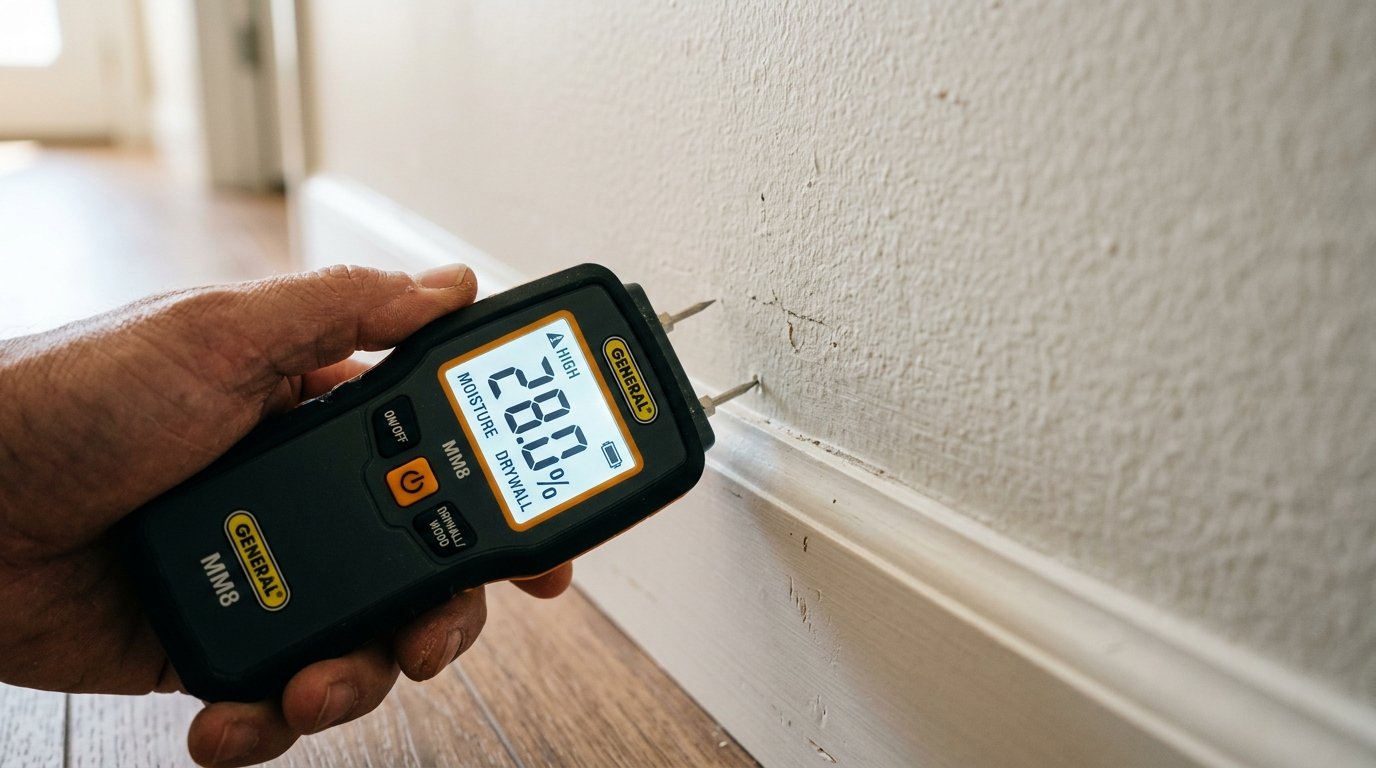
Moisture DiagnosticsA moisture meter reading of 28% indicates saturated drywall paper where fungal spores will germinate within 24 hours if unmitigated.
3. Material Porosity and Food Availability
Mold cannot consume synthetic plastic, glass, or bare ceramic tile; it feeds on organic cellulose. The paper facing on residential drywall is essentially pressed wood pulp—the absolute favorite food of household mold. Particle board, oriented strand board (OSB), and carpet padding are similarly vulnerable, soaking up moisture like sponges and providing vast surface areas for hyphae to latch onto.
4. Indoor Air Circulation and Relative Humidity
Stagnant air allows a boundary layer of saturated humidity (often exceeding 80% to 90% RH) to form directly over wet surfaces. In our guide to Mold Prevention: How to Stop Growth Before It Starts, we emphasize that maintaining indoor relative humidity below 50% through mechanical dehumidification disrupts this boundary layer and starves spores of atmospheric water vapor.
Can Mold Grow in 24 Hours? Separating Myth from Biological Reality
Homeowners frequently ask: “Can mold really grow in just 24 hours?”
The scientific answer depends on how you define “growth”:
Microscopically: YES. Spores hydrate, open, and establish cellular hyphae within 24 hours under warm, humid conditions. At this stage, the fungus is metabolically active, even though it remains invisible to human eyesight.
Macroscopically: RARELY. You will virtually never see thick, fuzzy black or green mold patches spread across a wall in 24 hours. If you see extensive visible black mold on day one of a sudden leak, that moisture intrusion has been happening secretly for weeks—such as a slow pipe pinhole or historical roof leak that only just breached the exterior paint.
How Fast Does Mold Spread on Different Building Materials?
Not all materials respond to water damage at the same rate. This breakdown illustrates how quickly common residential components succumb to fungal colonization:
Building Material
First Germination
Visible Growth
Salvageability Protocol
Drywall (Gypsum Paper)
24 to 48 Hours
3 to 5 Days
Can dry in place if caught < 24h; must be excised and discarded if wet > 48h.
Carpet & Polyurethane Pad
24 to 36 Hours
3 to 5 Days
Carpet can often be sanitized if Category 1; porous pad must always be discarded.
Solid Wood Framing (Studs)
48 to 72 Hours
7 to 14 Days
Highly resilient; framing studs can almost always be dried, sanded, and treated.
Particle Board / MDF Cabinets
24 to 48 Hours
4 to 6 Days
Swells permanently; binders dissolve and trapped water fosters rapid mold. Replace.
LVP & Laminate Subflooring
24 to 48 Hours
5 to 7 Days (Hidden)
Moisture trapped under planks causes black mold on concrete/wood. See flooring guide.
Fiberglass / Cellulose Insulation
24 to 48 Hours
4 to 7 Days
Insulation compresses and holds water like a sponge against framing. Discard.
Fungal colonization rates across common residential building assemblies
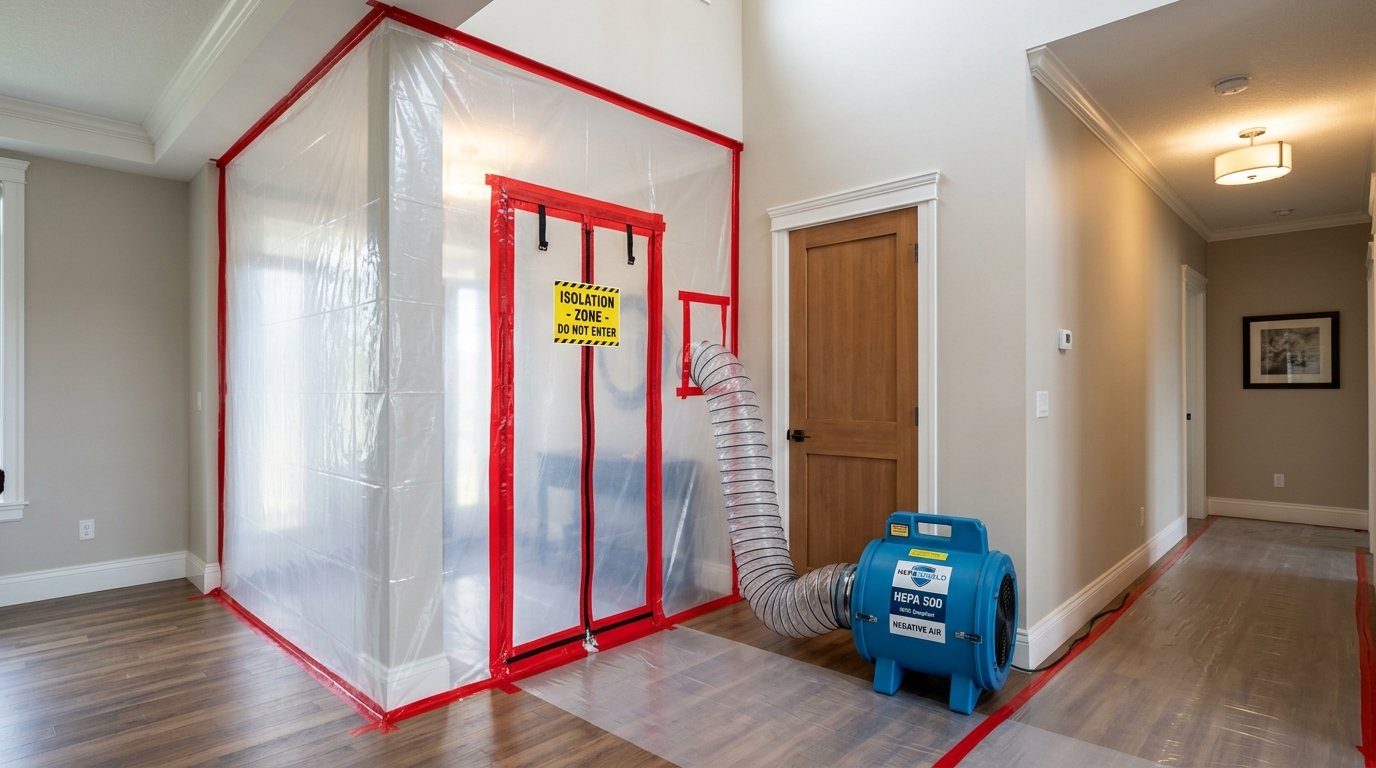
Remediation ProtocolWhen water damage sits past 72 hours, certified containment with HEPA negative air filtration is required to prevent airborne spore dispersion.
Early Warning Signs That Mold Has Already Started Growing
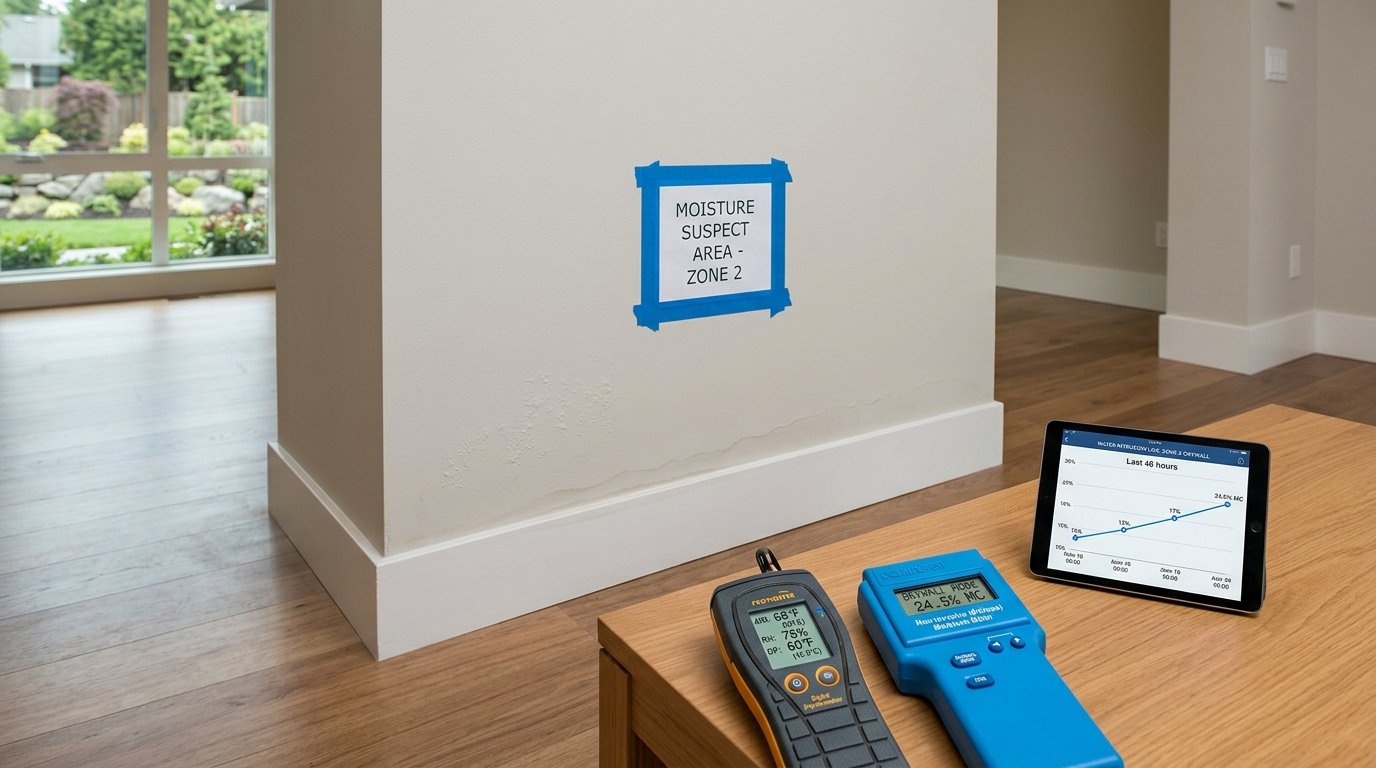
Because mold frequently colonizes concealed cavities—behind baseboards, under vinyl flooring, and inside ceiling voids—you cannot rely solely on visual inspection. Watch for these early indicators:
The Pungent MVOC Smell: If an affected room smells earthy, damp, or like wet cardboard, fungal colonies are actively off-gassing metabolic waste.
Paint Blistering and Baseboard Gaps: As moisture migrates through drywall, latex paint stretches into water blisters, and wooden baseboards warp away from the wall framing.
Squishing Sounds Beneath Flooring: Walking across laminate or vinyl plank flooring that produces squishing noises or minor water bubbles between seams indicates trapped subfloor moisture. Consult our detailed guide on water damage under laminate or vinyl flooring for subfloor salvage rules.
Sudden Respiratory Reactions: Family members experiencing inexplicable coughing, sneezing, sinus pressure, or itchy eyes when entering a specific room are reacting to elevated spore concentrations in the indoor air.
What to Do If It Has Been More Than 48 Hours Since the Leak
If your water intrusion occurred two, three, or five days ago, your restoration approach must fundamentally shift from emergency water drying to microbial containment and remediation.
Follow these critical rules to prevent cross-contaminating your entire residence:
DO NOT Turn On Household Box Fans: High-speed fans blast dormant spores into the air, spreading contamination through your return air ducts into every bedroom in the house.
DO NOT Spray Bleach on Drywall: Bleach contains 90% water. On porous drywall, the chlorine stays on the surface while the water penetrates, feeding the deep fungal hyphae.
Shut Off Central HVAC: Turn off your air conditioning system to prevent spores from circulating through the ductwork.
Call Certified Professionals for Negative-Air Containment: An IICRC-certified certified mold remediation team will erect 6-mil polyethylene plastic barriers, vent HEPA air scrubbers outdoors, and safely excise contaminated materials under strict containment protocols.
Key Takeaways
24 to 48 Hours is Non-Negotiable: Fungal spores hydrate and germinate within two days of moisture contact. Immediate water extraction is your best defense.
Visible Growth Takes 3 to 7 Days: Just because you can’t see mold doesn’t mean it isn’t actively colonizing the paper facing inside your wall cavity.
Arizona Heat Cuts Timelines: Warm temperatures accelerate fungal enzymatic growth; summer leaks in Phoenix can produce microbial colonies in as little as 24 hours.
Never Blow Fans on Post-48-Hour Damage: Doing so aerosolizes spores throughout your living space. Use closed-system dehumidifiers or call for professional containment.
Act Fast to Save Money: Emergency drying within 24 hours costs a fraction of full containment mold remediation.
Can mold grow in less than 24 hours after a water leak?
Under typical conditions, microscopic germination begins within 24 to 48 hours. However, in superheated, humid microclimates—such as an Arizona attic reaching 140°F with an overflowing AC condensate pan, or behind a closed wall cavity with warm Category 2 washing machine water—fungal spores can hydrate and begin producing microscopic cellular hyphae in as little as 12 to 18 hours.
How long before mold becomes visible to the naked eye?
Visible macroscopic mold colonies (fuzzy black, green, or white patches) typically appear on drywall, baseboards, or subflooring within 3 to 7 days after water intrusion. However, mold has already been active microscopically, breaking down cellulose fibers and releasing musty odors (MVOCs), since the 24- to 48-hour mark.
Does water category affect how fast mold grows?
Yes, significantly. Category 1 clean water (from a broken copper supply line) contains minimal organic nutrients, so spores take 24 to 48 hours to germinate. Category 2 gray water (dishwasher or washing machine overflow) contains dissolved detergents and organic debris, speeding up bacterial and fungal amplification to 24 hours. Category 3 black water (sewage or storm floods) carries live bacteria and pathogens that accelerate microbial colonization within 12 to 24 hours.
Can I just dry out wet drywall with box fans if it has been 3 days?
No. If porous drywall or carpeting has remained wet for more than 48 to 72 hours, fungal colonization is already established. Pointing high-velocity residential box fans directly at wet surfaces will dislodge and aerosolize millions of microscopic spores throughout your home's air duct system. Post-48-hour drying requires sealed negative-air HEPA containment and commercial dehumidifiers.
Why does Arizona's summer heat accelerate mold growth?
Fungal enzymes operate at maximum metabolic efficiency between 75°F and 90°F, with growth viable up to 120°F. When high outdoor desert temperatures (105°F to 118°F) combine with localized indoor water intrusion from AC condensation or slab leaks, the indoor temperature and moisture create an ideal incubator, cutting germination and colonization timelines nearly in half compared to cool coastal climates.
What does it mean when there is a musty smell but no visible mold?
A musty, earthy smell indicates that fungal colonies are actively metabolizing organic matter and emitting Microbial Volatile Organic Compounds (MVOCs). This almost always means mold is actively colonizing concealed spaces—such as inside insulated wall cavities, under luxury vinyl plank (LVP) flooring, beneath wet carpet pad, or on the backside of baseboards.
At what point does water damage require professional mold containment?
Under the IICRC S520 and EPA remediation guidelines, professional plastic containment with negative-air HEPA scrubbers is required whenever visible fungal growth exceeds 10 contiguous square feet, whenever moisture has remained unaddressed past 72 hours in porous assemblies, or whenever occupants experience respiratory irritation or allergy symptoms.
Can mold be prevented if drying starts within 24 hours?
Yes. The 24- to 48-hour window is known in the restoration industry as the 'Golden Window.' If all standing liquid water is extracted and structural materials are placed under commercial Low-Grain Refrigerant (LGR) dehumidification within 24 hours, mold spores cannot complete germination, and materials can be completely saved without mold colonization.
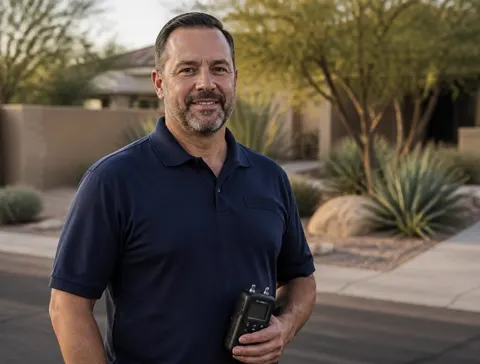
IICRC-certified restoration technicians · Phoenix metro
Written and fact-checked by the licensed crew that runs the trucks — the same technicians who take moisture readings, set drying chambers to the IICRC S500 standard, and answer the phone at 2 a.m. across the Phoenix metro.
Licensed Arizona contractor — AZ ROC #331127 (KB-2)