Mold prevention is not about scrubbing surfaces after fungi appear; it is about engineering an indoor environment where spores cannot biologically germinate. Discover the science of moisture control, the 24–48 hour dryout window, HVAC condensate management, and tailored strategies for Arizona homes.
Last updated:Reading time:15 minStandards:IICRC S500 Verified
To stop mold growth before it starts, eliminate persistent moisture and keep indoor relative humidity between 30% and 50%. Mold spores are ubiquitous in the air, but they require water to germinate. Following any leak, spill, or flood, you must thoroughly extract standing water and dry structural materials within 24 to 48 hours before fungal hyphae can colonize drywall, wood framing, or carpet. In desert climates like Phoenix, proper HVAC condensate drainage and targeted bathroom ventilation are the primary defenses against hidden microbial growth.
What Mold Actually Needs to Grow (The Moisture Triangle)
To prevent mold effectively, homeowners must understand a fundamental biological truth: you cannot eliminate mold spores from your home. Spores of common molds—such as Cladosporium, Penicillium, Aspergillus, and Alternaria—are microscopic, naturally occurring organisms that drift into our living spaces whenever a door opens, an exterior window is cracked, or an HVAC system pulls in fresh outdoor air.
In a dry, well-ventilated home, these spores remain completely dormant and harmless. Fungal colonization requires four interconnected environmental elements:
Viable Spores: Constantly present in outdoor and indoor air at baseline levels.
A Food Source: Carbon-based organic materials, including the cellulose paper backing of drywall, wooden structural studs, dust, carpet fibers, and cabinet backing.
Moderate Temperatures: Typical residential room temperatures (65°F to 85°F) are the exact metabolic sweet spot for fungal growth.
Moisture: Liquid water from plumbing leaks or elevated ambient relative humidity (typically above 55% to 60% sustained).
Notice that three of these four ingredients—spores, organic food, and comfortable temperatures—are permanent fixtures in every inhabited home in North America. Moisture is the only variable homeowners can control. If you deprive dormant spores of moisture, mold cannot physically grow, multiply, or colonize building assemblies.
The Critical 24–48 Hour Germination Window
Time is your most precious asset when dealing with unwanted moisture. According to both the U.S. Environmental Protection Agency (EPA) and the Institute of Inspection, Cleaning and Restoration Certification (IICRC S520 Standard), mold spores that come into contact with wet cellulose materials begin germinating within 24 to 48 hours.
During the first 24 hours of water intrusion, an event is classified as clean structural water saturation (Category 1). If aggressive extraction and dehumidification begin within this window, materials can often be saved and returned to their dry standard without biological growth. If water sits unmitigated past 48 hours, standing moisture dissolves drywall binders, encourages bacterial amplification, and enables fungal hyphae to penetrate deep into porous building components. If your home has suffered an active pipe rupture, reviewing our step-by-step first 24 hours after water damage guide will help you contain the emergency before microbial colonization takes hold.
Why Mold Prevention Trumps Remediation
Remediation is an invasive, expensive, and stressful undertaking. Once mold colonizes porous materials like drywall or insulation, surface wiping is insufficient; building codes and IICRC guidelines require erecting sealed plastic negative-air containment, running HEPA filtration scrubbers, cutting out structural drywall, and discarding contaminated building goods.
Proactive mold prevention protects three vital aspects of your property:
Structural Integrity: Fungi produce digestive enzymes that slowly break down cellulose fibers. Left unaddressed behind baseboards or beneath subflooring, mold softens framing lumber, causes drywall delamination, and rots wood subflooring, necessitating costly structural reconstruction.
Indoor Air Quality & Family Health: As active fungal colonies feed, they release millions of secondary spores and volatile organic compounds (VOCs)—the source of that distinctive, pungent “musty” odor. Inhaling these airborne contaminants triggers asthma flare-ups, chronic sinus irritation, and allergic reactions. To understand the medical implications, consult our clinical overview on the health risks of untreated water damage.
Financial Savings: Installing a digital hygrometer ($15) or adding a safety float switch to an AC drain line ($40) costs virtually nothing compared to professional certified mold remediation, which regularly ranges from $1,500 to $6,000+ when containment and rebuilds are required.
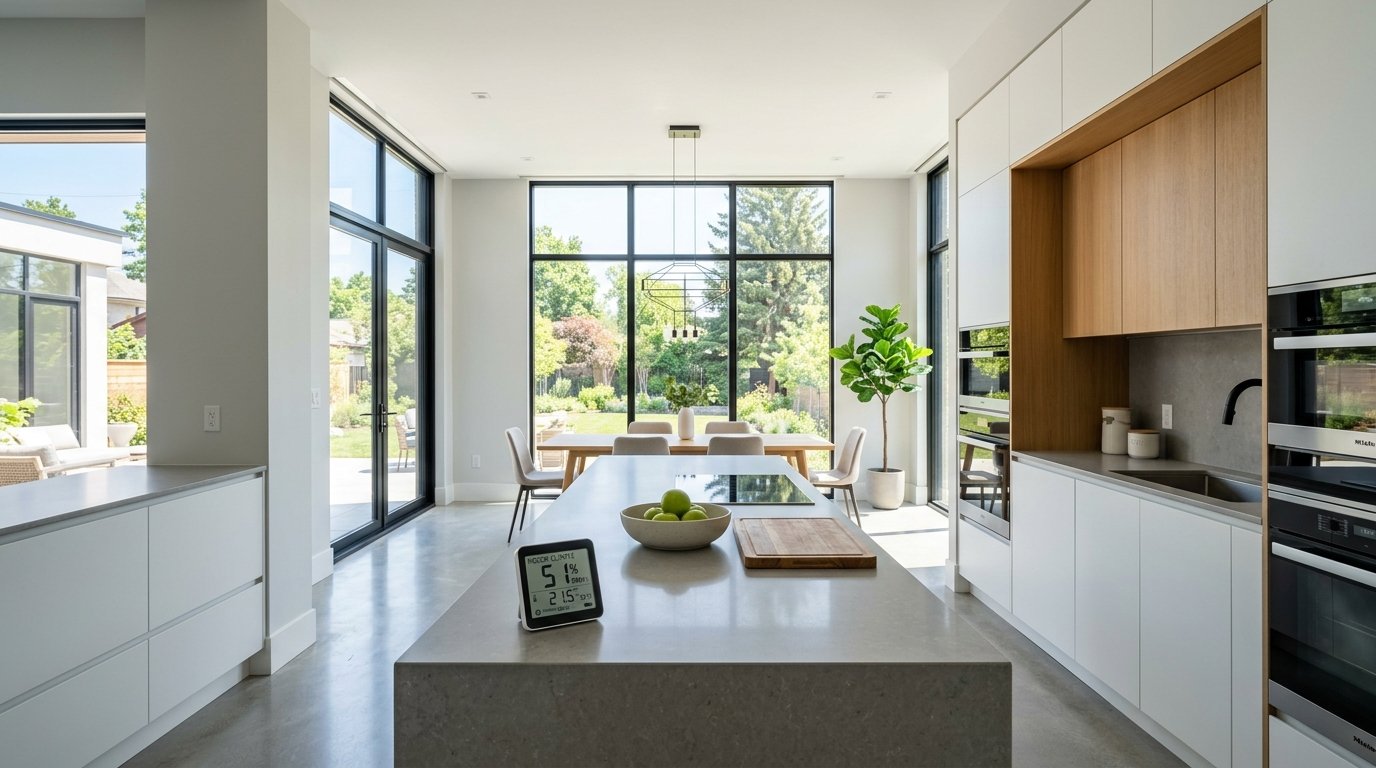
Moisture MonitoringMaintaining indoor relative humidity below 50% ensures mold spores cannot find the ambient water necessary to germinate.
8 Proven Strategies to Stop Mold Before It Takes Hold
True prevention requires a proactive, system-wide approach to managing water, vapor, and air circulation throughout your residence. Implement these eight field-tested strategies:
1. Maintain Indoor Relative Humidity Between 30% and 50%
Relative humidity (RH) is the percentage of moisture vapor present in the air relative to the maximum amount of moisture that air can hold at that specific temperature. The EPA unequivocally states that indoor RH must remain below 60%, with a target range of 30% to 50%.
Place inexpensive digital hygrometers in high-risk zones: the master bathroom, kitchen, laundry area, and near central return vents. If indoor RH consistently creeps above 55%, utilize portable dehumidifiers or ensure your central air conditioning system is properly sized and functioning. An oversized AC unit cools rooms too quickly without running long enough cycles to wring humidity out of the air, leaving the home cool but uncomfortably damp.
Showering, cooking, and doing laundry introduce gallons of water vapor into the air every single day. Without adequate mechanical exhaust, this vapor settles on cold drywall, mirrors, and window sills, creating localized condensation zones where mold thrives.
The Bathroom 20-Minute Rule: Turn on the bathroom exhaust fan before turning on the water, and keep it running for a minimum of 20 to 30 minutes after finishing. This removes lingering humidity trapped in tile grout and ceiling drywall.
Verify Exterior Venting: Confirm that all bathroom and range hood exhaust ducts terminate through the exterior roof or sidewall—never into an attic, soffit, or crawl space. Venting humid bathroom air into a dark attic is one of the leading causes of hidden attic mold in residential real estate.
Clean Exhaust Grilles: Vacuum dust accumulation from fan grilles every six months. Clogged fan blades can reduce air-moving efficiency by up to 50%.
3. Address Plumbing & Fixture Leaks Within Hours, Not Days
Slow, minor leaks are far more dangerous from a mold perspective than catastrophic pipe bursts. A dramatic burst pipe causes visible flooding that is addressed immediately; a slow, dripping PEX elbow or leaking dishwasher solenoid under a cabinet can drip undetected for six months, saturating subfloors and breeding extensive mold colonies before anyone notices a problem.
Inspect under-sink cabinets in kitchens and bathrooms monthly with a flashlight. Look for ring stains, swollen cabinet particle board, or peeling shelf liners. Install point-of-use smart water sensors ($20 to $40 each) under kitchen sinks, water heaters, and behind toilets. These sensors sound an alarm and push mobile alerts the moment liquid water bridges their sensor pins.
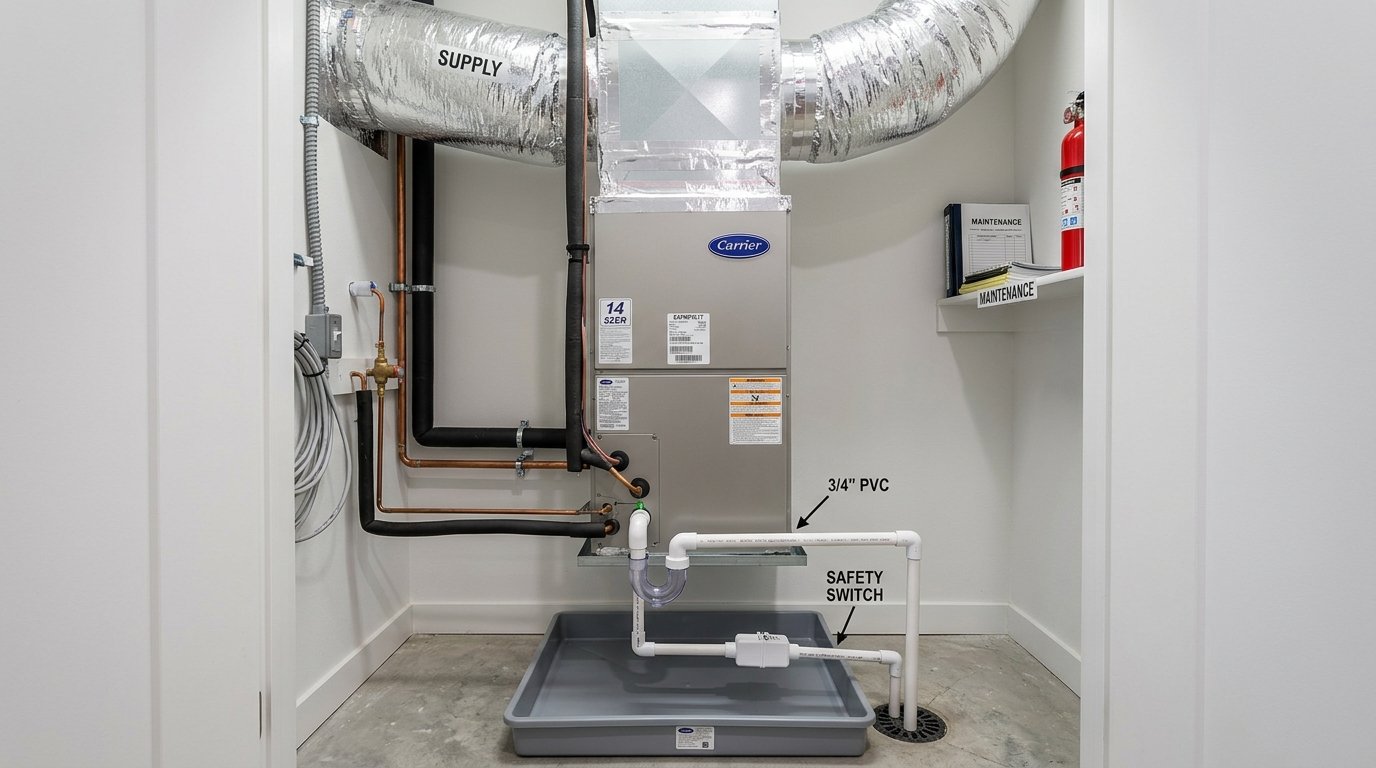
HVAC ProtectionA clear condensate trap and inline float switch prevent attic air conditioning units from overflowing into ceiling drywall.
4. Inspect and Service HVAC Condensate Systems
Your air conditioning system is not just an air cooler—it is your home’s primary dehumidifier. During warm weather, indoor moisture condenses on the cold evaporator coil and drips into an internal drain pan, which discharges outdoors through a 3/4-inch PVC condensate line.
If this drain line becomes clogged with dust, algae, or mineral scale, water backs up and overflows. To prevent this hazard:
Flush the Line Bi-Monthly: Pour a cup of distilled white vinegar into the condensate drain access T-pipe every two months during cooling season to dissolve algae blooms.
Install an Inline Float Switch: Ensure your unit is equipped with an electronic float switch (or water sensor). If the drain pan begins backing up, this switch automatically cuts electrical power to the AC compressor, halting condensation production before water overflows into your ceiling framing.
Change Air Filters Regularly: Dirty filters restrict airflow across the coil, causing the evaporator coil to freeze into a block of solid ice. When the unit cycles off, that ice melts rapidly, overwhelming the drain pan and flooding the surrounding utility space.
5. Eliminate Condensation on Windows, Pipes, and Cold Surfaces
Condensation occurs when warm, humid air contacts a surface whose temperature is at or below the dew point. If you notice water beads dripping down window glass, sweating copper cold-water pipes, or moist spots on exterior walls, mold is imminent.
Wipe down window sills immediately when condensation forms. Insulate exposed cold-water supply lines with pre-slit foam pipe insulation to prevent pipe sweating. In homes with single-pane windows, consider applying thermal insulating film or upgrading to double-pane Low-E assemblies to maintain warmer interior glass surface temperatures.
6. Promote Continuous Indoor Air Circulation and Furniture Spacing
Mold thrives in stagnant, dark microclimates where air exchange is minimal. Stagnant air allows pockets of humidity to accumulate behind large furniture pressed directly against exterior walls.
Keep couches, dressers, and beds positioned at least 2 to 4 inches away from exterior walls to maintain free convective airflow. Open closet doors periodically, avoid overstuffing storage wardrobes, and utilize ceiling fans on low settings to continuously mix indoor air layers and homogenize room temperatures.
7. Maintain Exterior Drainage, Gutters, and Roof Flashing
Stopping mold on the inside often begins with water management on the outside. Groundwater or roof runoff pooling against your foundation creates hydrostatic pressure that forces moisture vapor through porous concrete foundations and masonry stem walls.
Grade Away from Foundation: Ensure soil slopes downward away from your home’s foundation walls at a minimum pitch of 6 inches over the first 10 feet.
Extend Downspouts: Install gutter downspout extensions that discharge rainwater at least 5 to 6 feet away from the exterior foundation wall.
Clean Roof Parapets and Scuppers: Flat and tile roofs must have unobstructed scuppers and drain channels so heavy rainwater does not pond and find fastener penetrations.
8. Use Mold-Resistant Building Materials in Moisture-Prone Remodels
If you are remodeling a bathroom, laundry room, or kitchen, eliminate standard organic cellulose substrates that serve as mold food. Replace traditional paper-faced gypsum board with fiberglass-mat faced or cementitious backer board (such as HardieBacker or DensShield).
Specify antimicrobial paints formulated with EPA-registered fungicides for bathroom ceilings and high-steam zones. Use 100% silicone waterproof caulk around tubs, shower pans, and sinks, and reseal porous natural stone and tile grout lines annually to prevent moisture penetration into the underlying wall cavity.
Many homeowners mistakenly assume that living in an arid desert environment like Phoenix, Scottsdale, or Mesa grants complete immunity from mold. In reality, Arizona presents unique environmental dynamics that create aggressive, hidden mold conditions:
1. The 140°F Attic & 45°F AC Coil Dynamic
During desert summers, ambient outdoor temperatures often exceed 115°F, driving unconditioned attic temperatures as high as 140°F to 160°F. Central air conditioners run almost continuously to maintain a 75°F indoor climate.
The extreme temperature differential between chilled 45°F air ducting and the superheated attic air creates severe condensation if insulation on flex ducts is torn or unsealed. Furthermore, if an attic condensate pan overflows, that water drips into warm, dark attic insulation. In desert heat, bacterial and fungal metabolism accelerates rapidly—what takes five days to mold in a cool climate can colonize within 24 to 36 hours in an Arizona attic.
2. High-Mineral Hard Water Scaling and Pinhole Leaks
Municipal tap water across the Salt River Valley carries high concentrations of dissolved minerals (calcium and magnesium carbonate), often testing between 250 and 350+ parts per million (PPM). This aggressive mineral content causes rapid scale accumulation inside plumbing fixtures, shut-off valves, toilet fill valves, and water heaters.
Hard water deposits corrode copper supply tubing from the inside out, causing microscopic pinhole leaks behind bathroom vanities and baseboards. Because these pinhole sprays are so tiny, they may not trigger a noticeable pressure drop, but they quietly pump moisture into drywall cavities for months.
3. Concrete Slab Foundations and Subfloor Traps
Most homes in the Phoenix metro area are built on concrete slab-on-grade foundations. Concrete is a porous, sponge-like material that wicks ground moisture upward via capillary action.
When modern waterproof luxury vinyl plank (LVP) or laminate flooring is installed over a concrete slab without an adequate vapor barrier, moisture vapor migrating through the concrete becomes trapped beneath the synthetic planks. As detailed in our guide to water damage under laminate or vinyl flooring, this trapped water cannot evaporate, resulting in black mold growth along floor perimeter trim and subfloor underlayment.
Room-by-Room Mold Prevention Matrix
Different rooms face entirely different moisture challenges. Use this quick reference matrix to audit your property’s vulnerable zones:
Room / Area
Primary Moisture Risk
Target Metric
Key Preventive Action
Primary Bathroom
Shower steam, wet grout, leaking toilet wax rings
< 50% RH within 20 min of shower
Run 1 CFM/sq ft exhaust fan for 30 min post-shower; squeegee tile walls daily.
Kitchen
Dishwasher supply lines, sink sprayers, steam from cooking
Zero water staining inside cabinets
Use range hood vented outdoors; install smart water sensor under sink and dishwasher.
Attic & HVAC Space
AC condensate drain overflow, roof scupper leaks
Dry blown-in insulation; 0 standing water
Clear PVC drain line with vinegar bi-monthly; inspect secondary pan & safety float switch.
Room-by-room preventive metrics for residential moisture management
Common Mold Prevention Mistakes to Avoid
Well-intentioned homeowners frequently make preventable errors that exacerbate moisture problems or spread microbial spores throughout their living areas:
Mistake 1: Spraying Bleach on Porous Drywall or Wood
The belief that chlorine bleach eliminates mold on drywall or wood framing is perhaps the most pervasive myth in home care. Chlorine molecules are too large to penetrate the microscopic pores of gypsum and wood; only the water carrier penetrates. As the surface chlorine evaporates, the residual water feeds the deep fungal roots (mycelium), causing mold to return with increased vigor within weeks. Use EPA-registered botanical antimicrobials (such as thymol-based solutions) or consult an IICRC-certified remediation team.
Mistake 2: Painting Over Water Stains Without Complete Cavity Drying
Applying stain-blocking primer over a yellowed ceiling ring or dark wall spot masks the cosmetic blemish but does nothing to resolve trapped moisture inside the cavity. Trapped water continues to decompose the drywall core and framing studs in secret. Never apply paint until a pinless moisture meter confirms the substrate has returned to its dry standard baseline.
Mistake 3: Relying on Household Fans Instead of Dehumidifiers
Setting up residential oscillating box fans across a flooded floor merely blows moist air across wet surfaces without extracting any water vapor from the room. Worse, high-velocity air directly over an active mold patch aerosolizes millions of fungal spores, contaminating the entire home’s ventilation network. As detailed in our analysis of structural drying science and equipment, true moisture removal requires closed-system commercial Low-Grain Refrigerant (LGR) dehumidifiers.
When DIY Prevention Isn't Enough: Signs You Need Professional Help
While everyday moisture management is well within a homeowner’s capabilities, active water intrusions quickly surpass DIY tools. You should immediately contact Phoenix water damage restoration experts or your local certified restoration team when:
Visible Growth Exceeds 10 Square Feet: The EPA strictly recommends professional containment for fungal contamination covering more than a 3-foot by 3-foot area.
Water Has Sat for More Than 24 Hours: If water soaked into subflooring, wall cavities, or insulation overnight, professional commercial extraction and deep cavity drying are mandatory to arrest fungal germination.
Contaminated Water (Category 2 or 3): Water from washing machine drains, toilet overflows, or sewer backups carries harmful bio-pathogens that require antimicrobial washdown and controlled demolition.
Persistent Musty Odors With No Visible Leak: A strong musty smell without surface water indicates hidden moisture inside a wall cavity, ceiling assembly, or beneath a slab foundation.
The Ultimate Homeowner Mold Prevention Checklist
Print or bookmark this maintenance schedule to keep your residence permanently protected against microbial growth:
Weekly Tasks
• Check digital hygrometer readings in bathrooms and kitchen (verify < 50% RH).
• Squeegee shower walls after use and verify exhaust fan runs for 20–30 minutes.
• Empty and clean refrigerator drip trays and water dispenser catch basins.
Monthly Tasks
• Inspect under-sink plumbing cabinets in kitchen and bathrooms with a flashlight.
• Inspect washing machine supply hoses for cracking, blisters, or wet fittings.
• Flush the HVAC condensate drain T-pipe with 1 cup of distilled white vinegar.
• Vacuum dust buildup from bathroom and laundry room exhaust fan grilles.
Seasonal Tasks (Spring / Fall)
• Inspect attic ductwork for insulation tears and check secondary AC drain pan.
• Inspect roof flashing, parapet scuppers, and clear leaves from gutters.
• Verify exterior landscape grading slopes away from foundation walls.
• Inspect window perimeter exterior caulking for shrinking or gaps.
Key Takeaways
Moisture is the Only Control: Mold spores exist everywhere; controlling liquid water and relative humidity below 50% prevents germination entirely.
Act Within 24–48 Hours: Once porous building materials absorb water, fungal colonization begins within two days. Rapid structural drying is non-negotiable.
Avoid Bleach on Drywall: Bleach does not kill mold roots on porous materials; use EPA-registered antimicrobials or professional extraction.
Watch Attic Air Handlers: High desert temperatures turn unmaintained AC condensate lines into major attic ceiling leaks.
Test Before You Cover: Never paint over water stains or install new flooring until subfloors and framing are confirmed dry with calibrated moisture meters.
What is the single most effective way to prevent mold in a home?
The absolute foundation of mold prevention is moisture control. Mold spores exist naturally everywhere in ambient air and cannot be eradicated completely. However, spores cannot germinate or colonize without liquid water or sustained relative humidity above 55% to 60%. If you keep indoor materials dry and maintain relative humidity between 30% and 50%, mold growth is biologically impossible.
How quickly does mold begin to grow after a water leak?
Under typical indoor temperatures (70°F to 85°F), mold spores germinate within 24 to 48 hours of wetting porous materials like drywall, carpet padding, or wood framing. In hot Arizona conditions or stagnant unconditioned spaces, fungal hyphae can start colonizing cellulose fibers in as little as 24 hours. This makes immediate water extraction and structural drying essential.
What indoor humidity level stops mold from growing?
The EPA and IICRC recommend maintaining indoor relative humidity between 30% and 50%, and never exceeding 60%. In desert regions like Phoenix, winter indoor humidity is often low (15% to 25%), but summer monsoon storms and 24/7 air conditioning can cause indoor microclimates to surge above 65%, creating prime conditions for mold if ventilation is inadequate.
Does household bleach kill and prevent mold permanently?
No. Bleach (sodium hypochlorite) is only effective on non-porous surfaces like ceramic tile or glass. On porous materials like drywall, subflooring, and framing lumber, bleach's chlorine evaporates rapidly while its water component soaks deep into the material, inadvertently feeding surviving mold roots (hyphae). Professional remediation physically removes contaminated porous materials or uses EPA-registered antimicrobial encapsulants.
Why is attic HVAC condensation such a common mold cause in Arizona?
In Phoenix and Scottsdale, attic temperatures regularly reach 140°F to 160°F during summer months. When chilled air at 45°F to 55°F passes through attic ductwork and evaporator coils, the dramatic temperature differential creates gallons of condensation daily. If the primary condensate line clogs with algae or mineral scale, overflow drains into secondary pans or soaks attic insulation and ceiling drywall.
How can I prevent mold in a bathroom without an exterior window?
Operate a properly sized exhaust fan (minimum 1 CFM per square foot of bathroom area) during every shower and keep it running for 20 to 30 minutes afterward. Install a digital humidity-sensing wall switch so ventilation runs automatically until ambient humidity drops below 50%. Always wipe down shower walls with a squeegee, fix dripping faucets, and hang damp towels spread out rather than bunched on hooks.
Can mold grow unseen under waterproof luxury vinyl plank (LVP) flooring?
Yes. While LVP planks themselves are 100% waterproof synthetic plastic, water from minor dishwasher leaks, pet spills, or concrete slab moisture vapor easily seeps through click-lock seams and becomes trapped between the subfloor and the floor backing. Because the surface is impervious, moisture cannot evaporate, fostering hidden colonies of mold and bacteria beneath the floor.
When should I call a professional rather than handling mold prevention myself?
Call an IICRC-certified professional whenever standing water has sat for more than 24 hours, if visible mold growth covers more than 10 contiguous square feet (the EPA threshold), if moisture has penetrated wall cavities or subflooring, or if contaminated Category 2 or 3 water (sewage or washing machine discharge) is involved. Professionals use infrared cameras and commercial dehumidification to dry the structural framing to certified baseline standards.
IICRC-certified restoration technicians · Phoenix metro
Written and fact-checked by the licensed crew that runs the trucks — the same technicians who take moisture readings, set drying chambers to the IICRC S500 standard, and answer the phone at 2 a.m. across the Phoenix metro.
Licensed Arizona contractor — AZ ROC #331127 (KB-2)