What happens under your house does not stay under your house. Through the Stack Effect, up to 50% of the air on your ground floor rises directly from your crawl space. Discover the critical warning signs of crawl space mold, why traditional foundation vents fail, and how complete sealed encapsulation permanently protects your family's health and structural foundation.
Last updated:Reading time:14 minStandards:IICRC S500 Verified
Crawl Space Science · The Stack Effect · 20-Mil Encapsulation Protocols
Table of contents▾
Crawl space mold is primarily caused by unsealed dirt floors, humid outdoor air entering foundation vents, and hidden subfloor plumbing leaks. Common signs include persistent musty odors inside the home, cupping or spongy floorboards, falling insulation batts, and high indoor humidity. Because of the natural “Stack Effect,” up to 50% of your indoor breathing air originates from the crawl space. The only permanent solution is IICRC S520 microbial remediation followed by complete sealed encapsulation with a 20-mil vapor barrier and a dedicated crawl space dehumidifier.
What is Crawl Space Mold and Why Does It Flourish?
A residential crawl space is a shallow foundation cavity situated between the ground and the underside of the first floor. It supports the structural weight of the home through wooden sill plates, floor joists, support beams, and subfloor decking, while providing access to plumbing, electrical lines, and HVAC ductwork.
Unfortunately, an unconditioned crawl space represents an almost perfect natural incubator for fungi. Mold requires three elements to thrive: darkness, organic food (cellulose in wood framing and paper-faced insulation), and moisture. In an unfinished crawl space, bare earth constantly evaporates gallons of ground water vapor upward against the floor framing.
Why Traditional Vented Crawl Spaces Fail
For decades, residential building codes specified installing passive screened vents in foundation stem walls under the flawed premise that natural cross-ventilation would dry out the crawl space. Building science has thoroughly disproven this concept:
The Dew Point Collision: During warm months (especially during Arizona’s monsoon season), outdoor air entering the vents is hot and humid. The shaded crawl space beneath an air-conditioned home is substantially cooler (65°F to 75°F).
Condensation Cascade: As hot, humid outdoor air cools upon entering the crawl space, its relative humidity surges past 100%. Water condenses rapidly onto cold air conditioning ducts, copper water pipes, and wooden joists.
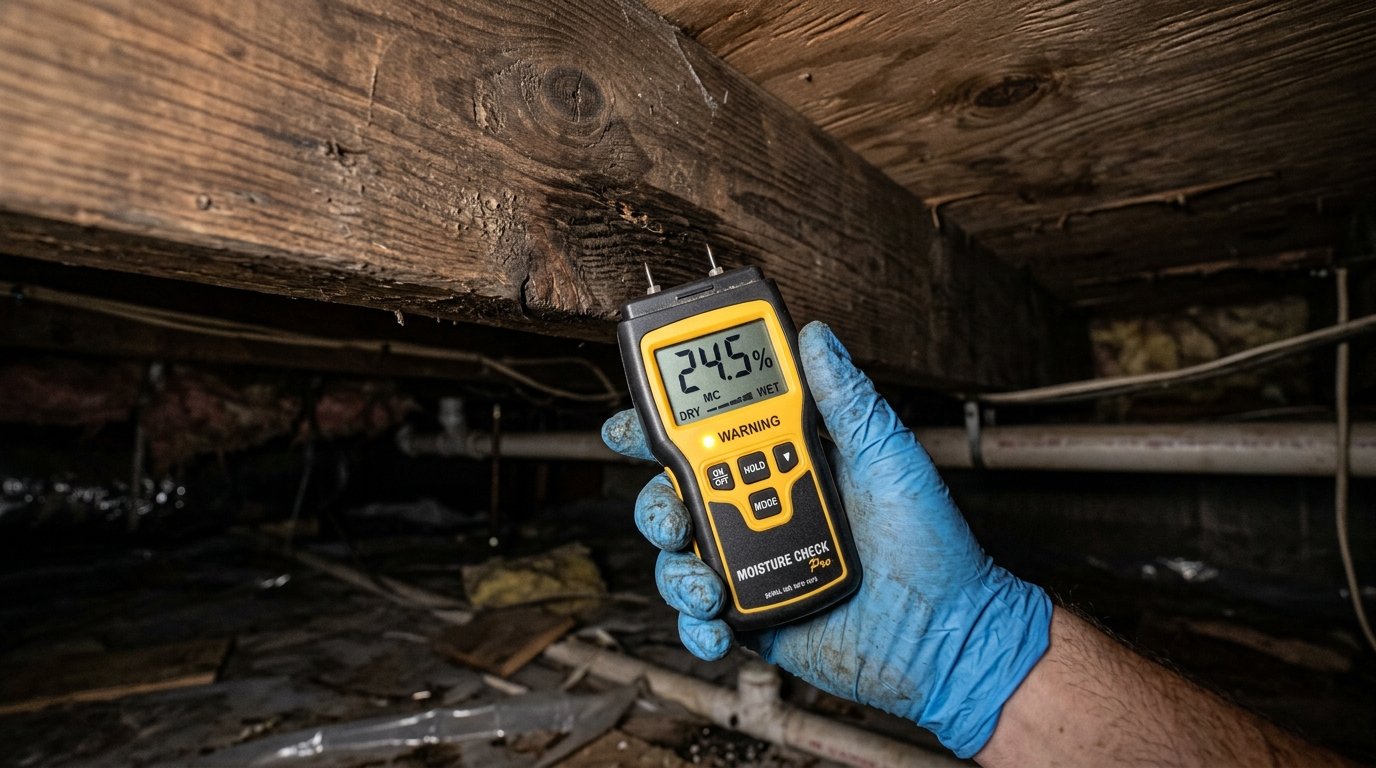
The 16%–19% Moisture Threshold: Wood framing with a Wood Moisture Equivalent (WME) above 16% is vulnerable to surface mold colonization; once moisture reaches 20%+, destructive wood-decaying fungi (such as Coniophora puteana) actively rot the load-bearing beams.
Moisture DiagnosticsA 24.5% moisture reading in structural floor joists indicates active water saturation where fungal hyphae break down wood lignin and cellulose.
The Stack Effect: How Crawl Space Mold Pollutes Your Living Room Air
Many homeowners assume that because they never enter their crawl space, microbial contamination under the floor cannot harm them. This assumption violates fundamental building physics known as the Stack Effect (or Chimney Effect):
Warm Air Rises: Air inside your home naturally warms, becomes buoyant, and escapes through recessed ceiling lights, attic bypasses, and roof ridge vents.
Negative Pressure at Floor Level: As air leaves the upper envelope of the home, it creates a subtle vacuum (negative air pressure) on the lower levels.
Underfloor Air Infiltration: To equalize this pressure differential, air is drawn upward from the crawl space through subfloor expansion seams, plumbing chases under bathtubs and sinks, electrical wire penetrations, and gaps around floor registers.
Environmental health studies confirm that between 40% and 50% of the air on the first floor of a crawl space home originated in the crawl space. When fungal colonies flourish underneath, billions of microscopic spores, fungal fragments, and volatile organic compounds (MVOCs) are drawn directly into bedrooms and living spaces. Review our clinical guide to the health risks of untreated water damage to understand how this airborne contamination triggers chronic asthma, allergies, and sinus infections.
7 Warning Signs of Mold in Your Crawl Space
Because crawl spaces are out of sight, homeowners must watch for indirect indicators within the living areas as well as physical signs beneath the subfloor:
1. Musty or Earthy Odors Entering Through Floor Registers
The most common complaint is an unexplained, persistent damp or mildew odor inside the home. This scent often intensifies when the air conditioning or heating cycles on, or following heavy rainfall. If your house smells like a damp basement even after thorough interior cleaning, the odor source is almost certainly beneath your subfloor.
2. Warped, Cupped, or Bouncy Hardwood and Subflooring
High humidity in the crawl space causes the bottom face of wooden subflooring and hardwood planks to absorb moisture and expand while the top face remains dry in the air-conditioned living space. This moisture gradient causes floorboards to cup (edges curving upward). If structural joists begin softening from rot, floors will feel bouncy or squeak loudly underfoot. For subfloor salvage rules, consult our guide on water damage under laminate or vinyl flooring.
3. Sagging, Heavy, or Fallen Fiberglass Insulation Batts
Traditional crawl space construction installed fiberglass batt insulation between overhead joists. Fiberglass acts like a sponge, absorbing moisture vapor from the ground. As the batts become waterlogged and heavy, they pull away from the wood subfloor and collapse into the dirt below. Worse, trapped moisture between the wet insulation and the wood joist creates an ideal, hidden breeding ground for black and white mold colonies.
4. Unexplained Chronic Respiratory Symptoms
If occupants suffer from recurring morning congestion, chronic coughing, burning eyes, or skin rashes that noticeably subside when they leave the home for a few days, biological contaminants in the crawl space air supply are a likely culprit.
5. High Indoor Relative Humidity (> 60%)
If your indoor relative humidity remains stubbornly above 55% to 60% during warm months despite your air conditioning running non-stop, massive moisture evaporation from the crawl space is overwhelming your HVAC system’s dehumidification capacity.
6. Condensation or Rust on Plumbing and Ductwork
Peeking into the crawl space with a flashlight often reveals beads of water dripping from chilled metal duct trunks, rust flaking off steel pipe hangers, and corroded electrical junction boxes.
7. Visible Discoloration on Wooden Joists
Active fungal growth in crawl spaces ranges widely in appearance:
White Powdery Growth: Often confused with efflorescence (mineral salts leaching through concrete stem walls), white mold like Penicillium or Aspergillus has a soft, fuzzy, fibrous texture that colonizes wood framing.
Yellow or Orange Patches: Common wood-decaying macro-fungi that actively break down wood lignin.
Dark Green or Black Colonies: Species like Cladosporium or Stachybotrys that flourish on heavily saturated cellulose materials.
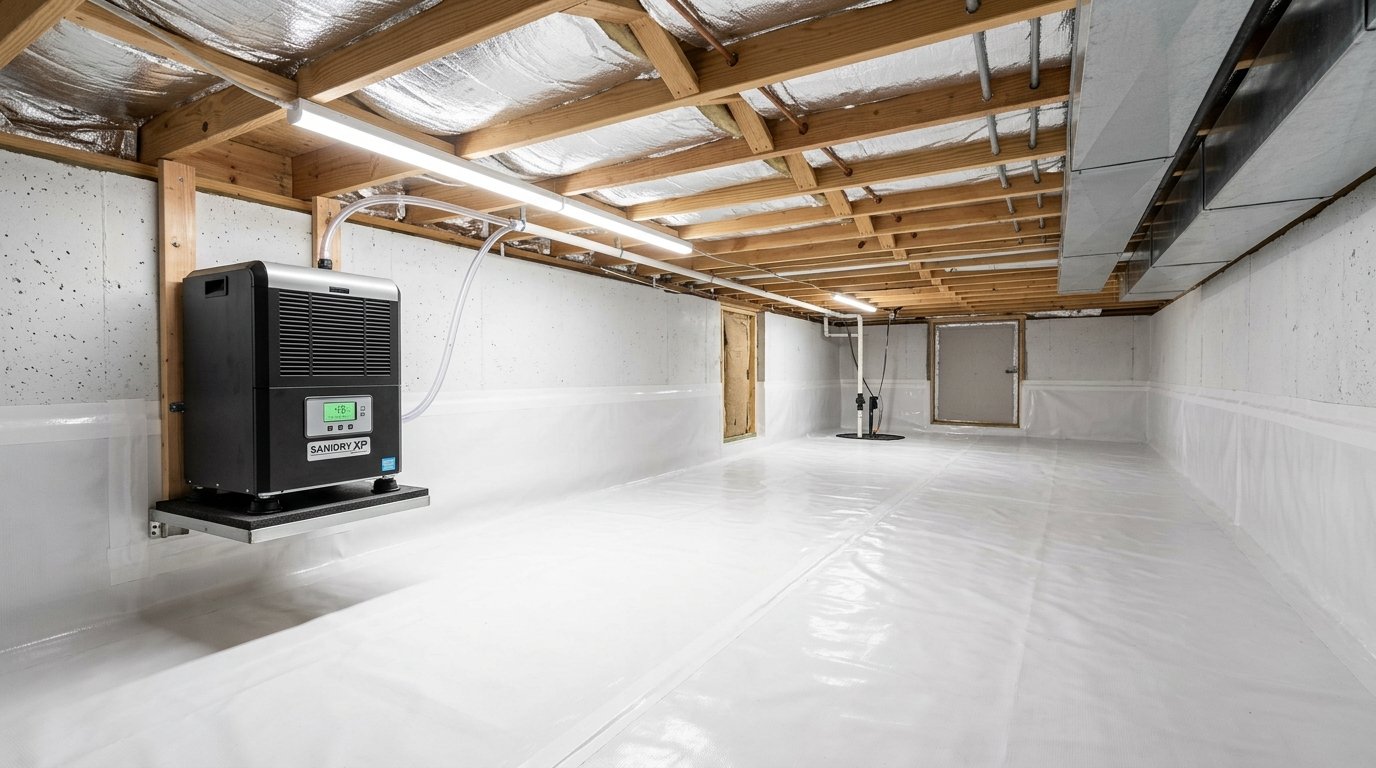
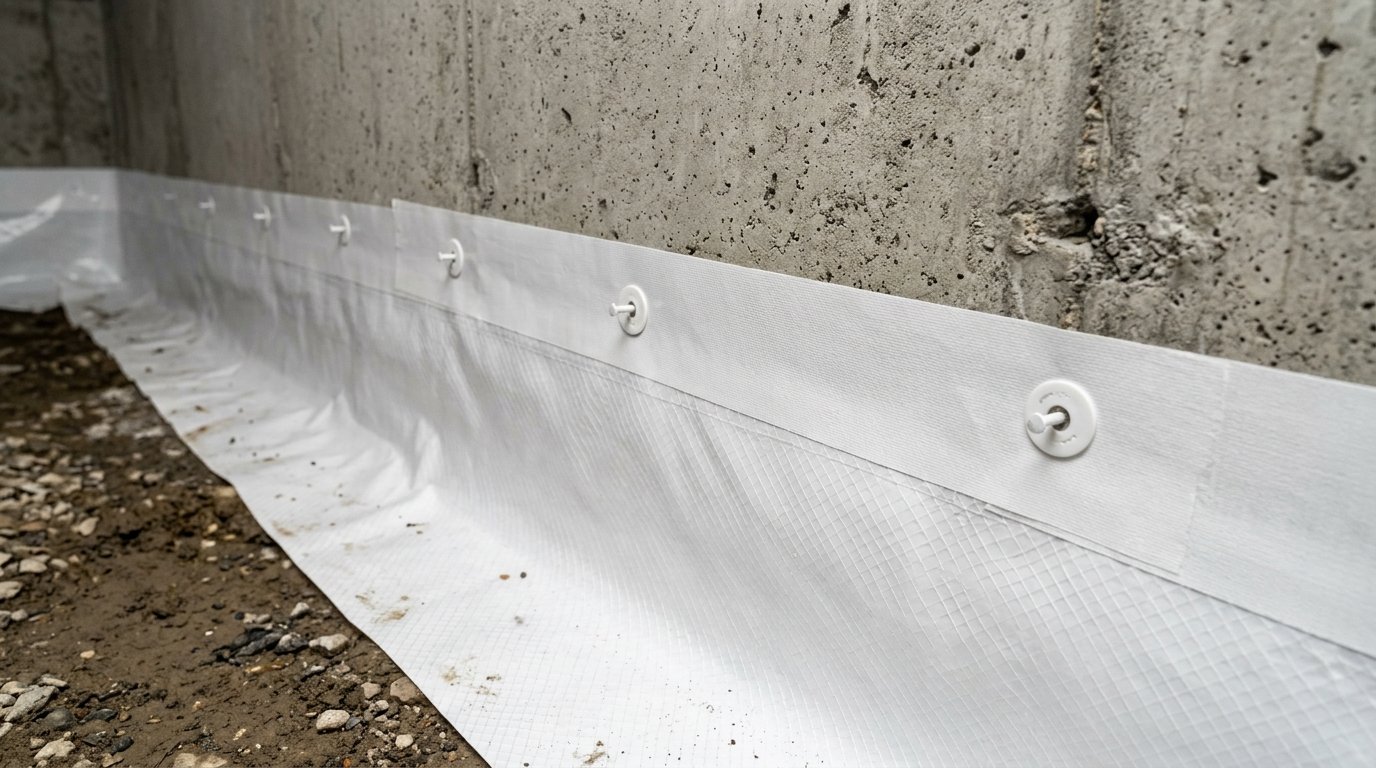
Encapsulation CraftsmanshipA sealed 20-mil reinforced vapor barrier mechanically fastened to concrete stem walls permanently blocks ground moisture from entering the subfloor.
Crawl Space Mold Diagnostic Matrix
Use this quick reference table to evaluate underfloor symptoms and match them to appropriate corrective actions:
Observed Symptom
Underlying Root Cause
Urgency Level
Corrective Action Protocol
Musty smell at floor registers
Stack effect pulling MVOCs into HVAC return ducts
High
Seal ductwork seams, remediate joists, install encapsulated vapor barrier.
Extract wet fiberglass; do not replace between joists; insulate stem walls instead.
White powder on concrete walls
Efflorescence (harmless mineral salts) or white mold
Low to Moderate
Perform spray test (efflorescence dissolves in water; fungal hyphae do not).
Black/green fuzzy colonies on joists
Active microbial colonization of cellulose framing
Critical
IICRC S520 remediation: media blast joists, apply antimicrobial coating.
Diagnostic framework for identifying underfloor moisture and microbial contamination
Step-by-Step Solutions: How to Permanently Eliminate Crawl Space Mold
Stopping crawl space mold is not a matter of quick chemical sprays. Permanent resolution requires a systematic, five-step building engineering approach:
Step 1: Eliminate Active Moisture Sources
Before encapsulating, technicians must locate and eliminate all bulk water intrusions:
Subfloor Plumbing Repairs: Inspect all supply and drain lines beneath kitchens, bathrooms, and laundry rooms for slow pinholes or loose drain slip joints. Our professional water damage restoration team isolates plumbing failures before sealing the space.
Exterior Drainage & Grading: Ensure downspouts extend 6 feet away from the foundation stem wall and soil slopes downward away from the exterior perimeter.
Step 2: Extract Contaminated Insulation and Organic Debris
Old, fallen fiberglass insulation batts cannot be salvaged once contaminated with mold spores. Technicians bag and remove all soaked insulation, scrap lumber, construction paper, and organic debris from the dirt floor, leaving a clean, graded substrate.
Step 3: IICRC S520 Microbial Remediation of Framing
Negative Air Filtration: Commercial HEPA air scrubbers vent air outside to maintain negative pressure, preventing loose spores from migrating into living quarters.
Physical Removal: Technicians HEPA-vacuum all wood framing and utilize abrasive soda-blasting or dry-ice blasting to remove embedded mold roots from rough framing lumber.
Antimicrobial Wash & Encapsulant: Surfaces are treated with an EPA-registered fungicidal wash, followed by a breathable antimicrobial coating that permanently inhibits future fungal attachment.
Thin 6-mil plastic tears easily and fails within years. Professional encapsulation utilizes commercial 12-mil to 20-mil multi-layer reinforced polyethylene:
The vapor barrier covers 100% of the earthen floor with minimum 12-inch overlapping seams.
All seams are sealed with commercial waterproof acrylic vapor tape.
The barrier extends up foundation stem walls and is mechanically fastened and caulked.
Support piers and plumbing penetrations are custom-collared and sealed airtight.
Exterior foundation vents are permanently sealed and insulated.
Step 5: Mechanical Crawl Space Dehumidification
Once the crawl space is sealed from outdoor air and ground evaporation, a commercial, low-grain refrigerant crawl space dehumidifier is installed. These units are specifically engineered to operate efficiently in cool underfloor temperatures, draining condensate automatically to the exterior and keeping crawl space relative humidity continuously between 40% and 50%.
Why Spraying Bleach or Fogging Solutions Fails
Many DIY homeowners crawl beneath their homes with pump sprayers full of chlorine bleach or over-the-counter foggers. This approach is not only ineffective—it often makes the problem worse:
Bleach Cannot Penetrate Wood: The chlorine molecule is too large to enter the microscopic pores of wood framing; it remains on the surface while its water carrier soaks deep into the timber, feeding the fungal root system (hyphae).
Foggers Do Not Remove Dead Spores: The EPA and IICRC state clearly that dead mold spores are just as allergenic and toxic as live spores. Fungi must be physically removed from the structure, not simply sprayed with chemicals.
Unaddressed Ground Moisture: Even if a spray kills 80% of surface mold, bare dirt and open vents will restore 90%+ humidity within 48 hours, causing new spores to flourish immediately.
Key Takeaways
Up to 50% of Your Air Comes From Below: The Stack Effect draws crawl space air, spores, and odors upward into your living space.
Open Vents Cause Moisture: Humid outdoor air condenses against cool crawl space framing during warm months.
Signs Extend Beyond the Crawl Space: Cupping floorboards, high indoor humidity, and chronic respiratory issues are primary red flags.
Encapsulation is the Only Permanent Fix: A 20-mil sealed vapor barrier combined with a dedicated dehumidifier permanently controls moisture.
Never Rely on Bleach: Fungal growth on rough wood framing requires physical remediation and long-term moisture management.
Can mold in a crawl space make you sick in the main living areas?
Yes. Due to a natural convective airflow phenomenon known as the 'Stack Effect,' between 40% and 50% of the air you breathe on the ground floor of a home with a crawl space is drawn directly up from the crawl space. As warm indoor air rises and escapes through attic vents, it draws replacement air upward through subfloor cracks, plumbing penetrations, and floor vents, carrying airborne mold spores, mycotoxins, and musty MVOCs into your living quarters.
What does crawl space mold smell like inside the house?
Crawl space mold produces a distinct pungent, heavy, earthy odor often described as smelling like damp soil, rotting wood, or wet cardboard. This smell is caused by Microbial Volatile Organic Compounds (MVOCs) released as actively feeding fungal colonies digest damp wood framing. The smell is often strongest near floor vents, bathroom vanities, or after monsoon rainstorms.
Why do traditional open-vented crawl spaces cause mold?
Historically, building codes required open foundation vents under the assumption that outdoor breezes would dry out the crawl space. In reality, warm, humid outdoor air enters the cooler, shaded crawl space beneath the home. As this warm air cools, its relative humidity spikes to 100%, causing moisture to condense on cold ductwork, water pipes, and wooden floor joists. Modern building science now mandates sealed, conditioned crawl space encapsulation.
How much does crawl space mold remediation and encapsulation cost?
Costs depend on crawl space square footage, access clearance, and severity of contamination. Basic fungal remediation (HEPA vacuuming and antimicrobial treatment of joists) typically ranges from $1,500 to $3,500. Full professional encapsulation—including old insulation removal, laying a heavy-duty 20-mil reinforced vapor barrier sealed up stem walls, and installing a commercial crawl space dehumidifier—ranges from $5,500 to $12,000.
What is the difference between a thin vapor barrier and full encapsulation?
A standard vapor barrier is typically a thin 6-mil black plastic sheet laid loosely across the dirt floor, leaving foundation walls bare and seams open. Moisture vapor simply flows around the edges. Full encapsulation uses thick, puncture-resistant 12-mil to 20-mil reinforced white polyethylene that covers 100% of the ground, wraps over support piers, is taped airtight at all seams, and is mechanically fastened and sealed up the concrete stem walls with foundation vents permanently sealed.
Can I just spray bleach on moldy crawl space floor joists?
No. Spraying bleach on rough framing lumber is ineffective and dangerous. Bleach consists mostly of water; its chlorine evaporates quickly on the wood surface while water penetrates into the porous timber, feeding the deep fungal roots (hyphae). Professional remediation physically removes fungal structures via abrasive media blasting or HEPA vacuuming, followed by EPA-registered fungicidal encapsulants.
Does crawl space mold affect home value and real estate escrow?
Substantially. Evidence of active mold or high subfloor moisture content (>19% WME) during a buyer's home inspection can derail escrow, delay mortgage underwriting, or result in severe price concessions. A professionally encapsulated crawl space with warranty documentation, however, is a major selling point that improves energy efficiency and indoor air quality.
Do homes in Phoenix and across Arizona have crawl spaces?
Yes. While modern subdivision tract homes built since the 1970s predominantly use concrete slab-on-grade foundations, thousands of historic homes in downtown Phoenix (Willo, Encanto, Roosevelt, Coronado, F.Q. Story), older ranch homes, manufactured homes, and properties in Prescott, Flagstaff, and Tucson are built on raised pier-and-beam crawl space foundations.
IICRC-certified restoration technicians · Phoenix metro
Written and fact-checked by the licensed crew that runs the trucks — the same technicians who take moisture readings, set drying chambers to the IICRC S500 standard, and answer the phone at 2 a.m. across the Phoenix metro.
Licensed Arizona contractor — AZ ROC #331127 (KB-2)