Basements in Arizona are rare, architectural gems—making flood prevention even more critical. Discover how caliche soil runoff, monsoon power grid failures, hydrostatic pressure, and sewer surcharges flood below-grade homes, and the 8 engineering strategies to keep yours dry.
Last updated:Reading time:14 minStandards:IICRC S500 Verified
Subterranean flood defense: High-volume submersible pumps, deep masonry structural drying, and preventive drainage systems protect Arizona basements from catastrophic water intrusion.
Table of contents▾
Basement flooding in Arizona is primarily caused by rapid surface flash flooding over impermeable caliche soils, summer power grid blackouts disabling 110V sump pumps, municipal storm sewer backups, and hydrostatic groundwater pressure forcing water through foundation cold joints. Because subterranean rooms lack natural ventilation and sit below the water table during heavy storms, a flooded Arizona basement can breed hazardous toxic mold within 24 to 48 hours. Installing a cast-iron primary sump pump with a dual battery-backup system, mounting a mainline backwater check valve, covering recessed window wells, and ensuring a positive 5% landscape slope are essential to protect your home.
While less than 10% of Arizona residences feature below-grade architecture, homes with basements—whether historic craftsman bungalows in Central Phoenix, sprawling luxury estates in Paradise Valley and North Scottsdale, or walkout split-levels in the Foothills—represent significant financial investments. When water invades a subterranean space, it creates an immediate structural and environmental crisis.
Unlike northern states where basements flood from slow seasonal snowmelt, flooding in the Sonoran Desert is sudden, violent, and highly concentrated. During our summer monsoon season (July through September), microburst thunderstorms can dump up to 3 inches of torrential rain in under an hour. Because desert soil is baked rock-hard by 115°F heat, it cannot absorb water; instead, billions of gallons sheet across the surface, seeking the lowest point on your property: your basement.
This comprehensive engineering guide breaks down the six primary causes of below-grade flooding in Arizona, details eight proven prevention protocols, and provides an immediate emergency response plan if floodwaters breach your foundation.
The 6 Hidden Causes of Basement Flooding in the Desert
Preventing subterranean water damage requires understanding how desert hydrology interacts with concrete and masonry foundations:
1. Caliche Soil & Desert Flash Flood Sheet Runoff
The upper soil profile across the Phoenix metropolitan area is dominated by caliche—a natural concrete-like sedimentary rock composed of calcium carbonate bound with sand and gravel. Caliche has an infiltration rate close to zero.
When intense monsoon storms hit, rainfall cannot penetrate the ground. Millions of gallons of surface water cascade across neighborhood streets and lawns in high-velocity sheet flows. If your property lacks proper positive grading, this surface river channels directly into recessed basement window wells, walkout stairwells, and subterranean patio drains.
2. Sump Pump Failure During Monsoon Power Outages
The most common single point of catastrophic basement failure is a primary sump pump connected to a standard household electrical outlet without auxiliary backup power.
In Arizona, the fiercest downpours arrive alongside 50–70 mph microburst winds, blinding dust haboobs, and frequent cloud-to-ground lightning strikes. These atmospheric events routinely knock out local electrical grids. The exact moment your basement receives thousands of gallons of incoming water is the exact moment your electric sump pump loses power. Without an autonomous battery-backup system, water fills the sump pit and overflows into living areas in less than fifteen minutes.
3. Municipal Storm Sewer Backflow & Overwhelmed City Mains
During extreme storms, city storm drains and combined sanitary sewer lines across Phoenix, Mesa, and Glendale become completely surcharged. When main lines cannot discharge floodwater fast enough, water creates immense backward hydraulic pressure.
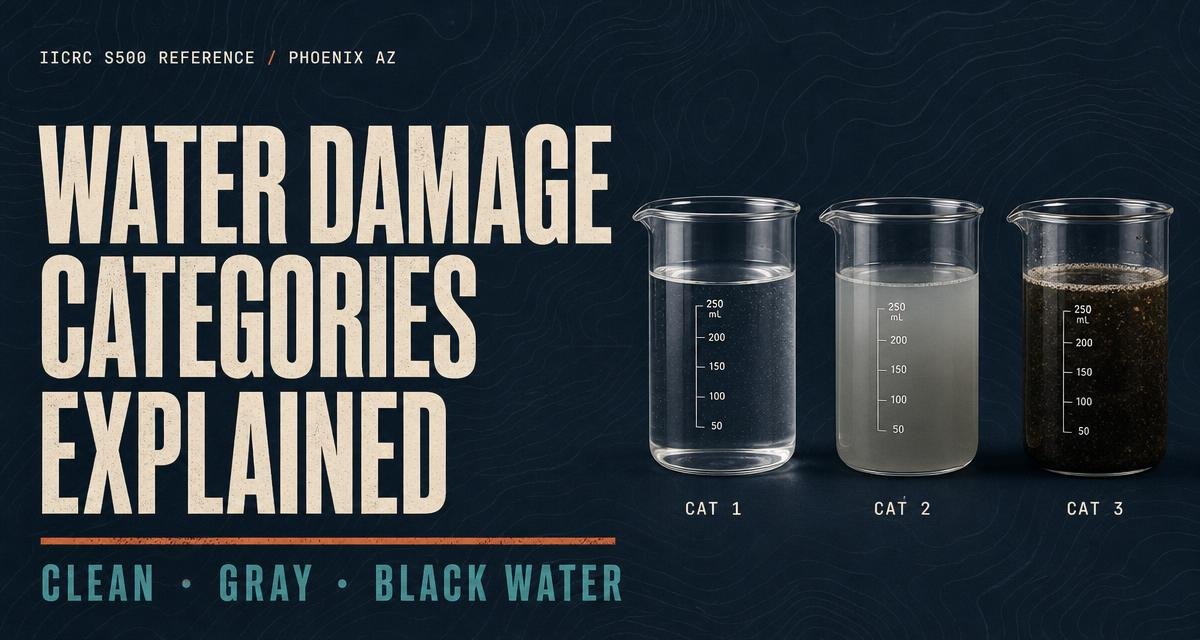
Because basement plumbing fixtures—floor drains, toilets, utility sinks, and showers—sit at the lowest elevation relative to the street main, backflowing sewage forces its way up through basement drains first. This floodwater is classified under IICRC S500 as Category 3 “black water”, heavily contaminated with pathogenic bacteria, parasites, and industrial chemicals.
Biohazard classification: Basement floodwater originating from street sewer surcharges or groundwater seepage carries Category 3 biohazards, requiring specialized antimicrobial sanitization and negative-air containment.
Desert clay soils (such as bentonite) experience dramatic volume expansion when saturated. As water collects around your subterranean foundation walls, it creates intense lateral and upwardhydrostatic pressure.
Water exerts approximately 62.4 pounds per square foot per foot of depth. At a basement depth of 8 feet, hydrostatic pressure forces groundwater through the microscopic gap between your basement floor slab and concrete stem wall (the “cold joint”), through wall-tie rod holes, and through settling fissures.
Recessed basement window wells are notorious water collection traps. Before rain arrives, desert dust storms blow fine silt, leaves, and trash into the bottom of the well.
When heavy rain starts, this debris turns into thick mud that seals the gravel drain at the bottom of the well. The window well rapidly fills up like a glass fish tank. Once the water level reaches the window sill, the hydrostatic weight shatters the glass or breaches the window frame seals, unleashing a waterfall into the basement below.
6. Subterranean Water Heaters & Water Softener Ruptures
In many Arizona basement floorplans, mechanical equipment—including water heaters, water softeners, and reverse osmosis pressure tanks—is installed below grade to keep it out of the desert sun.
Under high municipal water pressures (often 90–130+ PSI from city mains) and aggressive calcifying hard water, aging water heaters split at the seams and flexible rubber supply lines burst. Because families rarely spend full working days in the basement, an appliance rupture can pump 10 gallons a minute for eight hours before anyone upstairs notices, leaving the lower level submerged under several feet of water.
The table below outlines the primary subterranean failure points in desert homes, their operational warning signs, and the recommended permanent engineering solution:
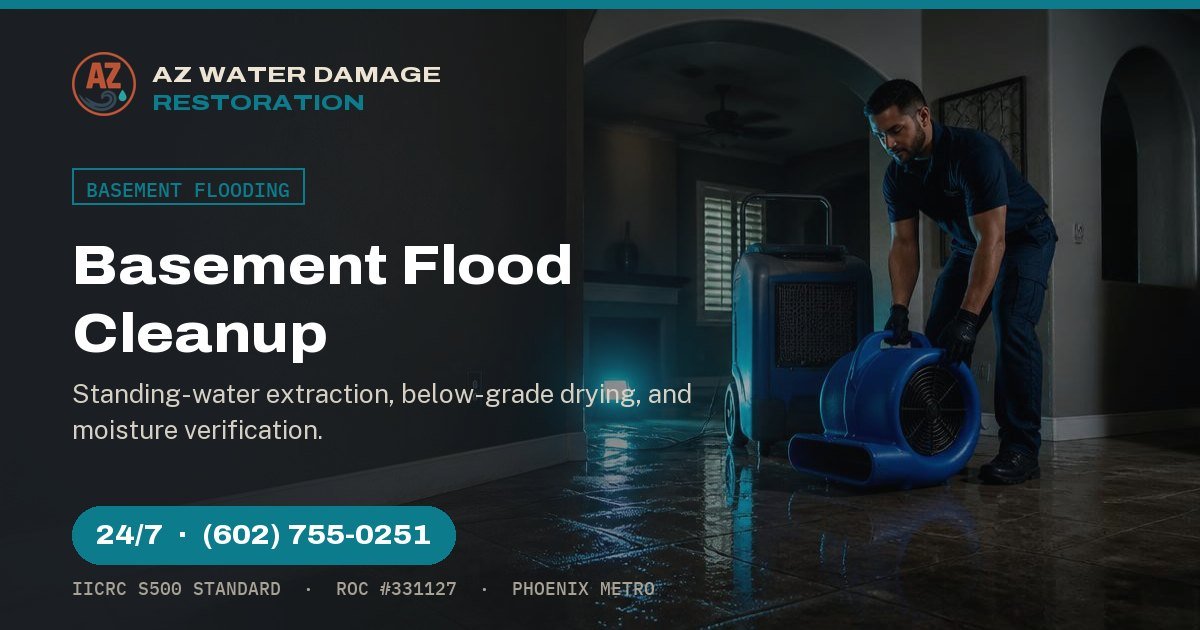
Subterranean flood extraction: Immediate water removal and structural drying prevent subterranean drywall rot, foundation deterioration, and toxic black mold outbreaks.
8 Proven Strategies to Prevent Basement Flooding in Arizona
Defending a below-grade home in the desert requires a multi-layered barrier strategy that controls exterior surface runoff, manages subterranean groundwater, and fortifies interior mechanical systems:
The first line of defense against subterranean flooding is keeping surface runoff away from your foundation walls. Soil around your foundation must slope downward at least 6 inches over the first 10 feet (a 5% grade).
Over time, desert settling, foot traffic, and landscape erosion cause soil near foundations to settle, creating a negative slope that traps water against subterranean walls. Re-grade your perimeter with dense clay-loam soil. Furthermore, extend all roof gutter downspouts at least 10 feet away from the foundation or tie them into underground solid PVC discharge pipes that empty into street storm drains or desert dry wells.
2. Install a Cast-Iron Sump Pump with Dual Battery Backup
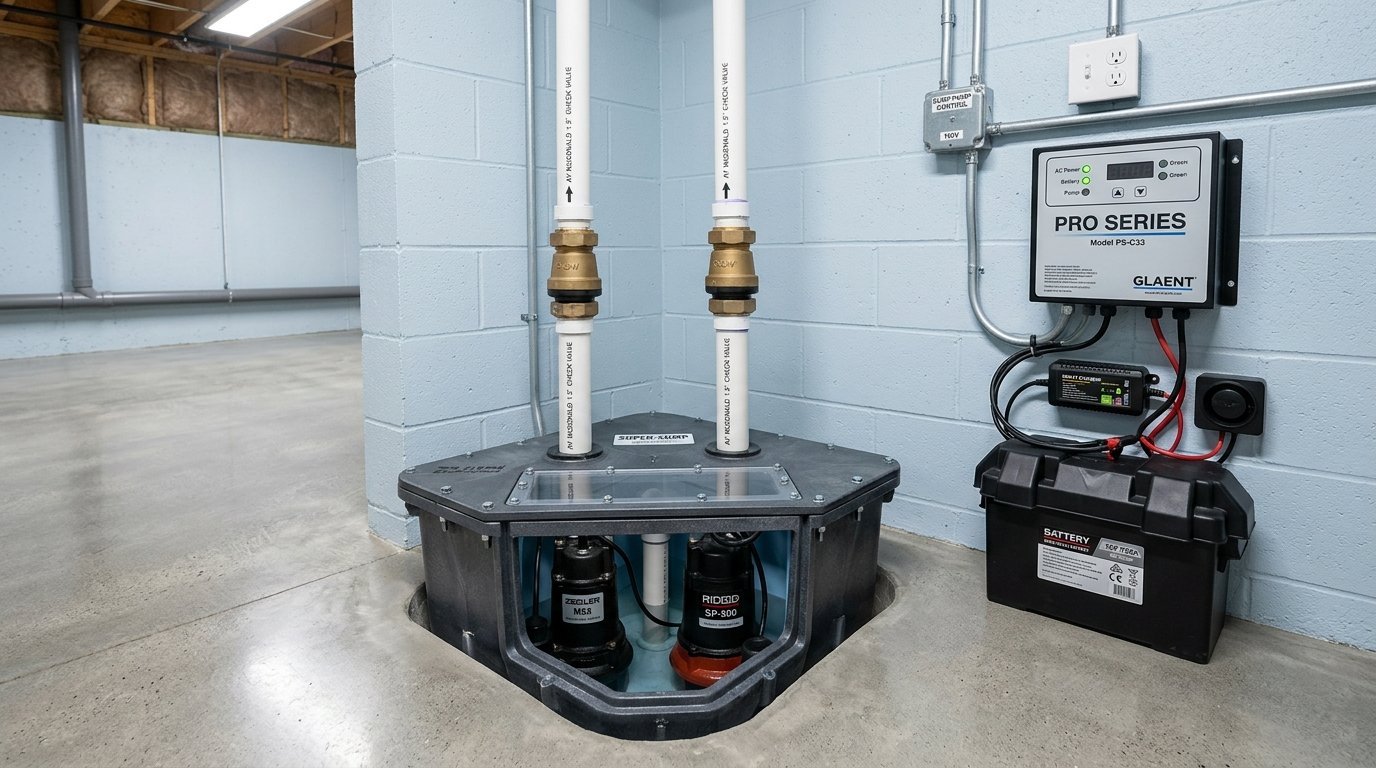
If your home relies on a sump pump, a single 1/3 HP plastic pump from a big-box store is an invitation to disaster. Upgrade to a commercial-grade 1/2 HP or 3/4 HP cast-iron primary submersible pump(such as a Zoeller M53 or Liberty Pumps 257) with an epoxy-coated casing and a solid vortex impeller.
Crucially, pair it with an auxiliary 12V/120V hybrid battery-backup pump system mounted 6 inches above the primary pump in the basin. Equip the backup with dual deep-cycle AGM or marine lithium iron phosphate (LiFePO4) batteries. In the event of a total grid blackout during a monsoon microburst, the backup system will pump up to 2,000 gallons per hour for over 24 continuous hours.
3. Install a Mainline Backwater Check Valve
To eliminate the catastrophic hazard of city sewer surcharge, have a licensed plumbing contractor install an ASME-compliant mainline backwater valve (such as a Clean Check or RectorSeal valve) on your main sewer lateral line outside the home.
Under normal conditions, wastewater flows freely out of your home into the city main. When city sewer lines become overwhelmed and backflow surges toward your house, an internal weighted flapper immediately floats up and locks against a neoprene gasket, forming a watertight barrier that stops black water from geysering out of basement drains.
4. Fortify Recessed Window Wells with Rated Polycarbonate Covers
Never leave below-grade window wells open to desert skies. Install custom-fit, heavy-duty polycarbonate window well covers with an integrated aluminum frame rated to support at least 400 to 500 pounds.
Ensure the top of the window well barrier sits at least 4 to 6 inches higher than the surrounding landscape grade. Dig out the bottom of the well, remove built-up desert silt, and fill the base with 12 to 18 inches of clean, 3/4-inch washed crushed granite to allow rapid drainage.
5. Seal Foundation Cold Joints with Hydrophilic Polyurethane Resin
Never attempt to seal basement foundation leaks with paint-on “waterproofing” coatings or hydraulic cement troweled on from the inside. When hydrostatic pressure builds up behind the wall, surface coatings blister and peel off within months.
Instead, utilize high-pressure hydrophilic polyurethane injection. High-pressure ports are drilled at 45-degree angles through the concrete to intersect the crack or cold joint. Expanding polyurethane resin is injected under 3,000 PSI; when it contacts groundwater, it expands up to 20 times its liquid volume into a flexible, closed-cell rubber gasket that permanently seals the fissure from exterior soil to interior face.
6. Install an Interior Perimeter French Drain & Hydrostatic Relief System
For homes experiencing chronic water table pressure or severe foundation weeping, an interior sub-slab drainage channel (interior French drain) is the definitive permanent solution.
A 12-inch trench is cut into the concrete floor slab along the interior perimeter of the basement walls. Perforated PVC drain pipe wrapped in geotextile filter fabric is bedded in washed river rock and connected to your sump basin. Any groundwater attempting to push through the cold joint is intercepted beneath the slab and diverted into the sump pump, permanently relieving hydrostatic pressure against the foundation.
7. Deploy Smart Water Leak Sensors with Automatic Main Shutoff
Because basement flooding from water heaters and pipe ruptures happens silently, install an array of smart wireless water sensors (pucks) on the basement floor near the water heater, water softener, HVAC condensate pan, and sump pit.
Link these sensors to a whole-home smart shutoff valve (such as Flo by Moen or Phyn Plus). If moisture is detected, the system sounds an audible alarm, sends an instant alert to your smartphone, and commands a motorized valve to shut off the home’s main water supply within 15 seconds. Learn more in our emergency water main shutoff guide.
8. Add a “Water Backup of Sewer & Sump” Insurance Rider
Standard homeowners insurance policies (HO-3 and HO-5) do not cover sump pump failure, drain backup, or groundwater seepage. If your basement floods with 12 inches of water, your carrier will deny the entire claim unless you have added specific endorsements.
Contact your insurance agent and purchase a Water Backup of Sewer, Drain, or Sump Pump Riderwith at least $25,000 to $50,000 in coverage limits. In addition, review our detailed guide on homeowners insurance water damage and mold claims to ensure your property is protected against costly exclusions.
Emergency Protocol: What to Do If Your Basement Floods Right Now
If water is actively rising in your basement, take these immediate safety precautions:
Never Enter Standing Water with Live Power: Do NOT walk down the basement stairs into standing water if electrical outlets, cords, or appliances are submerged. Locate your main electrical breaker panel on the upper floor or exterior service box and switch off power to the basement circuits.
Shut Off the Water Main: If the source appears to be a ruptured water heater, supply line, or softener, turn off the main water valve immediately.
Never Run a Household Shop-Vac: Standard consumer vacuums and extension cords are not rated for submerged pumping and present lethal electrocution hazards.
Call 24/7 IICRC-Certified Emergency Restoration: Contact our emergency dispatch at (602) 755-0251. We arrive within 45 minutes across the Phoenix Valley with commercial submersible trash pumps, truck-mounted extraction units, and Phoenix LGR industrial dehumidifiers.
Fulfill Your Mandatory Duty to Mitigate: Insurance policies require homeowners to take immediate steps to extract water. Delaying extraction allows Category 1 water to degrade into toxic bacterial contamination, giving insurers legal grounds to deny coverage. Learn more in our first 24 hours after water damage protocol.
Regional Basement Hotspots Across the Phoenix Valley
Plumbing infrastructure, soil composition, and basement flood vulnerabilities differ across Valley sub-markets:
Historic Central Phoenix (Willo, Encanto, Coronado): Features the highest concentration of original 1920s–1950s homes with true basements. Many possess unsealed red-brick or cinder-block stem walls tied into aging clay sewer laterals that easily surcharge during storms. See our Phoenix emergency water damage services.
Paradise Valley & North Scottsdale: Custom luxury estates frequently feature subterranean home theaters, wine cellars, and daylight walkouts. High municipal water pressures (110+ PSI) combined with complex mechanical manifolds increase the risk of massive hidden supply leaks. See our Scottsdale water damage restoration services.
Mesa, Tempe & Chandler (Canal Corridors): Homes located near Salt River Project (SRP) irrigation canals face elevated local water tables during irrigation release cycles, increasing hydrostatic pressure along subterranean foundations.
Key Takeaways
Power Outages Equal Flooding: Standard electric sump pumps fail during monsoon storms when the power grid collapses. A high-capacity battery backup pump is non-negotiable.
Block the Sewer: Overloaded city storm lines will back up into basement floor drains unless protected by an exterior mainline backwater check valve.
Caliche Repels Water: Desert soil does not absorb flash floods. Ensure a 5% positive ground slope and extend downspouts 10 feet away from the foundation.
Act Fast to Prevent Mold: Subterranean rooms lack natural airflow. Mold colonizes within 24 to 48 hours without commercial LGR structural dehumidification.
Review Your Insurance Policy: Standard homeowners insurance excludes basement groundwater and sump overflows without a specific Water Backup endorsement rider.
Why do basements flood in Arizona if it rains so infrequently?
Arizona basements are at extreme risk of flooding during rain events because desert soils consist of dense caliche and expansive clay, which act like non-porous concrete. When a summer monsoon drops 2 to 3 inches of rain in under an hour, none of it absorbs into the ground. It creates immediate surface flash flooding that rushes toward below-grade window wells, walkout stairwells, and foundation walls. Furthermore, summer lightning strikes frequently knock out electrical power, shutting down primary sump pumps precisely when flood volumes peak.
What is the single most important flood prevention upgrade for an Arizona basement?
A cast-iron primary sump pump paired with a high-capacity, dual-battery backup system and a dual-float switch. Because severe monsoon rain storms are almost always accompanied by local electrical grid blackouts from high winds or lightning strikes, a standard 110V plug-in pump will fail when you need it most. A 12V/120V hybrid backup system with deep-cycle AGM or lithium batteries can pump over 10,000 gallons of water on battery power alone.
What is a mainline backwater valve, and does my basement need one?
A mainline backwater valve is a one-way mechanical check valve installed on your main sewer lateral where it exits your foundation. During torrential monsoons, city municipal storm sewers and sanitary lines become completely overwhelmed, causing pressurized storm runoff and raw sewage to surge backward into residential lines. Because basement floor drains and toilets sit at the lowest elevation in the home, sewer backups erupt into basements first without a backwater valve.
How does expansive clay soil cause basement foundation wall leaks?
Maricopa County soils contain high concentrations of bentonite and montmorillonite clay. When dry, the soil shrinks away from foundation walls. When saturated during monsoon season, it swells up to 10% in volume, exerting thousands of pounds of lateral hydrostatic pressure against subterranean concrete walls. This hydraulic force pushes groundwater directly through cold joints (where the floor meets the wall), form-tie holes, and settling cracks.
How can I prevent water from filling up basement window wells?
First, ensure the top lip of your corrugated steel or masonry window well sits at least 4 to 6 inches above the surrounding finished landscape grade to block surface sheet flow. Second, install heavy-duty, UV-resistant polycarbonate window well covers rated for 500 lbs to keep out wind-blown desert silt and rain. Third, clear the 12 inches of washed gravel at the base of the well annually and ensure the gravel connects to your exterior drain tile or a dedicated dry well.
Does standard homeowners insurance cover basement flood cleanup in Arizona?
No. Standard homeowners insurance policies (HO-3) almost universally exclude groundwater seepage, surface flash flood runoff, and sewer/sump pump backups. To be covered, homeowners must specifically purchase two separate riders: a 'Water Backup of Sewer, Drain, or Sump Pump' endorsement (which covers pump failures and sewer backflow) and a separate National Flood Insurance Program (NFIP) flood policy for surface water runoff entering from the exterior.
How quickly does mold grow in a damp or flooded Arizona basement?
Mold spores begin colonizing damp building materials within 24 to 48 hours. Because basements sit below grade, they remain cooler, lack natural cross-ventilation, and hold relative humidity above 60% for days after water enters. Saturated drywall, baseboards, and carpet backing must be extracted and treated with industrial low-grain refrigerant (LGR) dehumidifiers immediately to prevent toxic mold proliferation.
Why do water heaters and water softeners frequently flood Arizona basements?
Many subterranean homes in Phoenix, Scottsdale, and Paradise Valley house water heaters, water softeners, and whole-home filtration units in the basement to save main-floor living space. Under Arizona's high municipal water pressure (90–130 PSI) and aggressive hard water (250–350+ PPM TDS), tank seams and flex lines rupture without warning. Because the basement is subterranean, hundreds of gallons can pool completely undetected until water reaches living spaces.
IICRC-certified restoration technicians · Phoenix metro
Written and fact-checked by the licensed crew that runs the trucks — the same technicians who take moisture readings, set drying chambers to the IICRC S500 standard, and answer the phone at 2 a.m. across the Phoenix metro.
Licensed Arizona contractor — AZ ROC #331127 (KB-2)