Protect your Arizona property from catastrophic water disasters while traveling: whole-house water shutoff protocols, water heater vacation settings, softener bypass, freeze prevention, and smart leak detection.
Last updated:Reading time:15 minStandards:IICRC S500 Verified
Securing your home's domestic main water shutoff valve before holiday travel eliminates the threat of continuous high-volume plumbing ruptures.
Table of contents▾
The 60-Second Holiday Plumbing Lockdown
If you are walking out the door for holiday travel in the next 15 minutes, execute this essential 3-step sequence:
Step 1: Shut Off
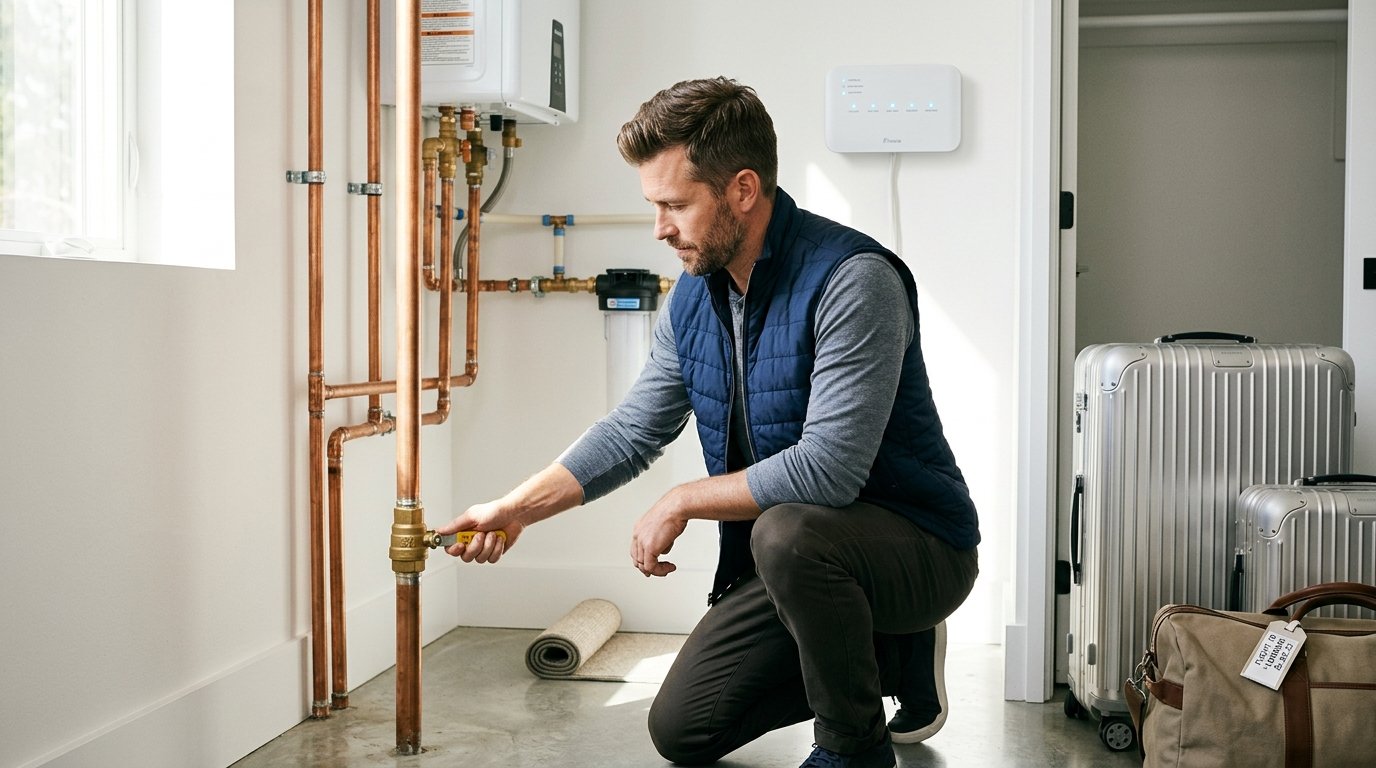
Turn off the domestic water main
Rotate the brass ball valve 90° perpendicular on your main copper riser (ensure fire sprinklers remain active).
Step 2: Relieve Pressure
Open faucets & flush toilets
Relieve trapped static pressure by opening one upstairs tap and one outdoor spigot. Flush toilets to drain tanks.
Step 3: Thermostat
Keep heat on at 58°F
Never shut the furnace off. Overnight desert freezes down to 26°F will rupture exposed pipes inside exterior walls.
The Anatomy of a Holiday Plumbing Disaster
Water damage during ordinary workdays is usually an inconvenience: a supply line ruptures while you are getting ready for work, you hear the hissing torrent, shut off the angle stop within five minutes, and mop up two gallons of water.
During Thanksgiving, Christmas, New Year’s, or extended winter vacations, that dynamic changes completely. When a pressurized plumbing connection fails while the home is unoccupied, there is no one to intervene. A standard 1/2-inch residential copper or PEX line under 60 PSI discharges between 8 and 12 gallons per minute (GPM).
The Uncontrolled Holiday Discharge Timeline
1 Hour
600 Gallons
Carpet, padding, and drywall baseboards saturated.
24 Hours
14,400 Gallons
Water penetrates crawl spaces or post-tension slabs.
48 Hours
28,800 Gallons
IICRC S520 microbial colonization begins on drywall paper.
In addition to sheer volume, the secondary damage compounds rapidly. In the closed, warm environment of an unventilated Arizona home, humidity soars past 85% RH. Airborne mold spores germinate within 24 to 48 hours, spreading through return air plenums and behind baseboards. What could have been a $150 plumbing repair escalates into a $60,000 to $120,000 full-scale structural remediation.
The Arizona Factor: Municipal Pressure Spikes & Desert Cold Snaps
Arizona homes face two unique environmental dynamics during the holiday winter season that drastically increase catastrophic failure rates:
1. Holiday Municipal Pressure Spikes
During major holidays (Thanksgiving, Christmas Day, New Year’s Day), industrial operations shut down, commercial buildings close, and hundreds of thousands of residential travelers leave the Valley. Municipal water main distribution networks across Phoenix, Scottsdale, Mesa, and Chandler experience a sharp drop in overall consumption.
This sudden decrease causes static line pressure in street mains to surge by 15 to 30 PSI, especially during the quiet midnight-to-5:00 AM hours. If your home's Pressure Reducing Valve (PRV) is older than 5 to 7 years or clogged with caliche minerals, this hydraulic surge hammers directly against aging flexible supply lines, toilet plastic valves, and water heater tanks.
2. Radiational Cooling & Desert Overnight Freezes
While daytime December and January temperatures often reach a comfortable 68°F, the Sonoran Desert’s dry air and clear skies trigger extreme radiational cooling after dusk. Temperatures across suburban valleys (especially Gilbert, Queen Creek, North Scottsdale, and Tucson foothill elevations) regularly dip into the mid-20s (24°F to 28°F) for 4 to 8 consecutive hours.
Homeowners who turn off their central heat to "save money" while away leave interior exterior-wall pipes and uninsulated attic lines completely exposed. When water freezes, it expands by 9%, exerting upwards of 20,000 PSI inside copper and brass fittings. The line splits, but no water flows until the midday desert sun warms the home back to 65°F, thawing the ice plug and releasing a full-pressure flood.
The Main Water Shutoff Decision Matrix
The single most critical question homeowners ask before packing their bags is: "Should I turn off the main water valve?" In 95% of situations, the answer is an unconditional yes—but you must understand the difference between domestic water and life safety systems.
CRITICAL: Never Shut Off Residential Fire Sprinkler Risers
Modern Arizona residential building codes (IRC Section R313, adopted widely in Scottsdale, Phoenix, and Maricopa County) require dedicated fire sprinkler systems in many single-family homes. Fire systems tap directly into the incoming municipal water service.
How to do it correctly: Inspect your main exterior riser. You will see a tee fitting where the fire sprinkler line splits off through a double-check backflow device with locked/tamper-sealed butterfly valves. Do not touch these valves. Locate the domestic shutoff valve downstream, which controls the line entering the dwelling's living spaces. Closing this valve protects the home without impairing fire protection.
What About Landscape Irrigation & Citrus Trees?
In Arizona, citrus trees, desert landscaping, and winter lawns require automated drip or sprinkler cycles even in December. Standard plumbing architecture routes the exterior irrigation line from the main service before it enters the interior house manifold.
You can safely close the interior domestic ball valve while leaving the exterior irrigation Pressure Vacuum Breaker (PVB) active. If you do this, ensure the PVB assembly is covered with an insulated freeze pouch to protect it from overnight cold snaps.
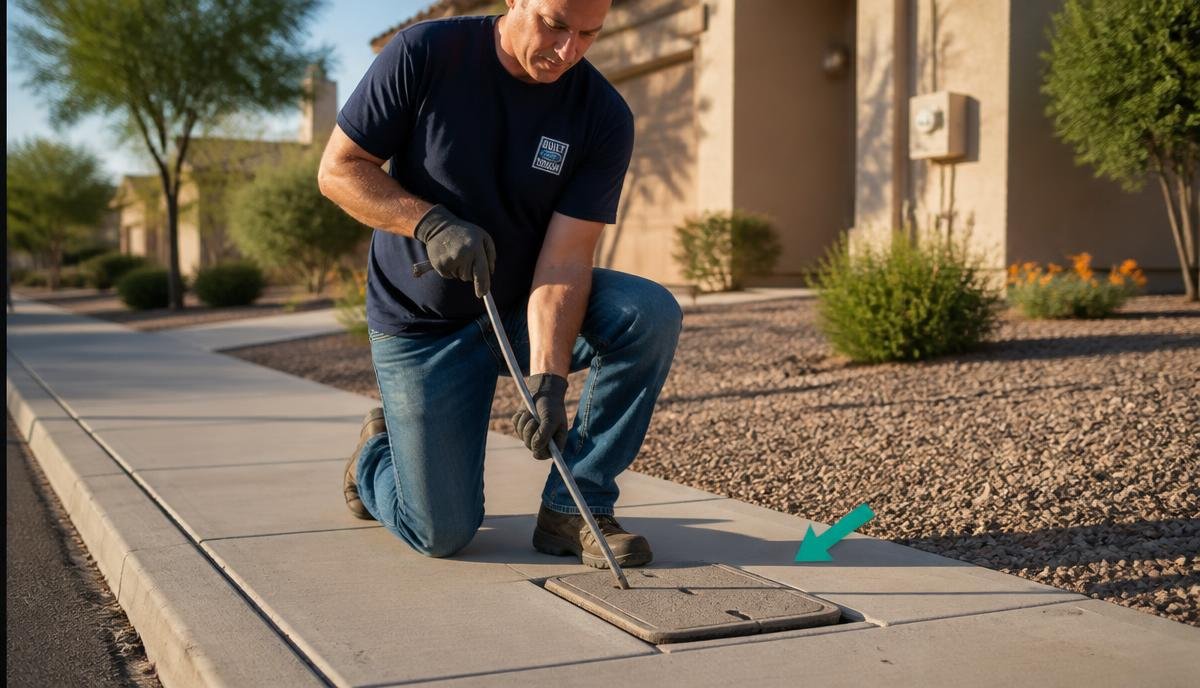
Emergency main isolation: In addition to the house riser ball valve, knowing where your municipal street meter box is located and having a dedicated curb key tool allows complete water shutdown during a major plumbing failure.
Room-by-Room Holiday Plumbing Lockdown Checklist
Whether you choose to shut off the whole-house main valve or need to keep water active for a guest or house-sitter, systematically securing high-risk fixtures is essential. Follow this room-by-room protocol:
1
The Kitchen: RO & Ice Maker Isolation
Reverse Osmosis (RO) System: Turn the small blue quarter-turn ball valve on the RO feed tube to OFF. Close the blue valve atop the pressurized storage tank. Arizona chloramine degrades plastic push-fit fittings, making RO units the #1 under-sink flood source.
Refrigerator Ice Maker Line: Pull out the fridge or reach into the adjacent base cabinet to turn off the 1/4" copper or braided PEX valve. Switch the ice maker wire arm to the OFF position inside the freezer.
Dishwasher Supply: Close the hot-water angle stop beneath the kitchen sink. Dishwasher solenoid valves can stick open from hard water grit, filling the tub until it spills across kitchen cabinetry.
2
The Laundry Room: Washing Machine Valves
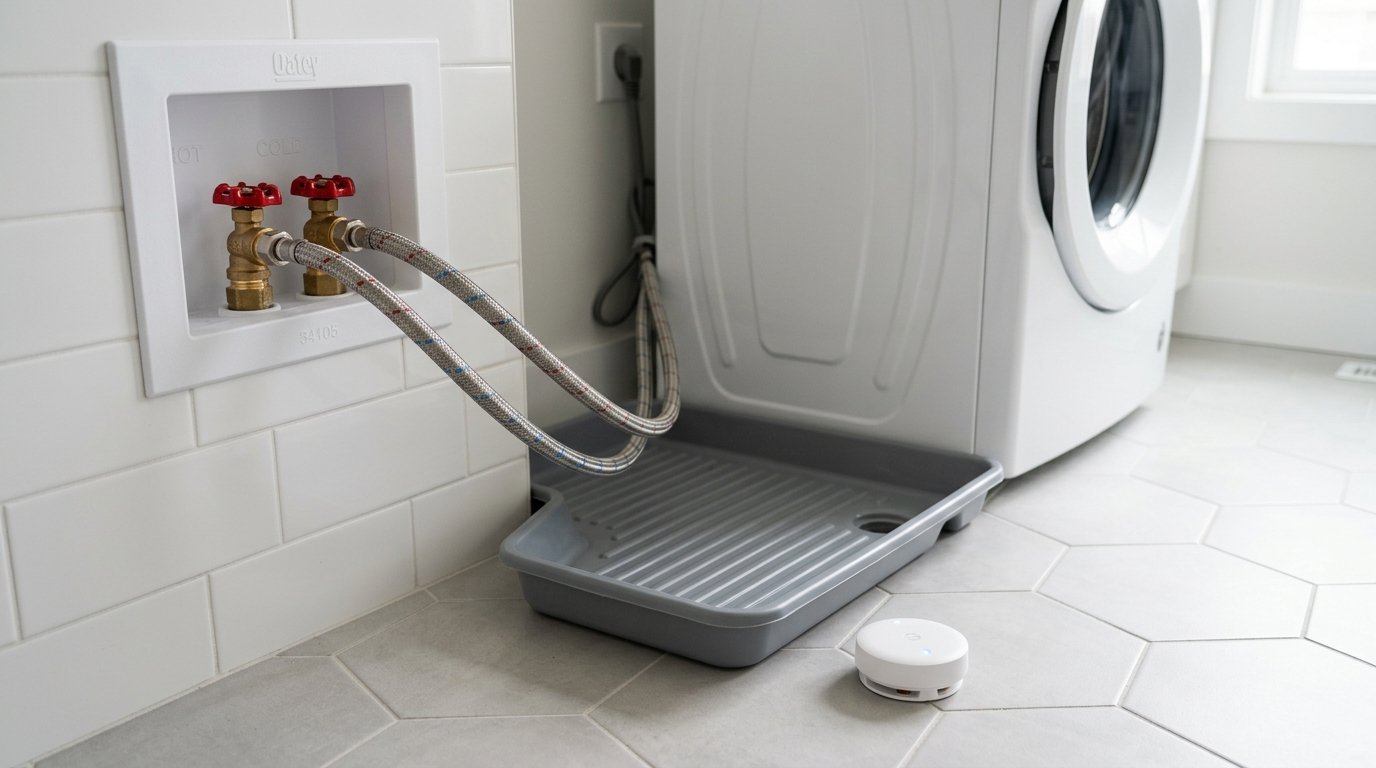
Shut Off Both Hot & Cold Valves: Always turn the red and blue quarter-turn levers on the recessed outlet box to the OFF position before leaving.
The Static Pressure Hazard: Washing machine hoses remain under continuous 60–80 PSI line pressure even when the machine is off. Black rubber hoses experience micro-fissuring and burst catastrophically at 3:00 AM during holiday pressure spikes.
Inspect Braided Stainless Sleeves: If your hoses are black rubber or older than 5 years, replace them with burst-resistant stainless braided hoses before your trip.
3
Bathrooms: Toilets & Vanity Cabinets
Close Toilet Angle Stops: Turn the chrome valve clockwise behind every commode. Toilet fill valves and flappers are vulnerable to high-pressure blowouts and stuck flappers that waste hundreds of gallons.
Plastic Nut Inspection: Inspect the plastic supply nut connecting the braided line to the bottom of the toilet tank. Hand-tightened plastic nuts crack under thermal stress and flood bathrooms instantly.
Open Under-Sink Vanity Doors: Keep vanity cabinet doors slightly ajar along exterior bathroom walls so central heating warms plumbing traps during overnight cold snaps.
4
Garage / Utility: Water Heater & Softener
Water Heater Vacation Mode: Rotate gas dials to "VACATION". For electric units, switch off the 30-amp panel breaker. This prevents dry-fire burnouts if the tank drains while water is isolated.
Bypass the Water Softener: Push the stainless or plastic bypass valve to BYPASS. This stops electronic timer cycles from attempting a 2:00 AM brine backwash against a closed water supply.
Water Heater Pan Drain: Verify that the secondary pan drain line leading outdoors is clear of desert dust, caliche chunks, and spider webs.
Smart holiday leak mitigation: Installing automated shutoff valves with point-of-leak floor sensors beneath washing machines and water heaters stops catastrophic floods the instant moisture touches the pan.
Holiday Plumbing Pre-Departure Priority Matrix
Use this authoritative decision matrix to organize your home's pre-travel plumbing lockdown based on risk severity:
Fixture / System
Recommended Pre-Departure Action
Holiday Failure Mode
Severity Level
Domestic Water Main
Rotate quarter-turn ball valve 90° to OFF; relieve line pressure
For homeowners who travel frequently or spend part of the winter out of state, modern smart plumbing technology provides an automated safety net that functions even when you are thousands of miles away:
Smart Whole-Home Shutoff Valves
Devices such as Flo by Moen, Phyn Plus, and StreamLabs Control are professionally plumbed directly into your domestic copper line. They perform continuous ultrasonic flow metering and automated micro-leak pressure tests.
When toggled to "Away" mode via your smartphone app, the threshold for abnormal flow drops. If a pipe ruptures or a fixture runs continuously for more than 5 minutes, the motorized ball valve physically closes within seconds, sending an immediate push notification to your phone.
Point-of-Leak Wi-Fi Puck Sensors
Compact, battery-operated Wi-Fi moisture sensors (YoLink, Govee, Aqara) can be deployed in minutes with zero plumbing work. Place them in strategic moisture hot spots:
• Directly inside the water heater drain pan in the garage.
• On the floor beneath the kitchen sink beside the RO system.
• Under the washing machine recessed supply connection.
• Behind master bathroom commodes.
The instant metal sensor contacts detect liquid, they sound a 100dB local siren and transmit Wi-Fi alerts to your smartphone or smart hub.
The Neighbor Checklist & Insurance Vacancy Due Diligence
Even the best automated valves cannot replace a pair of trusted human eyes. Furthermore, insurance policies (HO-3 and HO-5) often contain fine print regarding unoccupied properties during winter months:
Protecting Your Insurance Claim: The 48-Hour Caretaker Protocol
Many standard homeowners insurance contracts state that water damage caused by frozen or ruptured pipes is excluded from coverage if the dwelling was left unoccupied without maintaining heat or draining the water system. Furthermore, gradual damage occurring over weeks can be denied as "neglect."
Provide Your House-Sitter or Neighbor With:
1. Exact Physical Location of Main Shutoff: Send them a photo showing the exterior riser ball valve and the city water meter curb box.
2. Water Meter Key: Leave a T-handle curb key in the garage in case the main house valve seizes.
3. Walkthrough Schedule: Request a quick physical inspection every 48 to 72 hours—checking under sinks, looking for ceiling drywall sagging, and verifying thermostat warmth.
If the unthinkable happens and you unlock your front door to the sound of rushing water, sagging ceiling drywall, or flooded flooring, take immediate action to preserve life, safety, and insurance coverage:
1
Electrical Safety First
Never enter standing water if electrical outlets, baseboard heaters, or extension cords are submerged. If your main electrical panel is located in a dry garage or exterior wall, shut off the main breaker before stepping onto wet floors.
2
Kill the Water Supply
Immediately shut off the exterior riser ball valve or city water meter curb stop using a T-handle key.
Do not wait for an insurance adjuster to visit before initiating extraction. Standard insurance policies obligate you to mitigate losses immediately. Professional truck-mounted water extraction, industrial desiccant dehumidification, and thermal imaging must begin within hours to salvage flooring and structural framing.
24/7/365 Rapid Response Team
Dealing with a Travel Plumbing Emergency?
Our IICRC-certified restoration crews are stationed across Phoenix, Scottsdale, Mesa, Chandler, Gilbert, and Glendale ready to respond in 60 minutes or less with heavy extraction and thermal imaging.
Should I completely shut off my main water valve before leaving for the holidays?
Yes, shutting off your whole-house domestic water supply valve is the single most effective action you can take to eliminate vacation water disasters. If a washing machine supply hose, toilet valve, or water heater splits while you are away, an open line can discharge 8 to 12 gallons per minute—accumulating over 15,000 gallons per day. If your Arizona home has an automated landscape irrigation system or fire sprinklers, ensure you close only the dedicated interior domestic shutoff valve while leaving the fire riser and exterior irrigation lines active.
How do I shut off domestic water without disabling my residential fire sprinkler system?
In modern Arizona homes (especially built under IRC Section R313 residential fire sprinkler mandates), the main supply line splits into two branches at the utility riser: one for the fire sprinkler system and one for domestic household plumbing. Look for the domestic shutoff valve, typically located downstream of the dual-check backflow preventer. Never close the valve marked 'Fire Protection' or any valve with a tamper switch or lock. If your system is a combined flow-through loop, consult a licensed fire protection specialist before departure.
What should I do with my water heater when leaving for holiday vacation?
For gas water heaters, turn the front temperature dial to 'VACATION' or 'PILOT' mode. This keeps the pilot light burning and prevents tank freezing while avoiding unnecessary gas combustion. For electric water heaters, flip the dedicated double-pole 30-amp circuit breaker in your electrical panel to OFF. Crucially, if you shut off the home's main water supply, an electric water heater must always be powered down—if the tank drains from siphoning, energized heating elements will dry-fire and melt within 60 seconds.
Why do holiday water leaks cause exponentially more damage than normal leaks?
When occupants are home, a ruptured pipe or overflowing toilet is discovered within minutes. During holiday travel, water flows unabated for days or weeks. By hours 24 to 48, standing water triggers IICRC S520 microbial growth; by day 3, drywall dissolves and framing swells; by day 5, saturated ceiling drywall collapses under water weight, ruining furniture, flooring, and electrical systems. A typical holiday water loss averages $40,000 to $90,000 in remediation and structural reconstruction costs.
How does Arizona hard water cause shutoff valves to seize or leak?
Arizona tap water contains 250 to 350+ PPM of dissolved calcium and magnesium. Over time, these minerals precipitate inside older multi-turn gate valves and brass angle stops. When a homeowner attempts to turn a calcified valve before holiday travel, the brittle internal stem can snap or the degraded rubber washer disintegrates, creating an active pressurized leak inside the vanity cabinet. Always exercise valves gently or upgrade to quarter-turn ball valves with PTFE Teflon seats.
What temperature should I set my thermostat to in Arizona during winter travel?
Never turn your heating system off entirely. Even in the Phoenix metropolitan area, clear winter skies cause radiational cooling, dropping overnight temperatures into the 20s (24°F to 28°F). Set your thermostat to HEAT mode at a minimum of 55°F to 58°F. This maintains adequate thermal warmth inside exterior wall cavities, under-sink cabinets, and attic utility runs where plumbing lines are vulnerable to freeze-expansion bursts.
Do smart water shutoff valves like Moen Flo or Phyn work reliably while traveling?
Yes, smart whole-home shutoff valves (such as Flo by Moen, Phyn Plus, or StreamLabs) provide automated vacation defense. Installed on your main water line, they use ultrasonic transducers and micro-turbine flow sensors to detect micro-leaks as small as one drop per minute. When set to 'Away' mode, the device will instantly close its motorized ball valve and send a push notification to your phone if unusual flow is detected for more than 5 minutes.
Will homeowners insurance deny my water claim if a pipe bursts while I'm away?
Homeowners insurance policies (HO-3) cover sudden and accidental discharge of water, but most policies contain an 'unoccupied premises' or freeze clause. If an adjuster determines you turned off the heat during winter, failed to drain pipes, or left the property unmonitored for more than 14 to 30 consecutive days, the carrier may deny the claim or exclude secondary mold damage citing negligence. Having a neighbor inspect the home every 48 to 72 hours satisfies policy due diligence.
IICRC-certified restoration technicians · Phoenix metro
Written and fact-checked by the licensed crew that runs the trucks — the same technicians who take moisture readings, set drying chambers to the IICRC S500 standard, and answer the phone at 2 a.m. across the Phoenix metro.
Licensed Arizona contractor — AZ ROC #331127 (KB-2)