Do you need a plumber, a restoration pro, or just a mop? Use this scenario-based triage guide to identify the right professional for your water emergency right now.
Last updated:Reading time:10 minStandards:IICRC S500 Verified
Plumber vs. Restoration · Scenario Guide · Phoenix, AZ
Table of contents▾
Handle water damage yourself only if it is a small, clean-water spill addressed within an hour. For visible, simple plumbing leaks, call a plumber first. For hidden leaks, water that has already spread into walls or floors, or sewage backups, call a restoration company first to perform leak detection and damage assessment before the plumbing repair begins.
The 30-Second Version
If you are standing in water and need to know who to call right now, follow this triage logic:
Is it small, clean water, and caught within an hour? You may be able to handle it yourself.
Is the source obvious, accessible, and simple (like a visible pipe under a sink)? Call a plumber first to stop the flow.
Is the source hidden, or has water already wicked into walls or under floors? Call a restoration company first. They will pinpoint the leak and document the damage for your records.
Can I Just Handle This Myself?
DIY cleanup is only appropriate if the situation meets these core criteria: the affected area is small, the water is clean (Category 1), you caught it within about an hour, and there is absolutely no wall or cavity involvement.
For the full breakdown of exactly when DIY makes sense—including cost comparisons and safety criteria—see our complete DIY vs. Professional decision guide. Do not attempt to dry out carpet pad, drywall, or the area behind cabinets yourself; household fans cannot reach the moisture trapped in these cavities, leading to mold growth within 48 to 72 hours.
Plumber or Restoration Company? It Depends on the Job
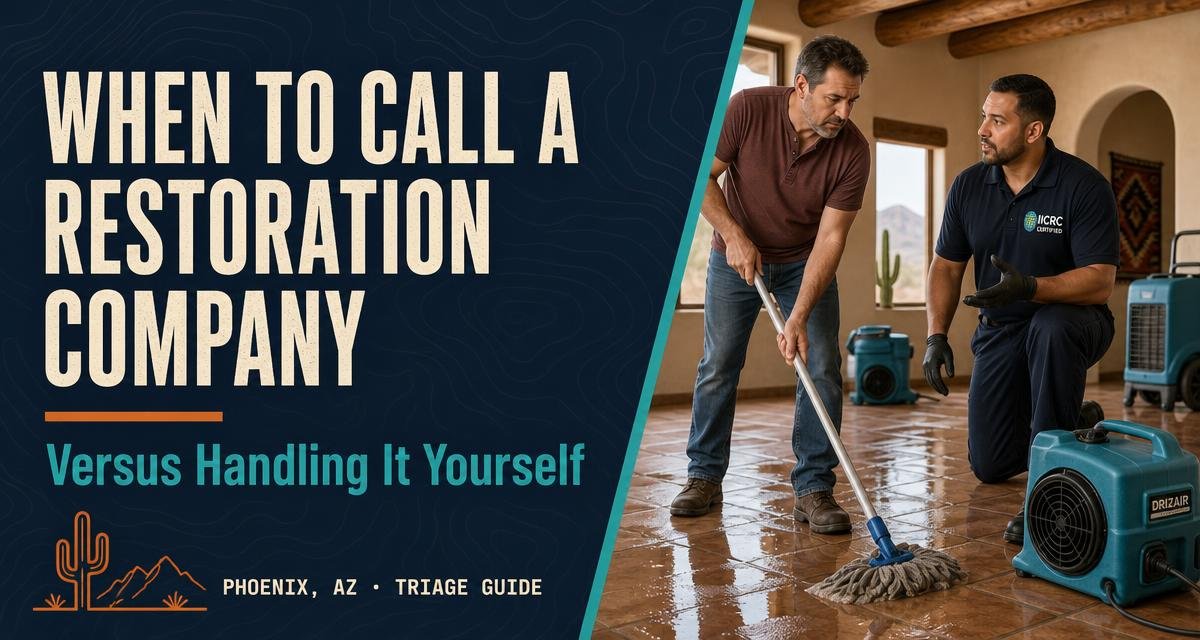
While both trades work with water, their roles are distinct. A plumber is a "mechanical" expert who fixes the pipes; a restoration technician is a "structural" expert who saves the house.
When a Plumber Should Be Your First Call
A plumber is the right first responder when the source of the water is obvious, accessible, and simple. If you can see the exact spot where a supply line has burst or an angle stop valve has failed, the priority is stopping the mechanical leak. Calling a licensed plumbing contractor like AquaVo Plumbing ensures the failed pipe, fixture, or water heater is repaired or replaced properly. If the leak is caught immediately and no water has migrated into walls or under flooring, a plumbing repair may be all you need.
When a Restoration Company Should Be Your First Call
A restoration company should be your first call when the source is hidden or unclear, or when water has already spread. In Phoenix, where slab leaks and leaks inside wall cavities are common, "exploratory" plumbing can be incredibly destructive.
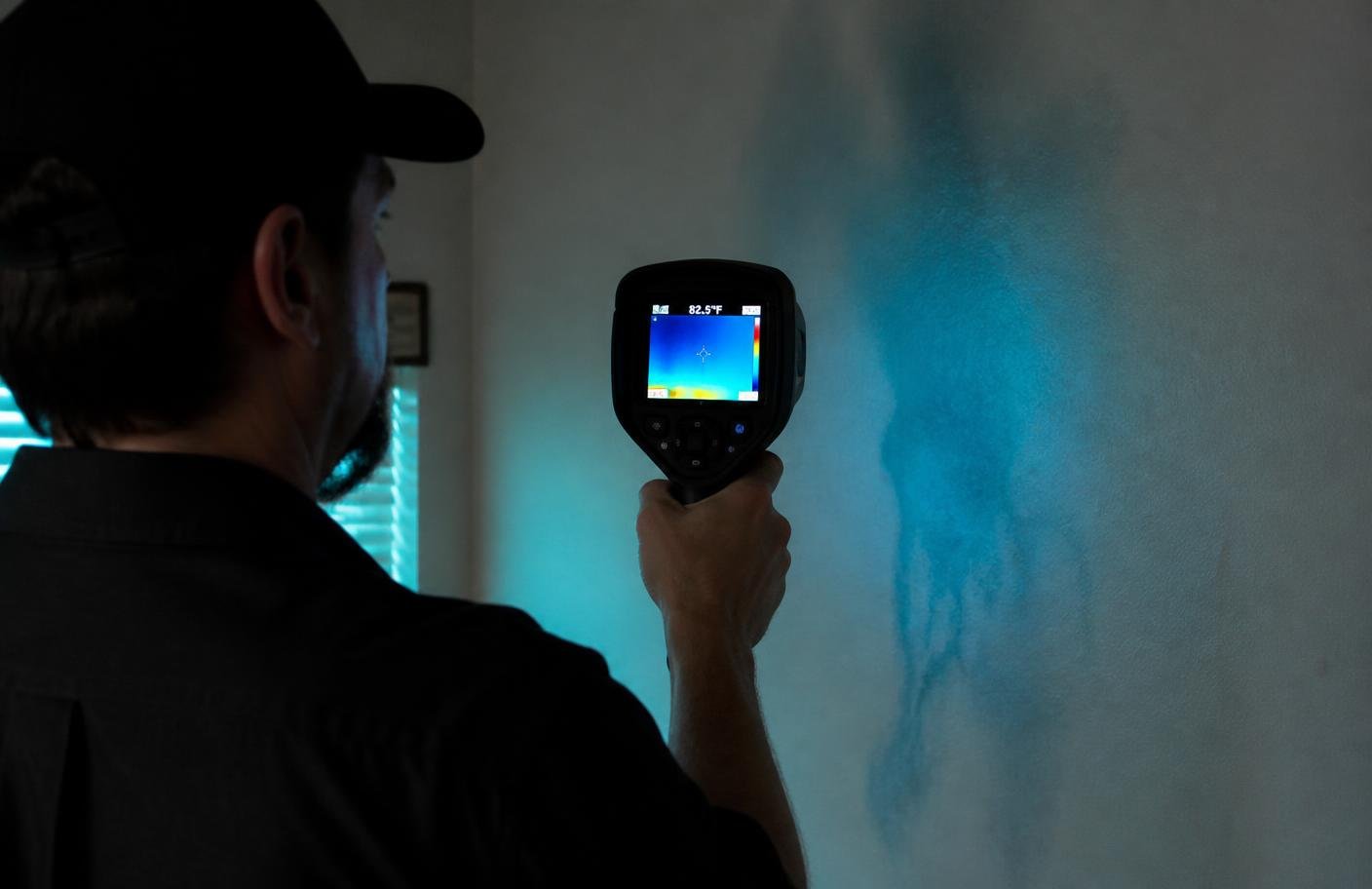
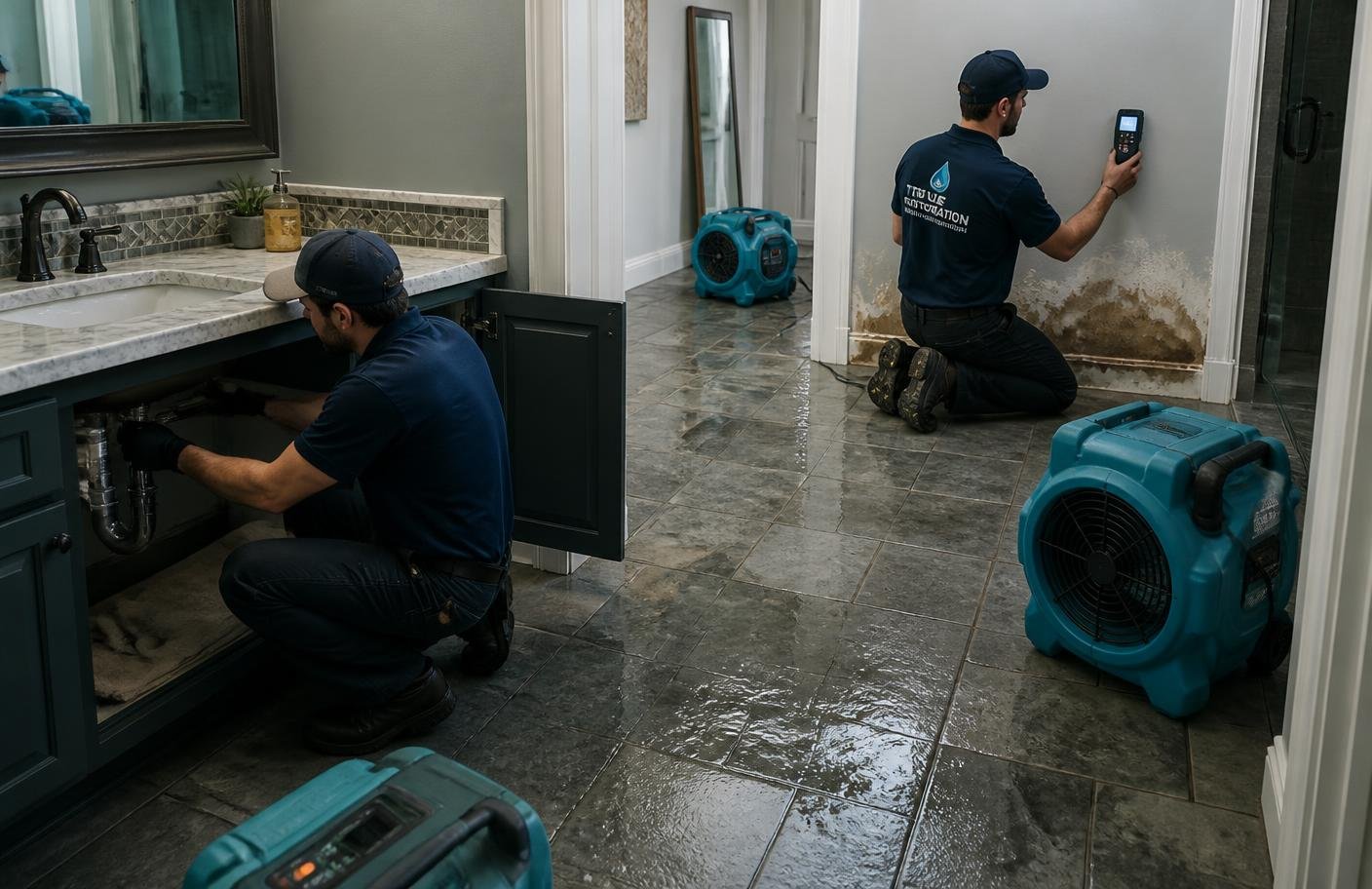
Restoration companies bring specialized leak-detection equipment—including thermal imaging cameras, acoustic listening devices, and moisture meters—that can pinpoint a hidden leak non-invasively. By calling the restorers first, you ensure the plumber knows exactly where to cut, saving you from unnecessary demolition. Furthermore, if you are unsure if the moisture is an emergency, you can check the signs you need emergency extraction first.
Why You Often Need Both — And in What Order
Most real-world situations genuinely need both a plumber (to fix the source) and a restoration company (to dry, clean, and restore the structural damage). Having a clear sequence avoids gaps, duplicate visits, and confusion when creating accurate documentation for your property maintenance records.
Often, the best path is calling a restoration company to triage the site and map the moisture, while a dedicated plumbing professional like AquaVo Plumbing replaces the ruptured pipe or failed line so structural extraction and dehumidification can proceed without delay.
TechnologyRestoration companies use thermal imaging to find leaks that plumbers can't see with the naked eye.
Appropriate if water stayed on surface and was dried fast.
CollaborationMajor losses often require a 'tag-team' approach between plumbing and restoration trades.
Emergency Priority: Why Immediate Triage Matters
A common mistake is waiting hours or days before starting mitigation. Moisture trapped in structural cavities continues to wick into baseboards, subfloors, and framing every minute it sits.
Whether you call a plumber to halt the source or a restoration contractor for extraction first, having objective moisture documentation protects your investment. Professional restorers use thermal cameras and calibrated meters to map exact wet boundaries, providing an itemized, transparent scope before any demolition starts. For more on direct budgeting, see our guide on restoration costs in Arizona and our water categories guide.
Key Takeaways
DIY is for small, clean, immediate spills only. Not sure if this is even an emergency? Check the signs first.
Call a plumber first for visible, accessible mechanical failures with minimal spread.
Call a restoration company first for hidden leaks, sewage, or widespread damage.
Restoration pros use thermal imaging and acoustic devices to pinpoint leaks non-invasively.
Should I call a plumber or a restoration company first?
If the leak is visible and the source is obvious, call a plumber first to stop the water. If the source is hidden, water has already spread, or there is visible damage to walls and floors, call a restoration company first. Their leak-detection equipment can pinpoint the source for the plumber, avoiding unnecessary digging.
Does a restoration company also fix the plumbing?
Most restoration companies focus on moisture detection, drying, and structural repair, while licensed plumbers handle the pipe repairs. However, many restoration companies coordinate directly with plumbers to ensure the repair and drying happen in the correct sequence.
Do I need both a plumber and a restoration company?
In most cases, yes. A plumber is needed to fix the physical pipe or fixture, while a restoration company is needed to extract water, dry the structure to prevent mold, and repair damaged drywall or flooring. Calling only one often leaves half the problem (the wet structure or the active leak) unaddressed.
Who do I call for a slab leak?
Call a restoration company first for a suspected slab leak. Professional restorers use thermal imaging and acoustic equipment to pinpoint the leak non-invasively. This allows the plumber to perform a targeted 'spot repair' or reroute rather than breaking up large sections of your concrete floor to find the leak.
Who do I call for a sewage backup?
Call a restoration company immediately for a sewage backup. Because sewage (Category 3 water) is a biohazard, it requires specialized PPE, antimicrobial treatments, and regulated disposal of porous materials. A plumber may be needed to clear the line, but the cleanup must be handled by certified restoration professionals.
Can I skip calling a plumber and just call a restoration company?
Yes, especially if you aren't sure where the water is coming from. A restoration company can use leak-detection tools to find the source and then bring in or recommend a plumber to fix the specific pipe once it's located, ensuring you don't pay for exploratory plumbing work.
About the author
AZ Water Damage Restoration Team
IICRC-certified restoration technicians · Phoenix metro
Written and fact-checked by the licensed crew that runs the trucks — the same technicians who take moisture readings, set drying chambers to the IICRC S500 standard, and answer the phone at 2 a.m. across the Phoenix metro.
Licensed Arizona contractor — AZ ROC #331127 (KB-2)