If a pipe bursts, you must shut off the main water valve immediately, open all faucets to drain the pressurized lines, isolate your water heater if necessary, and call for professional extraction. These steps stop the flooding at the source and reduce the volume of water forced into your structure by Phoenix's high municipal water pressure.
Step 1: Shut Off the Main Water Valve
Locate and close your main shutoff valve immediately to stop the flow of water into your home. In Phoenix, this is usually found in a concrete box near the street or on the side of your house where the main service line enters. Turn the valve clockwise until it stops (gate valve) or perpendicular to the pipe (ball valve).
For full guidance on finding your valve and what to do if it's stuck, see our complete guide to water shutoff. Do not waste time looking for a local shutoff behind a sink or toilet if the main line or a wall pipe has failed; go straight to the main supply.
Step 2: Drain the Water Still in Your Pipes
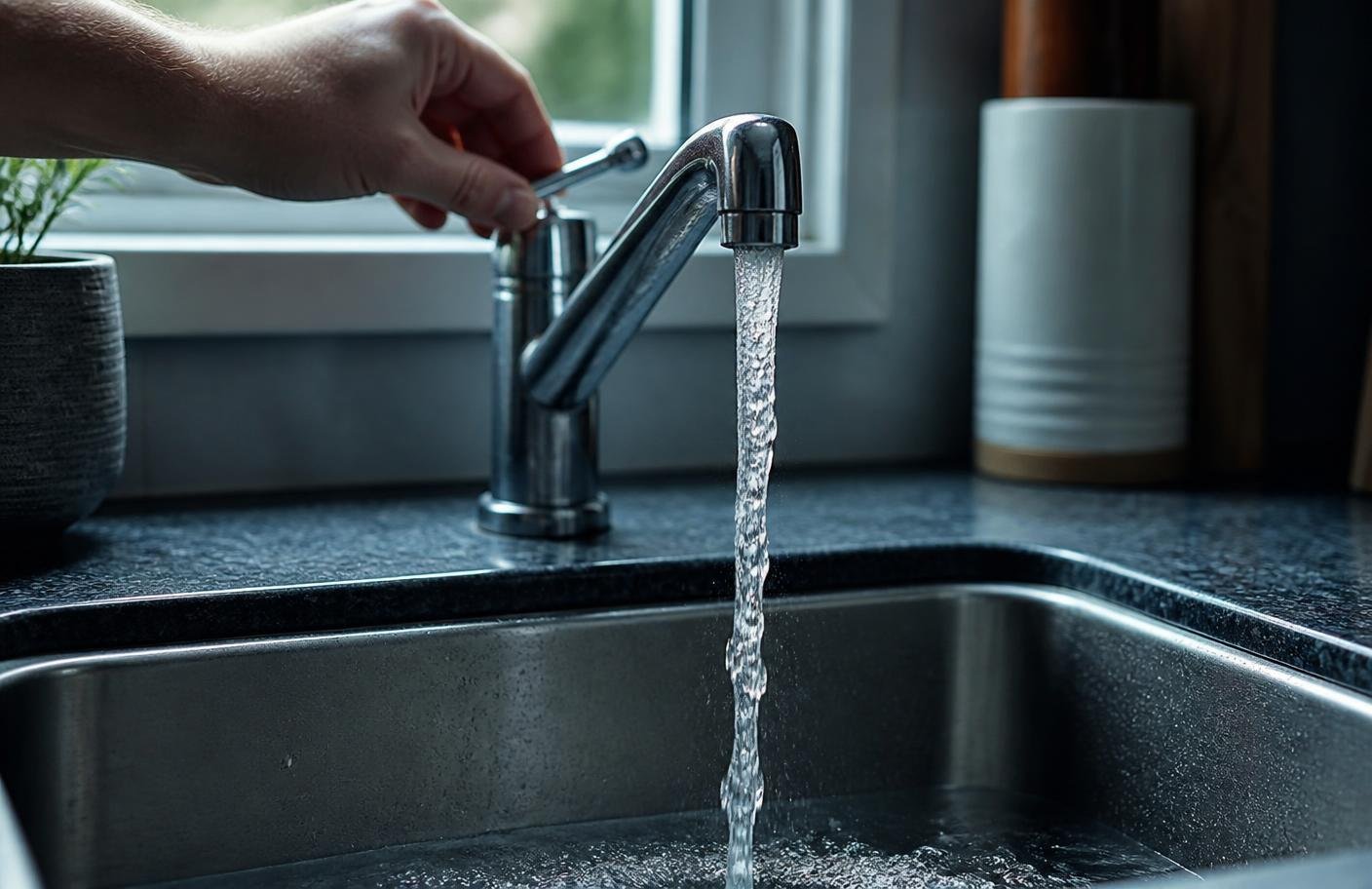
Water remains in your pipes under significant pressure even after the main valve is closed. If you do not drain the system, this residual water will continue to spray or leak out of the burst point until the entire home's plumbing is empty.
To relieve this pressure, open every faucet in the house—both hot and cold—and flush all toilets several times. Start with the faucets at the lowest point of the property (like an outdoor spigot) to allow gravity to assist in draining the upper floors. This clears the pressurized column of water, stopping the leak at the burst point much faster than if the lines remained closed.
Step 3: If the Burst Pipe Is on the Hot Water Line
If the failure is on a hot water pipe, you have an additional 40 to 50 gallons of water stored in your water heater that could potentially leak into your home. You must shut off the water heater and open the hot-water taps to drain the tank.
Turn off the power at the breaker panel (for electric heaters) or turn the gas control valve to "Off" or "Pilot" (for gas heaters). Then, close the cold-water inlet valve located on top of the heater. By draining the hot water lines through your faucets, you prevent the tank from emptying itself through the burst pipe, and you protect the heating elements from burning out once the water level drops.
Step 4: Cut Power to the Affected Area if It's Safe
Water and electricity are a fatal combination. If water is pooling near outlets, running down inside walls containing wiring, or reaching appliances, you must shut off the electricity to those specific zones at the main breaker panel.
Safety Warning: Only attempt to operate the breaker panel with completely dry hands while standing on dry footing. Never enter standing water that may be in contact with electrical sources. If the water has reached the panel or you cannot reach it safely, evacuate the home and wait for the fire department or a professional restoration crew.
Emergency StepsOpening all faucets relieves residual pressure, stopping the leak at the burst point significantly faster.
Step 5: Temporarily Slow the Leak (Don't Try to Fix It)
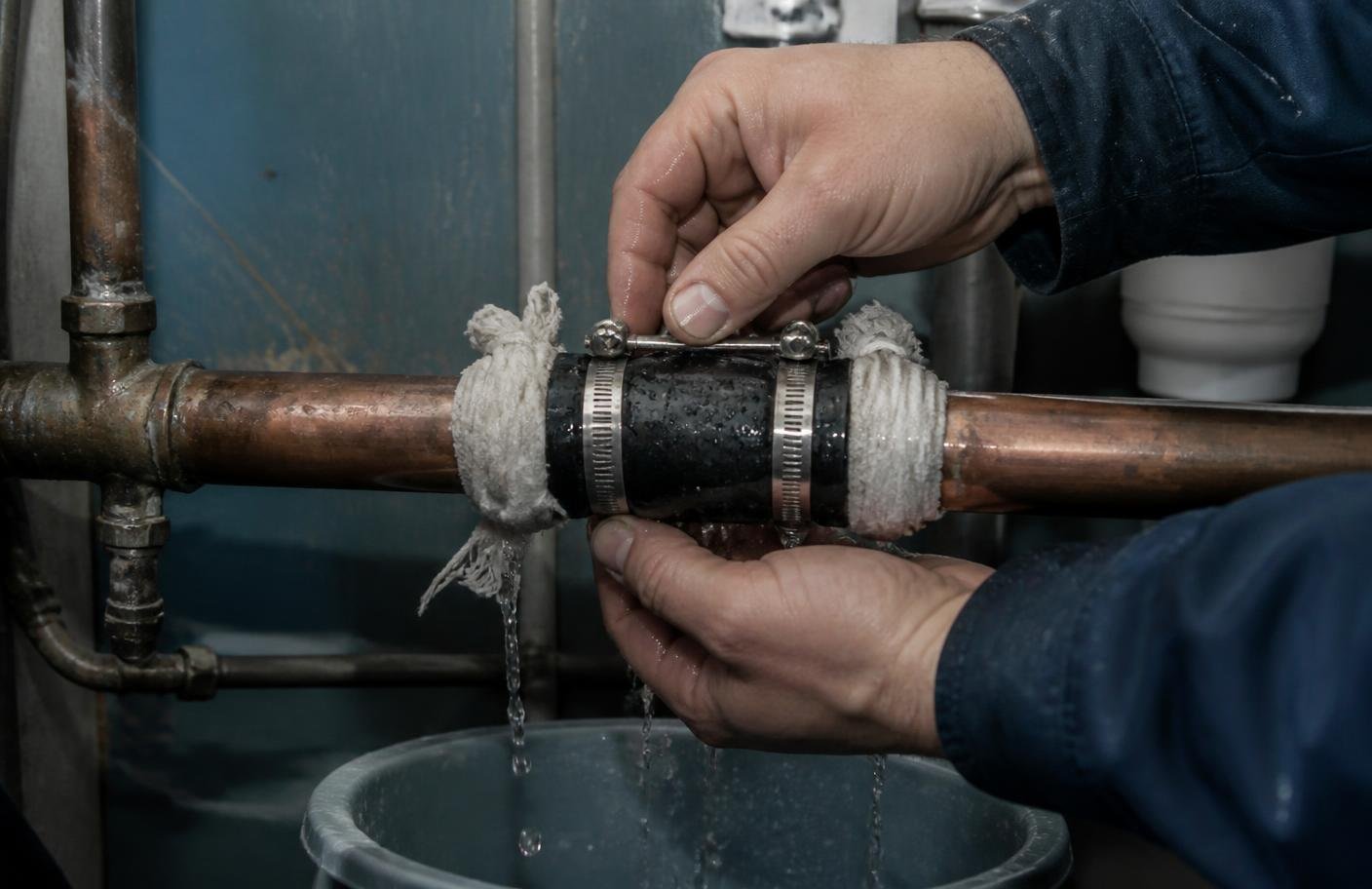
Once the pressure has been relieved and the flow has slowed to a drip, you can attempt to manage the remaining leakage. Wrap the damaged section of pipe tightly with rags, use heavy-duty waterproof tape, or apply a pipe repair clamp if one is available in your emergency kit.
State clearly: this is a temporary measure to reduce further water damage until a licensed emergency plumber (such as AquaVo Plumbing) and professional water restoration crews arrive. Do not attempt to cut into pressurized plumbing or perform makeshift permanent repairs yourself. A licensed plumbing specialist needs to properly solder, reroute, or replace the failed line while restoration technicians extract standing water and dry structural drywall and framing.
TriageA temporary clamp can reduce water spread, but the underlying pipe failure requires professional replacement.
Step 6: Extract Standing Water and Protect Belongings
If it is safe to do so, move furniture, electronics, and valuables out of the affected area. Begin removing standing water using a wet/dry shop vacuum or by mopping if the area is small. Every minute that water sits in contact with your flooring, baseboards, and drywall increases the risk of permanent structural damage and microbial growth.
For the complete first-hours checklist, including how to document the damage for your records and how to work with your provider, see our First 24 Hours Guide. Do not delay the extraction process; clean water from a pipe burst can degrade into a hazardous "Category 2" source in as little as 24-48 hours in the Arizona heat.
Why Do Pipes Burst? (It's Usually Not Freezing in Phoenix)
Freezing temperatures are the leading cause of burst pipes across the United States, but freezing is rarely the cause of burst pipes in Phoenix. While we do see occasional overnight frosts, the pipes in our region are generally buried or insulated enough to withstand them. The real culprits in the Valley are much more consistent and aggressive.
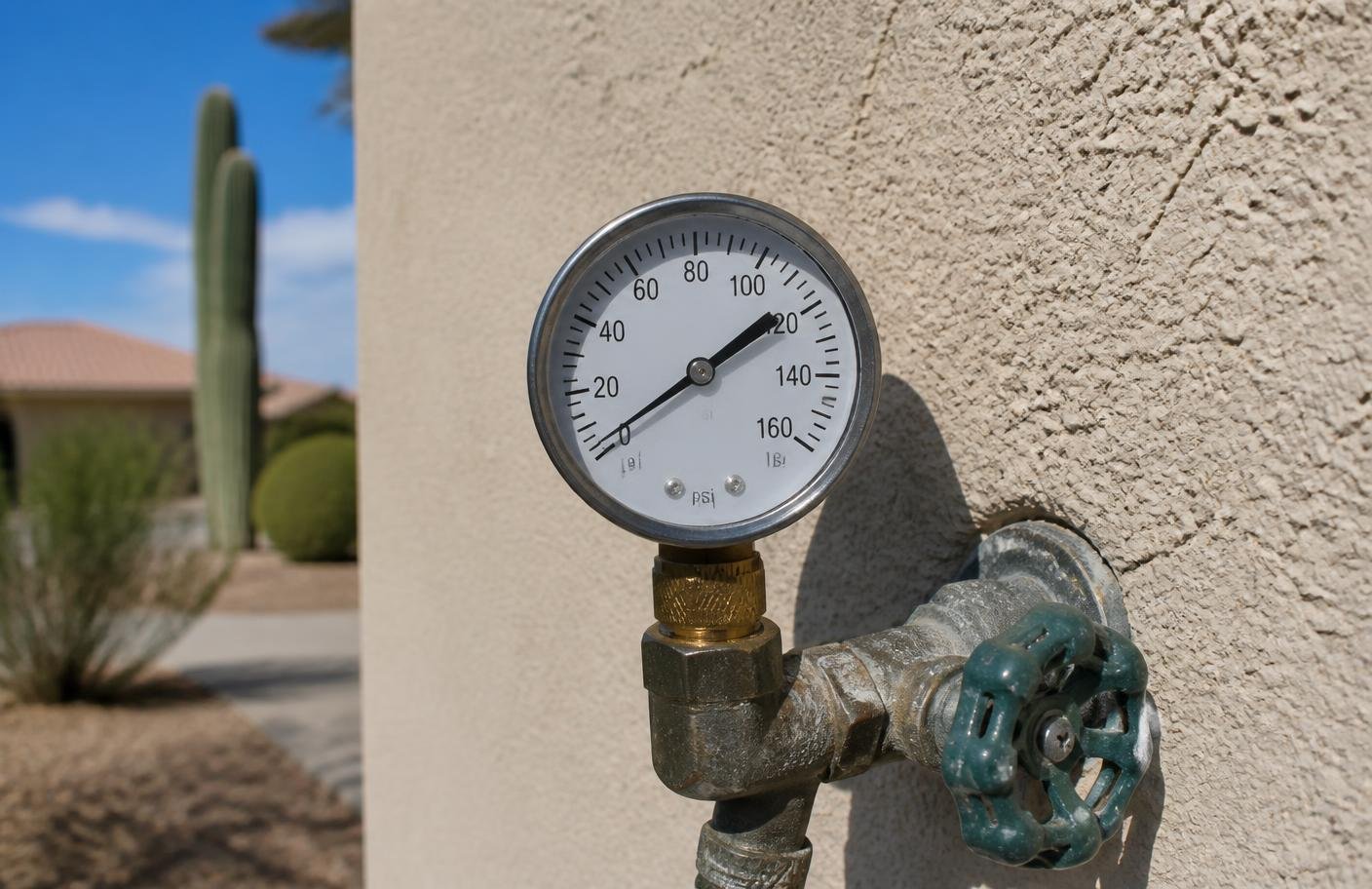
Extreme Water Pressure: Phoenix municipal water pressure is notoriously high. While residential plumbing is designed for a maximum of 80 PSI, street pressure in many parts of the Phoenix metro area—including Scottsdale, Mesa, and Glendale—commonly reaches 90 to 120 PSI or higher. Phoenix city code requires a Pressure Reducing Valve (PRV) for this reason, but these valves eventually fail. When they do, the constant high-pressure stress on pipe joints, valves, and appliance hoses leads to sudden, violent bursts.
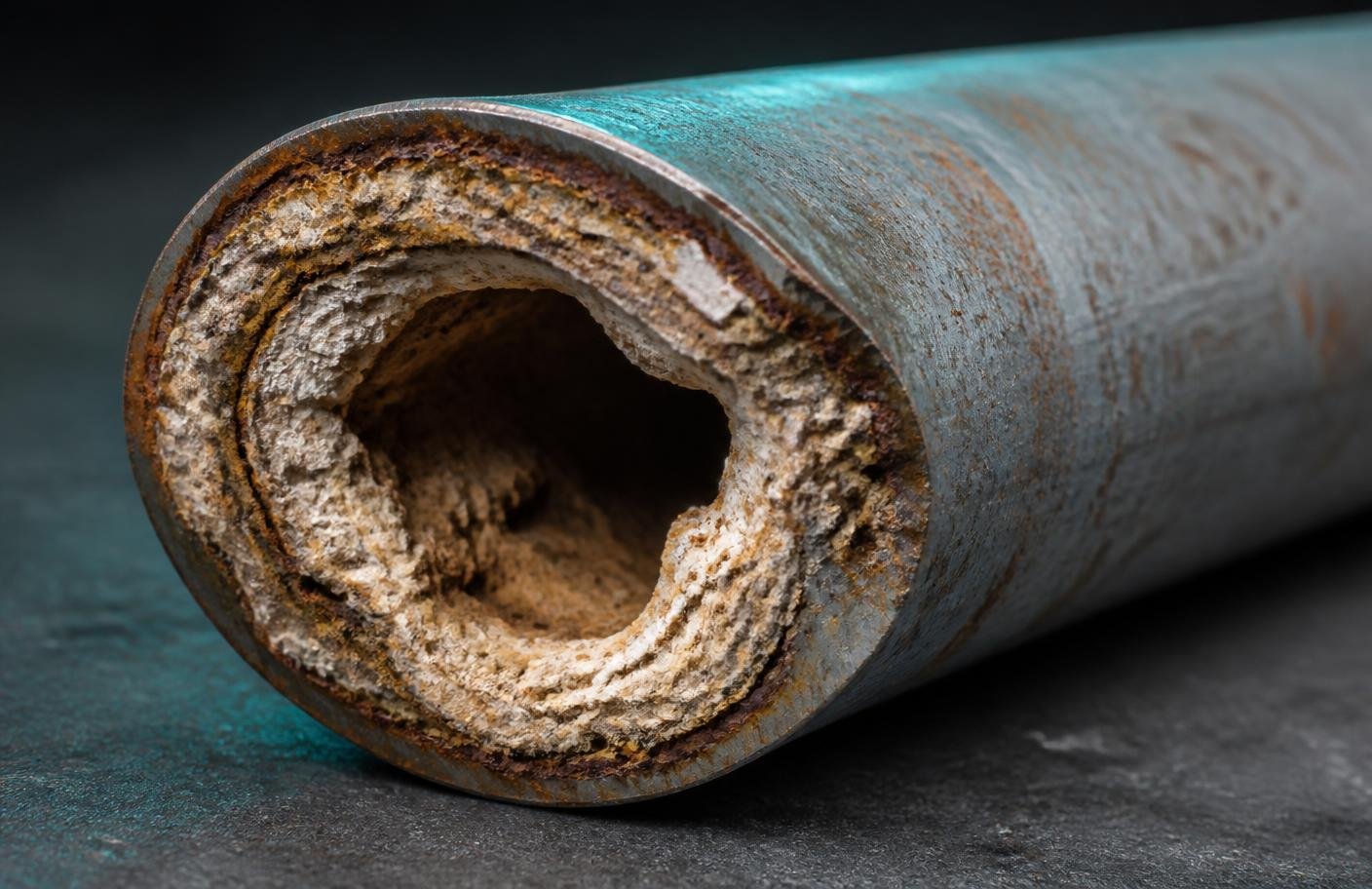
Hard-Water Mineral Corrosion: Arizona's water is among the hardest in the nation. Over time, calcium and magnesium deposits build up inside your pipes, causing "pitting" corrosion. This eats through copper and galvanized steel from the inside out, weakening the pipe walls until they can no longer hold the pressure.
Thermal Expansion: The extreme heat of the Arizona summer causes both the ground and the pipes themselves to expand and contract. In older homes with aging plumbing, this physical stress eventually causes joints to pull apart or brittle sections of pipe to crack.
Local CausesSustained water pressure over 80 PSI is the #1 cause of sudden pipe failure in Phoenix homes.
Burst Pipe Restoration: Direct Pricing & Scope Transparency
Burst pipe cleanup costs typically depend on how quickly the main shut-off valve was closed and whether water penetrated baseboards, wall framing, or flooring underlayment.
Professional restoration contractors should provide an immediate, written, line-item estimate based on calibrated thermal moisture mapping before equipment is set. Emergency dry-out via water extraction & mitigation and complete water damage reconstruction are quoted as distinct phases so you retain full control over your project budget. For comprehensive pricing benchmarks across the Valley, explore our Arizona Water Damage Cost Guide.
How to Help Prevent a Burst Pipe in the Future
Preventing a future emergency in the desert requires proactive plumbing management. We recommend:
Pressure Testing: Have a plumber test your home's static water pressure. If it's over 75 PSI, ensure your Pressure Reducing Valve (PRV) is functioning correctly. PRVs typically last 7-10 years.
Water Softening: Install a high-quality water softener to reduce the mineral scale that causes internal pipe corrosion.
Pipe Evaluation: If your home was built before 1990, have your galvanized or steel plumbing inspected for signs of external corrosion or internal narrowing.
CorrosionInternal mineral buildup weakens pipe walls, making them susceptible to high-pressure bursts.
Key Takeaways
Act Immediately: A burst pipe is a high-volume emergency that requires instant source control to prevent structural failure.
Limit Damage: Shutting off the main water valve and draining the lines yourself can significantly reduce the total volume of water lost.
Phoenix High Pressure: Local municipal pressure (90-120+ PSI) makes bursts more destructive than standard leaks; professional extraction is mandatory.
Prevent Mold: Call for professional moisture removal within the first few hours to ensure water is extracted from wall cavities and subfloors.
Related Technical Guides
Educational resources for Phoenix & Arizona property owners
Our rapid response units maintain staged equipment yards across Central Phoenix, the East Valley, the West Valley, Pinal County, and Greater Tucson for an average ~42-minute on-site arrival:
Immediately shut off your main water valve, then open every faucet in the house to drain the remaining water and relieve pressure. If a hot water line burst, shut off your water heater as well. Once the flow is controlled, call a 24/7 restoration professional to begin extraction and drying.
How do I drain the remaining water out of my pipes?
After closing the main shutoff valve, open all hot and cold faucets in the house, starting with the lowest point (like an outdoor spigot) and moving to the highest. Flush all toilets several times. This clears the pressurized water remaining in the system, reducing the volume of water leaking from the burst point.
What do I do if the burst pipe is on the hot water line?
You must shut off the water heater's power (or gas) and close its cold-water inlet valve. Opening the hot water faucets will then drain the tank and the hot water lines, preventing a massive 40-50 gallon leak and protecting the heating elements from burning out.
Why do pipes burst?
While freezing is a common cause nationally, in Phoenix pipes usually burst due to extreme municipal water pressure (often exceeding 100 PSI), mineral corrosion from hard water, and thermal stress from expansion and contraction. Over time, these factors weaken pipe joints until they fail suddenly.
Does high water pressure cause pipes to burst?
Yes. Phoenix street pressure often runs 90-120+ PSI, while residential plumbing is only rated for 80 PSI. Constant high pressure strains joints, valves, and appliance hoses, making a sudden burst much more likely if you do not have a functional pressure-reducing valve (PRV).
How much does burst pipe restoration cost in Arizona?
Mitigation costs depend on the water volume and affected materials, generally ranging between $1,200 and $4,600 for typical residential dry-outs. Having an upfront, itemized written estimate based on calibrated moisture mapping ensures you pay only for necessary extraction and drying equipment.
About the author
AZ Water Damage Restoration Team
IICRC-certified restoration technicians · Phoenix metro
Written and fact-checked by the licensed crew that runs the trucks — the same technicians who take moisture readings, set drying chambers to the IICRC S500 standard, and answer the phone at 2 a.m. across the Phoenix metro.
Licensed Arizona contractor — AZ ROC #331127 (KB-2)